1815-1914

A Private Enterprise Empire
The c18th British Empire was created by private enterprise but administered by men appointed by the imperial government. The Empire was established in the c16th and c17th for commercial reasons at a time when the prevailing economic theory was Mercantilism, which taught that countries could only increase their wealth at the expense of other countries. It became the responsibility of the government to protect what private interests had obtained and the government did this by developing a navy and passing a series of Navigation Acts to control trade.
The responsibility for the territories of the British Empire lay from 1801 with the Colonial Office in London. Before that they were administered by a committee of the Privy Council called the Board of Trade and Plantations. The Colonial Office consisted of a small group of men who were part of the War Office and were housed in a warren of rooms in 13 and 14 Downing St. Their jobs were to ensure that the administration of the colonies was done with as little cost and fuss as possible.
Whilst the Colonial Office looked after the colonies, India continued to be administered by the private company, the Honourable East India Company that had been established by Elizabeth I in 1601.
How was the
British Empire run?

The home of the Colonial, Home, Foreign and India Offices from 1866
By 1858, when the British government took over the running of India, there were fifty colonies administered from London by 62 employees. Most of these men were of a low rank -

The old Colonial Office at 13-
Men were appointed on recommendation
The men appointed to jobs as Governors had been appointed by the Colonial Office on recommendation. It was not until 1869 that any kind of competitive competition was introduced to raise the quality of men serving in the colonies and then only for the recently acquired Straits Settlements, Singapore and Hong Kong. The life of a Governor varied a great deal according to where one was posted. The salary levels varied according to where you were posted with a hierarchy of postings with Canada, Cape Colony, Australia, Gibraltar and Malta towards the top. A posting to one of the self-
The life of a governor could be hard and lonely. The governor of a self-
Prime Minister, Lord Russell defined the attitude of the time towards native people when he said that the imperial purpose was to' encourage religious instruction, let them partake of the blessings of Christianity, preserve order and internal peace, induce the African race to feel that wherever the British flag flies they have a friend and protector.' It was not always possible for governors once in post to protect the interests of local people as Lord Russell as the interests of white settlers often clashed with the interests of native peoples. Where governors sought to maintain the rights of local people they often clashed with local settlers who looked upon local people as their main source of labour.

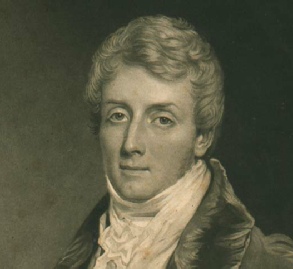
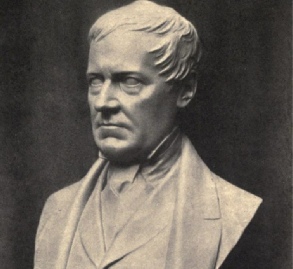
Lord John Russell, left, Lord Glenelg and James Stephen
The budget and personnel of the Colonial Office tended to be small before 1870, and the attitude of the government towards further acquisitions was to discourage them. The job of the governor was to govern with as little fuss as possible and ensuring that as little money as possible was spent. Consequently, clerks in the Colonial Office knew little about the colonies unless there was a problem brought to their attention. The nation's politicians themselves knew little about the colonies of the realm and even Disraeli, who was to advocate a larger empire from 1872, earlier in his political career said of the empire that it was ' a millstone around our necks'. Territories cost a lot to administer and protect but in the early Victorian period there were annexations and it was often the case that these decisions were made by men on the spot and were rarely reversed.
‘The Men on the Spot’
There were many examples of the ‘man on the spot’ making important decisions which tied the government in London. The province of Sind was annexed by General Charles Napier in 1843 much to the annoyance of Prime Minister Peel. Napier was a bible thumping Christian who saw the Emirs of Sind as wicked rulers whom it was his mission to destroy. In a one sided battle on 24 March 1843, the armies of the Amirs were defeated much to the delight of the Governor General of India, Lord Ellenborough. Peel and the directors of the HEIC were against the annexation which could only incur heavy costs. Ellenborough was recalled to London and sacked but the annexation was not reversed. The Punjab was annexed as a result of the determination of Lord Dalhousie to do so, believing it posed a threat to India's security. Once an annexation had taken place it was rare that the government in London would change a decision.
It was in South Africa that decisions made locally without the approval of London were to prove most costly. In 1877 Bartle Frere who had been a very successful administrator in India for 30 years and considered Britain's most effective governor, was sent to South Africa to become Governor of the Cape Colony. Three of his predecessors had been fired over their handling of the violence between the white settlers and native tribes.
In 1879, the Zulus, feeling threatened by the British annexation of the Transvaal, were making raids on settlements that bordered their territory. Frere asked the London government for reinforcements to wage war on Cetewayo, the Zulu leader. The government of Disraeli, already committed to operations in Afghanistan made it quite clear to Frere that he was not getting any reinforcements and that he was not to commence any hostilities against the Zulus. Despite this warning from London, Frere was determined to subdue the Zulus. After giving the Zulus an ultimatum which they could not possibly comply with, he allowed his army commander, Chelmsford, to launch a three pronged attack on Cetewayo's territories in order to capture him and force him to submit. The invasion ended in disaster with one section of the invasion force being virtually wiped out completely at Isandhlwana.
The Man on the Spot in South Africa caused the Boer War
In 1899, tension mounted between the governments of Britain and the Boer republics of the Transvaal and the Orange Free State. Salisbury, the British Prime Minister, and his colonial secretary, Joseph Chamberlain, wanted to compel the Boers of the Transvaal to submit to British authority but without a war. They both probably thought that pressure against the Boer regime would result in the Boers acceding to Salisbury's demands.
The situation was worsened though by the actions of the High Commissioner, Lord Alfred Milner who was determined that British authority in South Africa could only be established with the destruction of the Boer power and this could only come about with war. When the Bloemfontein Conference opened in June 1899 to consider the Boer demands, Milner made sure that the Conference ended without any resolution, and with the conference failing war would be the result. A telegram from Chamberlain to Milner asking him to return to the conference table arrived too late to prevent Milner ending the conference. The man on the spot in Victoria's colonies was often the person who dictated the British course of action.
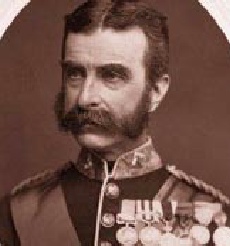
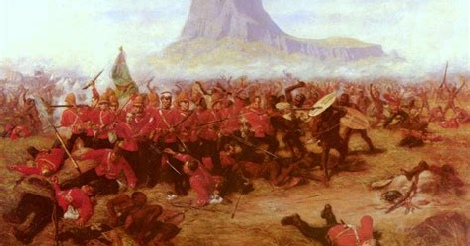
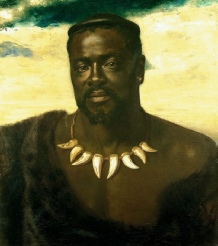
Lord Chelmford, left and Cetewayo and the Battle of Isandhlwana
Most governors were men of integrity who wanted to see what they regarded as the ideals of the British Empire -
William des Voeux
William des Voeux's first appointment in the Colonial Service was as magistrate in British Guiana. He had acquired the position by having relatives in high places and was then sent to one of the worst places in the Empire. Guiana was then a swampy colony famous for its sugar with vague borders with the countries on its boundaries. It was extremely hot and oppressive and full of snakes, yellow fever and gigantic mosquitoes. For a person who was quite sensitive and squeamish this was not quite the ideal location for des Voeux who hated snakes. Moreover he hated injustice and hated seeing men or even animals in pain. He was though expected not to get on the wrong side of the men who ran the colony's economy -
Des Voeux found the administration at St Lucia a shambles but with hard work and the sacking of inefficient administrators, he brought reform and justice to the island. He did this at a cost to his own happiness for he had learnt from his time in Guinea to stand aloof from the European population and not to grant favour. During his time on St Lucia des Voeux produced a report into the abuses he had witnessed in Guinea and sent it to the Colonial Secretary, Lord Glanville, who commissioned an enquiry which endorsed what des Voeux had said and as a result new laws were enacted in the colony. Henceforth there was greater scrutiny of the work of the magistrates and doctors became civil servants.
Once appointed a governor was responsible for appointing his officials, law and order, revenue and expenditure of the colony. The governor was also expected to be a leading member of colonial society and to set an example for the rest of the settler population. The governor was expected to know his territory and tour his colony. For colonies like the Australian colonies this could involve months away from his home and experiencing primitive conditions and health threatening climate and tropical diseases. The governor attended all kinds of social functions -
In 1860 the British Empire was at the height of its power. Britain had fully industrialised and the Great Exhibition had demonstrated its wealth and that it was the workshop if the world without any rivals. Britain mined two thirds of the world's coal, generated a third of the world's steam with factories producing a third of the world's output in manufactured goods. Britain had adopted free trade and did not need its colonies as long as it maintained its industrial advantage. British settlers in the colonies tried to maintain their allegiance to the mother country and took with them the same old class hierarchy and customs as back home. The architecture of their homes was similar as were their clubs and eating habits.
The Creation of Canada
By the middle of the century, the consensus in the Colonial Office was that colonies, once they had reached maturity, should be granted their own self-
The uprisings in Upper and Lower Canada failed but as a result the government appointed Lord Durham, as Governor General of both Upper and Lower Canada. Durham stayed just long time enough to compile a report that became the blueprint for representative government in the Empire. Durham achieved what seemed to be the contradiction of strengthening the link between the colony and yet granting a measure of self-
The British Public thought of the Empire as comprising just the white settler colonies
By the end of the century the white settler colonies had a degree of self-
The Colonial Office had a new home, built in 1875 in a corner of the Foreign and India house on Whitehall. By this time, it had much more control of what was happening in the colonies with the growth of the telegraph network. With the extension of the empire in the 1890s and with Joseph Chamberlain in charge, the administration of the empire was made even more efficient. The age of the independent governor was over and henceforth he became a civil servant working to the dictates of the masters in Whitehall.
Peter Crowhurst
Updated May 2019
For further reading see:
- Running the Show by Stephanie Williams, 2011
- The Rise and Fall of the British Empire by Lawrence James, 1996
- The Decline and Fall of the British Empire by Piers Brendon, 2008

The creation of a federal Canada in 1867