




Edward Gibbon Wakefield

Instrumental in the settlement of Australia and New Zealand
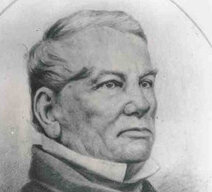
Edward Wakefield was a colonial theorist and statesman who with his brothers and son was instrumental in the early development of colonial Australia and New Zealand. Gibbon was the son of authors and philanthropists Edward and Priscilla Wakefield and born in 1796 in London. He was educated at Westminster School before entering the diplomatic service. After two years service in Turin (1814-1816), his career was sullied by his elopement with a ward of court. He was allowed to join the embassy staff in Paris in 1820 but after six years adducted and married an heiress. The marriage was annulled and he was imprisoned for three years in Newgate during which time he wrote A Letter from Sydney despite never having ever been there. The letter advocated systematic colonisation, selling land to settlers at reasonable rates in approved areas.
On his release from prison Wakefield became a founder member of the National Colonisation Society and promoted settlement in New South Wales. His South Australian Association, which was instrumental in the founding of South Australia (1834) was more successful.
The New Zealand Land Company
In 1839 he joined Lord Durham in
Canada who had been tasked with the job of investigating recent rebellions in
Canada and reporting on a way forward. Wakefield helped Durham in the drawing
up of a report which laid the basis for colonial government in the dominions.
On his return to England Wakefield became the London agent for the New Zealand
Land Company which was organising the migration of thousands of migrants to New
Zealand. Wakefield wanted New Zealand colonised in a systematic way with
settlers chosen according to the skills they offered rather than have the
country settled by convicts and land speculators. Despite having the support of
Lord Durham and the banker Francis Baring, Wakefield could not come to any
agreement with the government of Lord Melbourne which wanted the company turned
into a joint stock company.
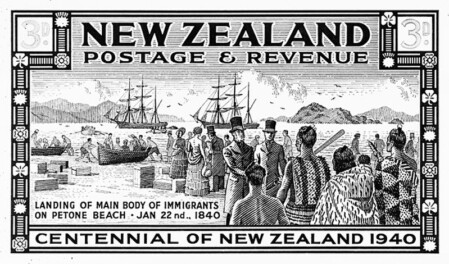
New Zealand Company ships arrive in New Zealand
Ships sail for New Zealand without government approval
Rather than wait for government approval Wakefield charted the ship Tory to send out settlers ahead of government approval, a move which halted French plans for settlement. The Tory set sail in May 1839 and by the end of the year a further eight ships had left England for New Zealand.
Wakefield's brother was in charge
Wakefield’s brother William was in charge of the first expedition and it was he who founded the city of Wellington and negotiated the purchase of large amounts of Maori land, a move which was annulled the following year after William Hobson had negotiated the Treaty of Waitangi and set up a British administration, partly to prevent the large scale exploitation of the Maori people and their land.

A Maori settlement
Wakefield then persuaded another brother Arthur to lead an expedition that would buy and develop land in and around Nelson on the South Island. Within a few more years several more of Wakefield’s family had taken the decision to migrate to New Zealand. In 1853, Wakefield himself emigrated to New Zealand and for the last nine years of his life helped to establish self-government in the young colony.