



Sophia Pigot
The story of an early British migrant to the Cape Colony and Natal
The Pigot family
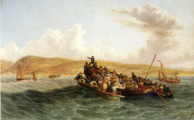
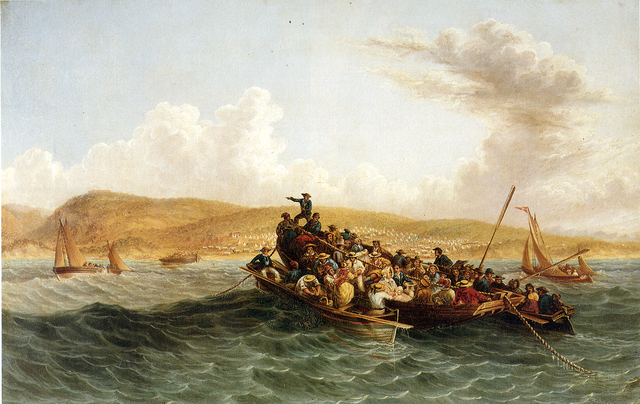
On Monday 13th of December 1819, Sophia Pigot, a 15 year old girl from a respectable and well-off family, set sail from Gravesend, England, aboard the Northampton, bound for South Africa to begin a new life. The journey would take four and a half months to a country she knew little about-. The weather was icy cold, and the Thames was close to freezing. She was accompanied by her father, George Pigot, an ex-soldier who hoped to establish an estate in the eastern districts of the Cape Colony, her elder sister, Kate and her father’s new young bride, Elizabeth Tomkinson, his first cousin. The Pigots were accompanied by about twenty servants and their wives and children, making up a party of about 50 people. Sophia kept a journal of the journey and the first few years of life in the Eastern Cape and much of this account is based on Sophia’s journal. Sophia had little idea of the hardships that lay ahead. The journey through the rough seas of the Bay of Biscay and the North Atlantic brought days of sickness and being confined to her cabin. The final destination for the Northampton was the beach at Algoa Bay from where the journey by land to the final destination of Blaukrantz was made using ox drawn carts through snake infested lands where lions and elephants were numerous. Having arrived at the lands allocated to the Pigot family near Grahamstown, then in a war zone, the land had first to be cleared for farming and a home had to be built.
Sophia was born on 9 May 1804 at Foxearth a farm in the parish of Caverswall, a few mile east of Longton in Staffordshire. She began attending Miss Wright’s school in Cannock when she was four, remaining there until she was fourteen, only leaving when it was the holidays to visit family and friends. She never went home and rarely saw her father who was often away with his regiment, the 1st Staffordshire Regiment.
Sophia's family
Unfortunately, we know little of Sophia’s mother. In 1814 Major Pigot sold Foxearth and the family moved to Horsemoor House, near Chieveley, in Berkshire, a property owned by Major Pigot’s younger brother Hugh. As well as her sister Kate, it is likely that her older brother George, was with them. Young George was commissioned as a Lieutenant on 20 January 1817 and from May 1818 until early the following year served in HMS Leveret, part of the squadron of ships guarding Napoleon on St Helena, and then served in HMS Cyrene on the West African coast. from February 1982 until May 1823 when he was transferred to HMS Algerine which capsized in a squall in the Mediterranean on 9 January 1826.
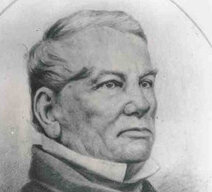
Sophia’s father Major Pigot was born probably on 5 June 1771, to Catherine Hill, the mistress of Lord Pigot, a former Governor of Madras. He was the eldest of three sons of Catherine who Lord Pigot acknowledged. Lord Pigot’s defence of Madras during the wars against the French in India in 1756 and 1759 won him great fame. He returned to England and was created a baronet and served as an MP before becoming an Irish peer with the title of Baron Pigot of Patshull (an estate in Staffordshire). In 1775 Lord Pigot was persuaded to return to India, to bring order to the British administration in Madras which had become riddled with faction. Unable to resolve the conflict between the different factions, and indeed being accused of corruption himself he was placed under house arrest. Nine months later, on 11 May 1777, whilst still under house arrest, Lord Pigot died, having already been restored to office. George inherited £5,000 but being of illegitimate birth, inherited no title.
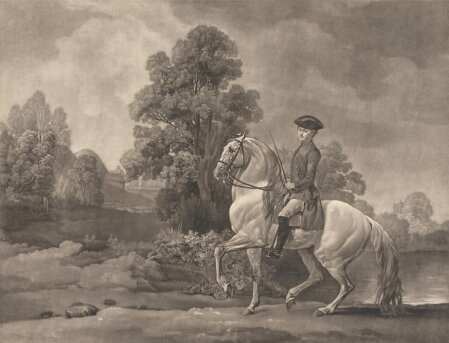
Following the death of his father, George became an ensign in the 1st Staffordshire Regiment in 1787, and was stationed in Ireland for many years. He was present at the capture of Martinique and Guadaloupe in the West Indies in 1794 and was involved in the suppressing of unrest by slave workers in the Windward Islands in 1795. In 1796, he got married in Patshull to Mary Ann Adams of Greenstead, Essex and in the same year was sent with the 9th Light Dragoons to Monte Video.
The government scheme to settle the eastern Cape
He was clearly not that committed to a life as a soldier for he transferred to a regiment that was being run down, and retired as a Major in 1808 to begin a life as a farmer. By this time George had three children, George, Katherine born in 1802 and Sophia born in 1804.
George’s brothers Hugh and Richard, were both doing well in the army but army life was not for George who in 1819 decided to apply to join the government’s scheme to send 4,000 people to the eastern frontier of the Cape of Good Hope. George would need to organise a party of at least 10 able-bodied labourers over the age of 18. In return the party would receive free passage including food and accommodation and receive 100 acres of land in the Eastern Cape plus 100 acres per man in the party. George then was required to agree with his party the terms of employment, including how many years they each were required to work for George before receiving their own freedom.
There were up to 90,000 applicants for the government scheme, but George was sufficiently well connected to secure passage for his party, on one of the ships leased for the scheme. It is not clear why George gave up all he had in England to become a pioneer which involved being a soldier without a regiment and a farmer without land and having two teenage girls and at the time he applied no wife. George had funds and possibly he hoped that he could create for himself and his family a lifestyle that because of his birth was not available in England. He did enquire about the possibility of receiving some public office in the Cape, but conditions were not favourable. His health was in decline and although he didn’t lack for courage or enterprise, he was not able to endear himself to the men and women who were in his party, many of whom were to drift away from his farm to safer parts on the colony for the family arrived in South Africa during a series of wars fought between the Xhosa tribes and the Europeans for control of the Eastern frontier. George’s hasty temper and intolerance did not endear him to his indentured servants whom he needed if his project of creating an English style estate in the South African bush were to succeed.
Just ten days before departure from Gravesend, George married his young first cousin, Elizabeth Tomkinson at St Pancras Church, London. Elizabeth was previously known to Sophia and Kate as Betsy who now became Mama. She would take care of the family home and bring up the two girls. With George likely to be away for periods of time, to marry a younger woman with plenty of energy and known to his daughters made perfect sense.
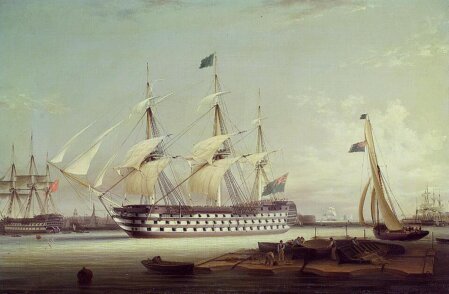
The Northampton was a three decked merchant vessel that had been launched in 1801 on the Thames. Prior to being chartered by the government for the 1820 settlers to South Africa, it had made eight voyages to India for the East India Company and had done one journey to new South Wales transporting convicts. For the journey to the Eastern Cape the Northampton was carrying 257 passengers, including the parties of William Clark, Charles Dalgairns, Thomas Mahoney. Major Pigot and William Smith.
William Clark was a surgeon and had arranged to take out a group of 11 young men from the Refuge for the Destitute in Hoxton, London. The passengers came from all classes, including the family of George Pigot who had previously led a privileged life, to Thomas Mahoney and his party of 16 mainly Irish servants who proved troublesome throughout the voyage. The captain of the ship was Captain Charlton and it was his task to keep order on the ship and this did involve confining members of Mahoney’s party occasionally to a lock up.
Life on board the' Northampton'
Sophia and her sister Kate had their own cabin on board unlike most of those on board who were accommodated on a mess deck. Sophia described her cabin in her journal as very comfortable indeed. Departing on the 13th December, the ship made very slow progress for a week, with the ship anchoring off Deal, and Portsmouth, with Sophia going ashore on both occasions. Sophia spent much of her time when she wasn’t sea sick, walking on deck and getting to know her fellow passengers.. Kate was suffering from seasickness much more than Sophia and was in bed for much of the first week. It was not until the 5th January that the Isle of Wight had been left behind and the ship began, with decent wind to make good progress. The weather was very squally with the ship rolling around a good deal. Sophia noted in her diary for 11th January that two men had been handcuffed for striking Captain Charlton and being impertinent to her father. The incident frightened her but there were a number of such incidents involving members of Mahoney’s Party, although Sophia became quite well acquainted with Miss Mahoney.
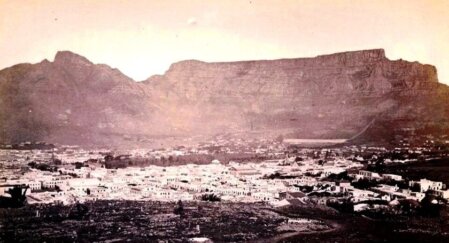
By the 14th January, Porto Santo had been passed and the weather was improving. Sophia noted that a number of people on board had smallpox and a women of the Pigot party died of smallpox on the 25th. The days were much hotter by the end of January and Sophia spent time on the deck working on a muslin handkerchief and reading. Evenings were spent reading, chatting with fellow passengers and listening to music. The equator was crossed on the 16th February and the ceremony of Neptune took place for those crossing the equator for the first time. References continued to appear in her journal to the troublesome Mahoneys. Sophia continued to spend a lot of time walking on deck and she liked to walk a mile before breakfast. As they sailed southwards all the talk was about the Cape which was reached on the 26th March however the ship was kept in quarantine and no-one was allowed to disembark, excerpt those like her father who was well connected. On the 28th George Pigot went ashore to visit his nephew Mr Henry Monkton who was Lieutenant Colonel of the 72nd regiment and Commandant of Cape Town. The ship remained in Cape Town harbour until early on the 2nd April when it set sail for the final destination of Algoa Bay (now Port Elizabeth) which was reached on the 30th April.
Algoa Bay
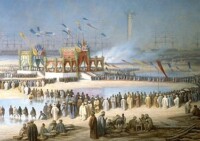
Algoa Bay beach was the destination for all the ships that carried passengers bound for the eastern Frontier. A tented encampment has been built to accommodate the various parties until it has been decided where they were going on to, and for transport to be arranged. The Pigot family though were lodged in the mess room of the 7th Regiment that was based at Algoa Bay and Sophia and Kate could enjoy the company of young officers. The girls went for walks each day and visited those whom they had got to know on the voyage, although Kate continued to suffer from illness. The piano had been unloaded and Sophia arranged for someone to tune the instrument so she could continue to play music. They had days out in a wagon and trips on the river until the day for departure for the eastern frontier arrived. They finally left Algoa Bay on the afternoon of the 15th June with seven wagons pulled by oxen.
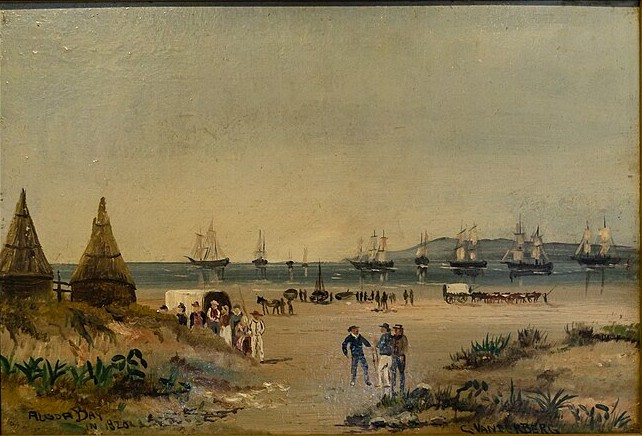
The journey overland
The journey to the land allocated to the Pigot family, Blaukrantz, was every bit as much of an adventure to Sophia as the voyage to Algoa bay had been. Sophia walked alongside wagons pulled by oxen through beautiful bush countryside full of wild animals including elephants, deer, zebra. A number of rivers had to be crossed and on days when the rain had been heavy, the party had to wait until the river level had fallen. Heavy rain also made some of the tracks impassable necessitating the party remain where they were. She ate oranges and dried meat as she travelled and in the evenings slept in tents or occasionally in buildings occupied by officers.
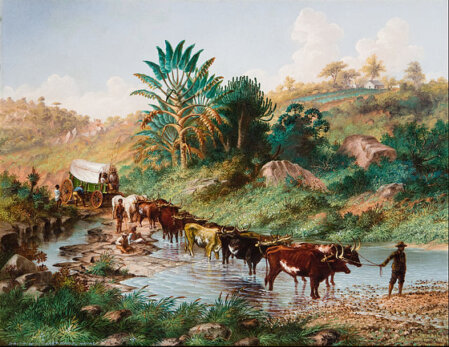
Grahamstown
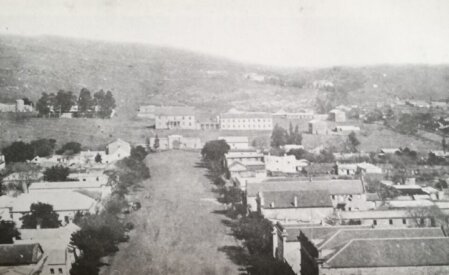
Grahamstown, the town nearest Blaukrantz, was reached on 26th June and the Pigot family remained here whilst suitable accommodation was prepared at Blaukrantz. With a military presence in Grahamstown, there were plenty of invitations to dinner and other social events. Unfortunately, it was now the rainy season and for much of their time in Grahamstown it rained with Sophia confined to the house. Eventually it was time to leave Grahamstown for Blaukrantz, and on the day of departure, 21st June, it was fine weather.
Blaukrantz
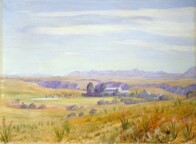
Blaukrantz had once been the site of an old military fort and there were some buildings in a poor state of repair. George Pigot decided to build a new dwelling house for the family a mile away from the old buildings and until this house was completed the family lived in a large marquee. Once settled in Blaukrantz, Sophia was isolated from polite society although not too far away lived the Dalgairns and their small party of men.
Living on the frontier
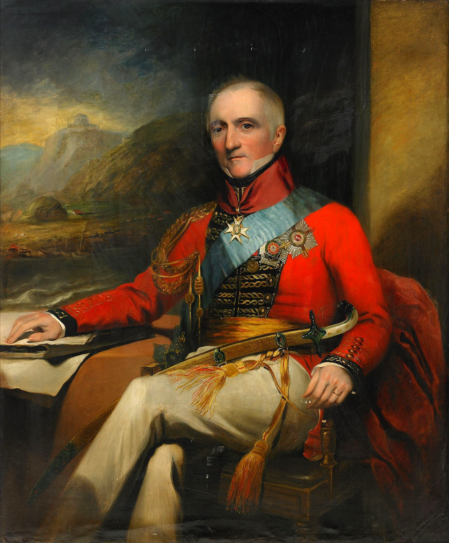
The Dalgairns were frequent visitors and on one occasion , on the 28th May, 1821, Sir Rufane Donkin, the Acting Governor of the Cape Colony visited, staying the night. Sophia remarked that dinner was cooked by a French chef. The fact that the Acting- Governor of the Cape Province stayed at the Pigots is an indication of how well George Pigot was connected. Sophia and Kate spent much of their time making items for the house, reading and walking around the estate. Their father was frequently in Grahamstown on business. Grahamstown was the main town on the eastern frontier and the centre of local administration and a military base. Donkin had changed the administrative centre to Bathurst, closer to the Pigots, but as soon as Lord Somerset returned, the administrative reverted to Grahamstown. The frontier area was fought over by the Boers, the English and the local Xhosa tribes. There had been five wars prior to 1820 with Grahamstown being attacked by a force of 10,000 Xhosa warriors on 22 April 1819. The town was defended by just 350 troops, but it held out. The Pigots arrived in the area during a period of relative calm although the new settlers were wary of the local natives. In early 1821 a party of around 6,000 Xhosas appeared at the Clay Pits, close to the Pigot estate, causing concern amongst the settlers. They did have permission though to collect clay. Another incident to put the new arrivals on their guard was the murder of an English boy guarding cattle. 48 cattle and the boy disappeared without trace from near Grahamstown. This brought home to the settlers how insecure their position was.
Meanwhile, Pigot’s party of skilled agricultural workers was being put to work converting acres of bush to profitable farmland. Pigot had brought out to South Africa a carpenter, a wheelwright, three masons, a blacksmith, cooper, a shoemaker, a baker and ten farmers to construct a house and estate befitting a Lord of the Manor. The work wasn’t always to the liking of these people for several tried to escape. Although indenture documents had been signed, some of Pigot’s workers sought the easier and safer life to be had in Grahamstown. Despite the loss of some of his men, Acting Governor Donkin reported after his visit to the Pigots that his fields had been cleared and were beautifully enclosed and cultivated whilst his stock of black cattle and sheep was extensive and select and the garden was supplied with every description of vegetable, with all the numerous fruits which abounded in the Colony. He also noted that the main house, although only half finished would be spacious, substantial and elegant. George Pigot was also the first person to introduce the merino sheep to the eastern province.
As the main house neared completion Sophia spent more and more time there, working and reading. Much of the rest of her time was spent visiting neighbours or receiving visits. There were neighbours like the Logies which was walkable, otherwise Sophia took a horse and rode side saddle. By June 1821 most of the house was finished and the family were taking more and more meals there. Sophia made a note in her journal for the 3rd June saying the family said prayers for the first time in the house. On Friday 17th August, 1821, Sophia wrote that Mr Moodie had come to visit. This was probably John Moodie. Sophia was later (1824) to meet and marry John’s brother Donald.
The Moodie brothers
George Pigot and other influential men in the area encouraged the development of the Kowie River for fishing and shipping, and Acting Governor Donkin asked Donald Moodie to survey the river. He subsequently on 2 June 1821 sent a report to Lord Bathurst. It is more than likely that during the time he spent surveying the Kowie River, Donald Moodie visited the Pigots and got to know Sophia. Donald had served in the Royal Navy from the age of 14 and saw a good deal of action, before retiring on half-pay as a lieutenant in December 1815. Donald came to the Cape following his brother Benjamin, who in 1817 had brought nearly 200 Scottish settlers, to Cape Town, mostly on indentured contracts. Having bought a farm in the Swellendam area, the three Moodie brothers (Ben, John and Donald) then took part in forming a military village called Fredericksburg, a project to provide new military homes, close to the eastern frontier. The scheme failed before it had really got started as few officers occupied their allocated land consistently. Donald was an exception remaining on his land, almost alone, until February 1822. Following the abandonment of the Fredericksburg project, the Moodie brothers received generous grants of virgin forest land west of the Bushmans River mouth. Ben was soon drawn back to Swellendam but Donald and John remained to establish farms which they named after places in the Orkneys (Long Hope and Hoy). However during the floods of October 1823, their buildings and cultivated lands were swept away. Donald then married Sophia whilst John employed a friend to manage the farms and he moved to Grahamstown.
A proposal
Donald must have proposed to Sophia some time before January 1824 for she notes in her journal that she was exceedingly unhappy as she did not know what to do.. During 1820 and 1821 she seems to have been secretly in love with someone we know nothing about. Perhaps he was a junior officer without prospects, who the family did not encourage. The proposal of Donald though was well received by Sophia’s father and stepmother but caused Sophia to mull over what was right and her duty and not to consider her own happiness and pleasure. In the event the couple got married on 29 March 1824 when Donald was nearly 30 and Sophia was 19. They got married at Pigot Park with the Rev William Geary performing the ceremony and began married life living at Pigot Park.
Married life
Despite her initial reservations about getting married to Donald, her letters to him on the many occasions when he was working away from home indicate that it was certainly a marriage of love. They were married for thirty seven years during which time Sophia had fourteen children. Life was not easy for them. Donald had a succession of jobs that did not last long or pay a great deal and they were living in an area where there was always the threat of violence breaking out between the Xhosa and the Europeans. They did not have a home of their own for any years but made the most out of what they had.
Donald’s first position in local government was when in January 1825 he was appointed magistrate of Port Frances -the port at the mouth of the River Kowie, now Port Alfred, that he had surveyed a couple of years previously. The salary was just £90 a year, hardly enough to pay the servants. Sophia was pregnant with her first child and remained at Pigot Park. The baby was a daughter who was named Sophy and shortly after the birth, Sophia joined Donald at Port Frances. They were still living at Port Frances when Sophia had her second and third children named Catherine Jemima and William James Dunbar.
In 1827 Donald was away for three months visiting Cape Town on private business and using the opportunity to meet with the Secretary of the Colony, Colonel John Bell, and also the Acting Governor, General Bourke. The development of Port Francis was slow because the river mouth was proving to be very dangerous for vessels trying to access the port. The post of magistrate to the port was abolished by the end of 1827 after which Donald managed to obtain the position of Clerk of the Peace at Grahamstown. The family settled in Grahamstown and Sophia was able to enjoy the social life there especially the dancing. During their time in Grahamstown Sophia bore two more children, George Pigot, born in January 1829, and then in April 1830, Donald Hugh Menzies.
The move to Grahamstown came at a time when Sophia’s father George Pigot’s health was declining. He was now 60 and probably suffering from a hernia, a common complaint among those who spent a good deal of time on horseback. George’s financial situation was also not good. Despite the very positive comments on the farm passed by Acting Governor Donkin, on the occasion of his visit, the reality of the situation was quite different. The first few years saw the failure of the wheat crops, leading to near starvation conditions for the labourers on the farm. George Pigot hoped to be able to establish an English style estate that he could rule over but he knew little about the local conditions. He was far too authoritarian a figure to his indentured workers and a number began to run away to places where they could determine their own destiny. Cattle were being lost in greater numbers to cattle thieves and there was always the danger of an attack on the farm.
George dies
George Pigot had applied for various posts but the only one he succeeded in getting was the post of Guardian of Slaves in the Eastern Province- a post that he was totally unsuited for. George died on 20 June 1830 at Pigot Park. His will bequeathed a sum of money held in England to his wife, Betsy and his two daughters. Various lands in South Africa were given to Betsy to enable her to return to England, whilst Kate inherited Pigot Park.
Kate left for Cape Town soon after her father’s death and the estate was rented out to tenants who farmed the land however war broke out in 1835. A Xhosa chief of high rank was killed in late 1834, and an army of 10,000 led by Maqoma moved across the frontier burning homesteads and killing all those who resisted. Pigot House was among those that were attacked and burnt, with the house left in ruins.
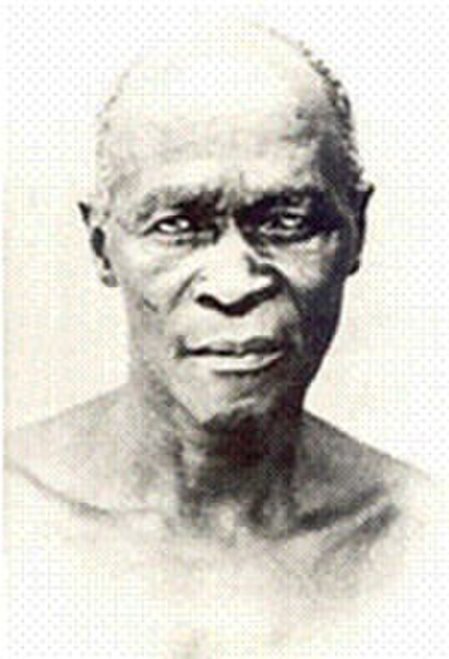
By the time that Pigot Hose was destroyed, Betsy, Kate and Sophia were all far away. Bessy was in England having returned there shortly after George had died. Kate was in Cape Town whilst Sophia and Donald were in Graff Reinet. Donald had been appointed Protector of Slaves for the Eastern District on 3 August 1832 with a salary of £400 a year. Donald served the government in a number of additional roles, including having to report on the state of the frontier in late 1834. This involved travelling to beyond the Orange River to meet with the chiefs of that region. Donald must have been based in Graff Reinet for in May 1834, Sophia, and her six children and her sister Kate joined Donald. It was during this time that he began to acquaint himself with the transcription and translation of thousands of official documents about the conditions and treatment of the native tribes of South Africa.
Donald's work as a historian
‘The Record’ which is the translation and compilation of these documents, probably commissioned by Sir Benjamin D’Urban, and which appeared between 1838 and 1841. Both Benjamin and Richard were born in Graff Reinet. These were difficult times as Donald was away from home a good deal at a time when the sixth Frontier war was being waged which left 7,000 people homeless. Little Richard, who was born very frail and suffered for most of his 13 month life, died and five days later, Sophia gave birth to her ninth child, John Bell. Donald was away from home gathering documents in Grahamstown and Port Elizabeth for both of these events, Donald was then moved to Cape Town and Sophia and Kate had to make their own way and pack up the house. They took a route which enabled them to break the journey at Grootvadersbosch, Benjamin Moodie’s farm near Swellendam. When Sophia continued her journey, Kate remained with Benjamin Moodie and the youngest of Sophia’s children, Lolotte, Benny and John, whilst Sophia made her way to Cape Town with Sophy, Minna, George and Donny, arriving in May 1837. The family lived in various houses and in November 1839 Octavius was born but lived for just seven months. Sophia’s next birth was in 1841 when Caroline was born. Donald continued with his work of collecting and transcribing documents relating to the native peoples of the Cape . There was a break from this work in October 1841 when he took up a temporary appointment in charge of the Government Bank at Cape Town.
Donald’s next move was in early 1842 to George, where he was appointed magistrate with the task of extricating the district from the disorder into which it had fallen,. The family joined him there and it was here that Sophia’s youngest daughter Jessie was born. The next move for the family in October 1845 when Donald accepted the post of Secretary to the government of the new colony of Natal - the most important position he had held, although it only carried the salary of £500 a year. Although Natal was to become their home Sophia and Donald continued to move frequently from house to house with all the problems that this entailed- removals, securing new servants, arranging the education of the children. The colony of Natal had only been formed on 4 May 1843, and Donald worked closely with the Lieutenant Governor Martin West to establish an administration and constitution for the colony. When West was succeeded in September 1851 by Sir Benjamin Pine, Donald’s influence declined for he had become unpopular for advocating the claims of the Kahrs to lands which they had been dispossessed. In September 1851 he retired on leave and a year later he was suspended and his salary terminated.
Donald dies
Sophia and Donald now moved to a farm, Doornkop, near Ladysmith, where they were often visited by their younger children. Sophia continued to keep a journal writing of the farming operations, maintaining her garden and the visits of family and friends. Travelling between Doornkop and Pietermaritzburg, where several of their children lived, was more difficult than any of the journeys they had undertaken in the Cape region. They had to endure frequent thunderstorms, flooded tracks, broken carts and thefts.
In February 1857, Donald entered public life again when he was elected to the Natal Legislative Assembly, becoming its first Speaker. Sophia and Donald now set about creating another new home, just outside Pietermaritzburg, which they called Melsetter after his home in the Orkneys. Kate joined them and helped with establishing a garden for cabbages, bananas, French beans and also the making of butter. A new house had to be built, and the foundation stone was laid in May 1861. With such a large family Donald and Sophia were constantly surrounded by their children and grandchildren. Donald focused on his public duties whilst Sophia managed the house and the garden. As well as his duties in the Assembly Donald worked on publishing pamphlets on subjects he had previously researched. In July 1861, Donald fell ill and a few weeks later on 24 August died. Previous to Donald’s death, Benny had died in 1858 aged just 25 and then in 1860, both her eldest daughters died, Sophia aged 35, and Catherine aged 34. Sophia had been married twice, whilst Catherine had lost her husband, Captain William Jesse, killed in the Crimean War in 1855. Sophia’s sister Kate, who had accompanied Sophia throughout her travels in South Africa died, still unmarried, in May 1863.
Sophia continues to manage the house building
Throughout these sad times, Sophia continued to manage the building of the new house, which was habitable by the end of November 1861. The project helped her to deal with her grief. In 1864 the Bishop of Cape Town, Robert Gray came to Natal, and the Moodies used the opportunity to have several of their children confirmed. In October 1868 Sophia let out Melsetter, and travelled, visiting family and friends. She was closest to George, her second son, who as a surveyor, had secured a post with Kruger’s government in the Transvaal. He helped to build the railway to Lorenco Marques, and made money from the gold mines in the Barberton area. He is credited with giving the name of his mother’s former home in England, Chieveley, to a small place between Estcourt and Ladysmith – where Winston Churchill was captured by the Boers in November 1900.
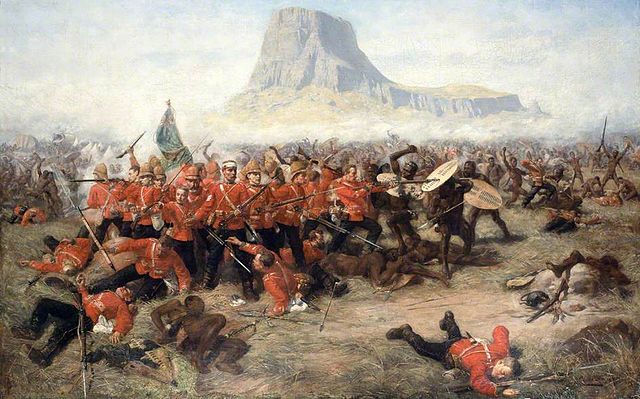
Sophia was 70 in 1874, by which time her health was declining and she was increasingly worried by events in Natal. In 1879 the Zulu war broke out. Sophia was shocked by the death of Dunbar’s son, Malcom, who was killed in January at Isandlwhala and in June the death of Prince Imperial, Napoleon III’s only son, made a deep impression on her.
Sophia dies
Sophia died in Pietermaritzburg in October, 1881, and right up to this time she continued to keep herself busy with her various hobbies. She was never happier than when she was in charge of a home building project and the creation of a productive garden. She never complained at all the moves necessitated by Donald’s temporary jobs, she raised her family and created a home for them all.
The Pigot family were among the earliest British settlers to the Cape Colony and despite the difficulties they encountered built a life for themselves and for their children. Life was never easy for Sophia as she was constantly having to rebuild a home for the family. Even after the family had moved to Natal there were constant threats to her security, yet she managed to raise a large family, most of whom remained in South Africa. Donald helped in the development of Port Francis, now Port Alfred and his work as a historian created a record of the lives and treatment of the native peoples of the Cape Colony and Natal.
By Peter Crowhurst
August 2026
Further reading:
Margaret Rainier, ed, The Journals of Sophia Pigot, A.A.Balkema/Cape Town, 1974
Dictionary of South African Biography