



A History of British Migration
Part 1 from earliest times to 1600
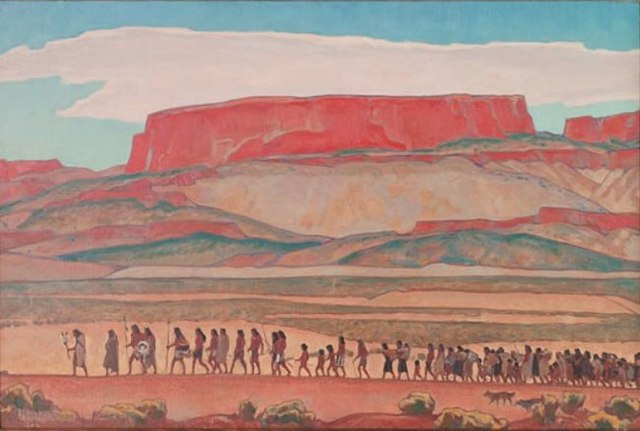
A study of migration by Maynard Dixon, 1923
Different types of migration
Migration has been a feature of human history since origins of the human race in Africa thousands ago. The first settlers came to Britain about 25,000 years ago and have been followed by successive waves of people, each of which has changed our culture customs and culture. We are in the Britain today the descendants of all those who have made their home here. The last 2000 years have seen Romans, Angles and Saxons, Normans, all invade and settle in Britain and changed the way the country has been ruled, how we feed ourselves, how we travel, entertain ourselves and talk to each other. Refugees from political and religious persecution have sought shelter and ultimately a home in Britain whilst others have come to the British Isles to escape poverty.
The story of human history can be told through migration and the impact it has had on bringing change to a society. Migration though is not just about the international immigration of one group of people into a country and the impact they have but also about internal migration and the movement of individuals and families from one area to another. In the 18th to 19th centuries there was mass movement from the countryside to the town as cities developed and were where industry was based. Migration can also be forced as well as voluntary. During wars groups of people are often expelled because they are perceived as posing a threat. Others are taken prisoner and transported as slaves or prisoners. Other groups of people flee from advancing armies and may never return to their homes but make new homes elsewhere. Prisoners man be incarcerated in camps and may decide not to go home at the end of the conflict but to settle in the land of their previous enemy.
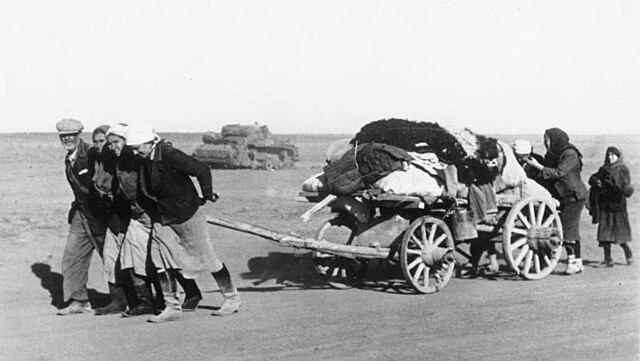
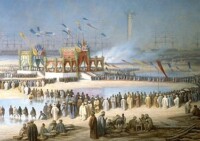
Refugees fleeing the Battle of Stalingrad, 1942
The Atlantic migration of the 19th century
The largest migration in history was the Atlantic migration from Europe to North America beginning in the 1840s and involving large numbers of people moving from Germany and Ireland. In the 1880s there was a second wave of immigrants into the United States from southern Europe, numbering 17 million. In recent years the largest voluntary movements have been from developing countries moving to the developed and industrialised world. Between 1960 and 1980 13 million migrants moved to western Europe whilst 10 million moved to the United States.
The forced migration of people has been a feature of human history for millennia. The forced transportation of African slaves to the Americas from the 16th to the 19th centuries numbered about 20 million whilst the expulsions imposed by the Nazi party in Germany amounted to seven to eight million people. Around 14 million people fled during and after the partition of British India in 1947-1949. Such migrations have transformed societies, the town and landscape and the composition of populations.
Between the coming of the Celts between 1000 and 500 BC and the arrival of the Normans in the 11th century, Britain was transformed. The introduction of roads, new systems of farming, urban living and new administrative institutions changed Britain forever and the Britain of today would have been quite different without the changes introduced by successive waves of settlers from overseas.
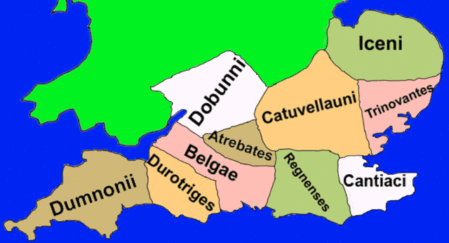
Celtic tribes in southrn England
The Celts came from central Europe and changed the face of the countryside by introducing large rectangular fields to replace the previously haphazard system. Bordering the fields were ditches or drystone walls. In 55BC and again a year later Caesar sent a large Roman army to Britain to subdue the Belgae, a Celtic tribe. He did not stay but a century later, in 43 AD, Claudius sent an army to completely take over Britain. Cities were built as their administrative centres and villas with forms of central heating and piped water were built in the countryside. Roads were built to link important centres and in towns mints, potteries were constructed. The fens were drained to facilitate large scale farming and sheep were introduced to the South Downs. Lead mining was introduced to the Pennines, Derbyshire and Flintshire, and the mining of silver in the Mendips. Iron was mined in the Weald. The Romas introduced the concept of the spa to Britain and built spas around the country.
A missionary expedition sent to Britain
Following the decline of the Roman empire, there were new invaders from northern Germany and Denmark. There was no united leadership amongst the British people, and many moved westwards or across the Channel to escape the aggressive invaders. The Anglo-Saxons were lowland farmers and developed open strip field farming, often reclaiming land from the forest. Kings emerged to settle feuds and to administer laws and collect rents although their power was not unlimited as they were subject to the decisions of the Witan on who should rule. The idea of service to the king was introduced which later became the basis of the Feudal system of the Middle Ages. In the 6th century, Pope Gregory sent a missionary expedition to Britain with Prior Augustine and 40 monks. They landed on the Isle of Thanet, met King Ethelbert of Kent and were given the right to make converts.
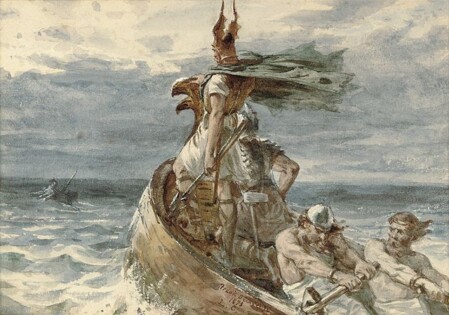
The Vikings
From 835
the Vikings were making regular journeys up the Thames and over the next 20
years penetrated into East Anglia, Northumbria and Mercia defeating their
opponents. The Treaty of Guthrum between Alfred and Guthrum in 866 led to the
Danelaw and the introduction of Danish customs and words in the area they now
controlled on the other side of the River Lea and Watling St. Place names like
Thorpe reflect the influence of the Vikings in the north of Britain.
The Normans
Following the arrival of the Normans in 1066, the lands of the Saxon lords were taken from them, and they were subject to heavy taxation, bullied and sometimes killed. Castles were established to guard all important towns and routes. The country was divided into manors and the feudal system was introduced by which all those who held land from the king were required to do military service. The kings of Medieval England were often French born, living for much of their time in their lands in France and the frequent wars of the period were often about maintaining control of their lands in France.
The Middle Ages were a relatively quiet time for migration. There were no large -scale migrations as described above but political change as well as natural disasters caused many to migrate. As England’s economy grew and exports, particularly of wool, increased, foreign artisans were welcomed to England for their skills. Brewers and weavers from all over Europe were attracted to England. Poor immigrants were also attracted by the prospect of finding work and improving themselves.
Whenever the economy took a downturn, there was often resentment of foreigners. There would not be large-scale religious tensions until the 16th century when there began the beginning of attempts to reform the Catholic Church which led to the rise of Protestantism. There was some religious migration though and that concerned the Jewish population. William I had invited Jewish migrants to England to help finance his various building projects and his wars. Jews were not regarded as citizens of the realm but as servants of the king. They were given certain rights by the monarch which made clear they were a separate group from their neighbours. They were answerable to the monarch who provided them with protection in return for their services. There was though constant tension between the Church in England and the Crown over the treatment of Jews. The Church wanted Jews to pay tithes and to be open to conversion to Catholicism. Whenever the economy took a downturn, foreigners were blamed and often attacked. Jews were a particular target because they were the ones who lent money.
The position of Jews in England
Whenever the economy took a downturn, there was often resentment of foreigners. There would not be large-scale religious tensions until the 16th century when there began the beginning of attempts to reform the Catholic Church which led to the rise of Protestantism. There was some religious migration though and that concerned the Jewish population. William I had invited Jewish migrants to England to help finance his various building projects and his wars. Jews were not regarded as citizens of the realm but as servants of the king. They were given certain rights by the monarch which made clear they were a separate group from their neighbours. They were answerable to the monarch who provided them with protection in return for their services. There was constant tension between the Church in England and the Crown over the treatment of Jews. The Church wanted Jews to pay tithes and to be open to conversion to Catholicism.
By the 13th Century there were about 3,000 Jews in England, mostly concentrated in county towns like Lincoln, Winchester, and Norwich. Streets like Jewry St in Winchester are testament to their former existence. They lived in particular parts of towns and because of the restrictions placed on them holding property, they usually lived in rented accommodation, usually near the administration centres of county towns. They often lived near the local castle, for protection when needed although when in 1190 the Jews of York fled to Clifford’s Tower. Local knights had them burnt to death.
Discrimination against the Jewish population and other migrants happened – often during periods of economic depression- or when there were sections of society who resented the position Jews held. In 1190 the Jewish population in York was attacked and massacred as a result of a number of false accusations of child murder. During the conflict between Henry III and Simon de Montfort, there were a number of occasions when de Montfort turned on the Jews. When he was raised to the peerage in 1231 as Earl of Leicester, thereby entering England’s political elite, one of his first acts as earl was to expel the Jews from Leicester. This was followed by Henry, giving way to pressure from the Church, issuing a decree that ‘no Jew may remain in our kingdom unless he s able to serve the King, and find good pledges for his fidelity. Other Jews…..are to leave the Kingdom’. In 1264 when the conflict between Henry and de Montfort was coming to a head, and Simon needed money to finance his military campaign, the goods of the Jewish people wee seized and and any Jewish people found were stripped, robbed and afterwards, by night, murdered. As many as 500 people wee murdered in the process of providing de Montfort with the funds he needed. A few years later in 1290, Edward I expelled the entire Jewish population of about 3,000. Antisemitism was increasing in Europe, partly caused by allegations about children being killed during ritual ceremonies, and partly by the weakness of kings to protect them.
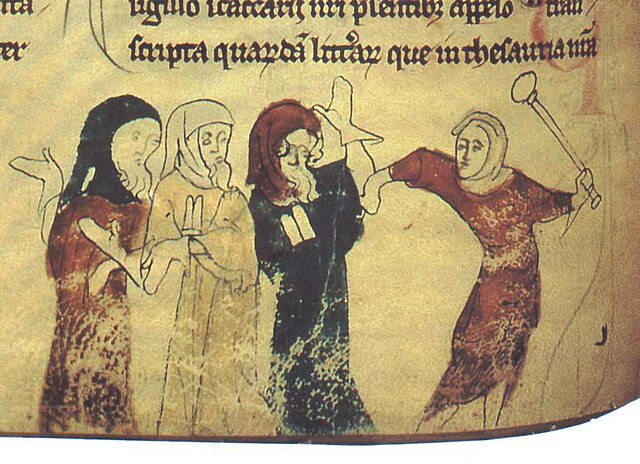
The exforced removal of Jews from England by the Edict of Expulsion, 1290
The arrival of the Flemish
At times Flemish workers were accused of taking English jobs, and Italian bankers and German merchants were accused of putting up prices. At time of economic depression foreigners were often regarded as unwelcome, and sometimes this brought action against them, such as the Alien Subsidies -a tax paid by all non-native born people. Such a tax was introduced in 1440 and was payable at two different rates: for householders the tax amounted o 16d each per year and for non-householders it was 1s 6d a year. The rate was too low to put of any would-be immigrants from coming to England. The tax was to last for three years but it was later extended until 1487 by when over 55,000 aliens had been recorded as having paid the tax.
In 1522, Holy Roman Emperor Charles V, instituted an Inquisition in the Low Countries which led to the suppression of heretics, which came included the early Protestants. An imperial edict, in 1535, condemned all heretics to death and even Protestant leaders such as Luther and Calvin advocated the execution of those who did not adhere to their own doctrines. As the situation in the Low countries got worse, many Protestants decided to leave, and many came to England and Scotland. In England, Henry VIII allowed them to settle and between 1535 and 1550, about 5,000 Flemish and Walloon refugees living in the London area were granted citizenship. Around the country now are numerous Black Lion pubs, the black lion being the symbol of Flanders and a reflection of the many who found shelter in England.
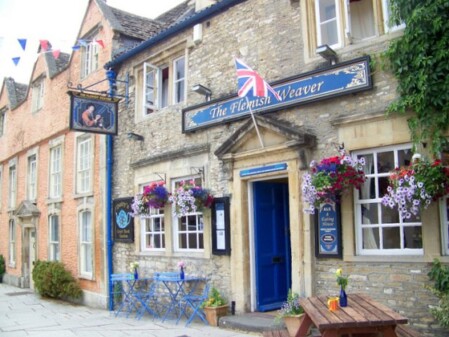
The Flemish Weaver
An English Navy
By the time of The Tudor monarchs, most of the lands held by British monarchs had been lost and there was more focus on developing the defences of Britain. Henry VIII established the basis of a national navy by founding Trinity House, the forerunner of the Admiralty, and extended the royal dockyards and encouraged the construction of faster ships with superior firepower.
Elizabethan encouragement of empire
By the time of Elizabeth, England had the means to send ships overseas to far away destinations to challenge the power of the Spanish in the Americas, and to plant settlements. Elizabeth encouraged maritime expeditions under the leadership of captains like Raleigh, Drake and Hawkins to explore and plunder. Expeditions by Frobisher explored the African coast, the Levant and Canada. Humphrey Gilbert explored Newfoundland, and Drake sailed around the world.
In March 1584, Elizabeth I gave Walter Raleigh a charter to form a colony in America to provide riches from the Americas and establish a base from which ships could disrupt the Spanish operations in the Caribbean. The charter outlined what was to be Raleigh’s mission: to “discover search find out and view such remote heathen and barbarous lands Countries and territories not actually possessed of any Christian Prince and inhabited by Christian people” and to “hold occupy and enjoy . . . forever all the soil of all such lands Countries and territories so to be discovered or possessed . . . ” Raleigh’s exploratory expedition (though he did not go himself) of two ships captained by Captains Amadas and Barlowe arrived on Roanoke Island, in July 1584 and made contact with local people, the Secotans and the Croatans. Two Croatan tribesmen were brought back to England to tell Raleigh all about the area Raleigh was convinced by what Captain Barlowe and the two Indians had to say about the possibility of establishing a settlement, and he then sent a second expedition of five ships, with 115 colonists.
107 men had been left behind under the command of Ralph Lane to create the first colony. They built a fort and homes and were promised that further supplies would arrive in the spring. That fleet never arrived although that summer Raleigh was able to rescue the colonists offering them passage home.
The second group of settlers set sail in 1587 and visited the colony at Roanoke but there was no-one there. The area was deserted. The new group decided to stay on at Roanoke to establish a settlement, but they soon discovered that relations with the local people had not been good. Some of the new group of settlers decided it was too dangerous to stay on and persuaded the Governor of the expedition, John White, to allow them to return and ask for help. 115 colonists remained behind.
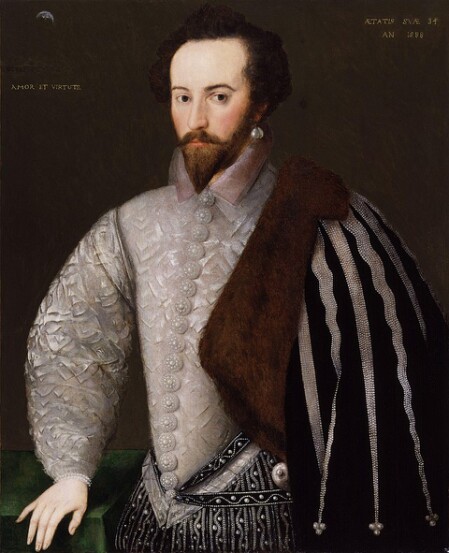
Sir Walter Raleigh
Attempts to found English settlements in America
It is thought that the settlers may have survived until 1607 and then were killed by a large raiding party led by the Powhatan chief, Wahunsonacock, who feared that the settlers might link up with the Jamestown settlers who arrived in 1607.It is possible that a few of the settlers survived the attack and found refuge with the Tuscarora on the Roanoke River and that there were survivors from the settlers who went to live on Croaton Island. The project to found a colony in America had failed but it had captured the public’s imagination. Raleigh had named the colony Virginia after his Queen but it would be another seventeen years before that happened.
The fate of the colony
Seafarers like Raleigh and Drake were venturing across the Atlantic to attack Spanish gold ships. They had the advantage of having faster and better armed ships so plunder was possible. Such voyages were privately funded so attempts to establish settlements did not have the capital to fully support settlers over a number of years but with the support of Parliament and of English investors, it would not be long before a successful attempt was made. Raleigh spoke of the gold and riches to be found. The public’s excitement was illustrated by a new London play, Eastward Ho, performed in 1605, in which the character spoke of dripping pans an chamber pots made of gold and how all the prisoners who we taken wee fettered in gold. The idea of migration was not new as there was a tradition of farm labourers, craftsmen and domestic servants moving around the country looking for work and being hired at the great hiring fairs. London was the great magnet that attracted migrants from all over the country as well as from Europe.The first attempt to found an English colony in the Americas had failed but it would not be long before there was a more successful attempt - in 1607 during the reign of James I.
By Peter Crowhurst, March 2024