



Lord Roberts
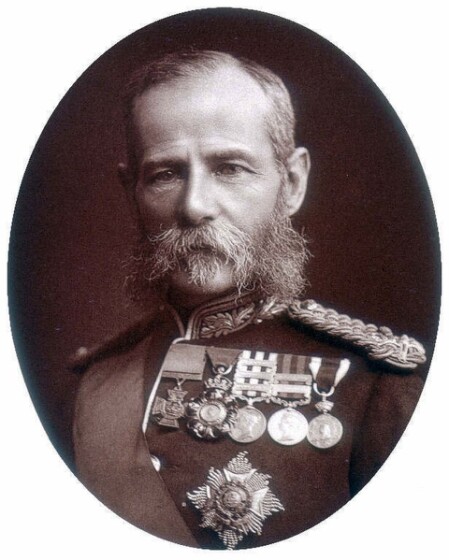
Winning the VC at Lucknow
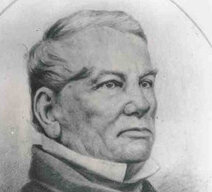
Lord Roberts was a British Field Marshall, the son of a General who for more than fifty years, served with the Indian Army. He was born in Cawnpore and subsequently educated at Clifton College, Eton and Sandhurst and Addiscombe. He entered the Bengal Army in 1851 and served throughout the Indian Rebellion. He was present during the siege of Delhi and took an active part in the operations leading to the relief of Lucknow. For which he was awarded the Victory Cross for courage.
He distinguished himself during Napier’s campaign in Ethiopia during which he was assistant quarter-master general and he retained this position during the Lushai expeditions (1871-72). He was mainly concerned with the defence of India, convinced of the danger to India from an expansionist Russian empire that he believed threatened India’s north west frontier and the passes from Afghanistan into India.
By 1878 he had been promoted to major-general and in the opening moves of the Second Afghan War, Roberts commanded a force that took control of a strategic pass at Peiwar Kotul in November 1878 for which he was made K.C.B. Following the murder of Cavagnari , the British representative in Kabul, and other member of his mission, Roberts commanded a force that defeated the Afghans at Charasia and took possession of Kabul and assumed the government. The existing Amir, Yakub Khan, was sent as a prisoner to India, and Abdul Rahman was proclaimed Amir. Meanwhile the Governor of Herat had stirred up anti-British feeling and with a large force of men defeated the British General Burrows at the Battle of Maiwand. Burrows was forced to retreat to Kandahar where he remained besieged.
The Relief of Kandahar
In August 1880 Roberts led a force of 10,000 men in a three week march through the mountains to Kandahar, where he inflicted a heavy defeat on the Afghans led by Ayub Khan, and relieved the besieged garrison.
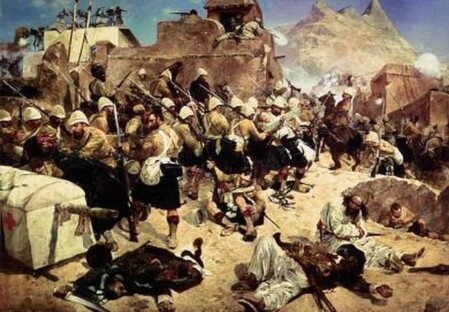
The 92nd Highlanders at Kandahar
Created Lord Roberts of Kandahar and Waterford
In 1881 Roberts, now a baronet, was appointed commander-in-chief of the Madras army, and then four years later was promoted to be commander-in-chief in India, a position he held until 1893 when he became commander-in-chief of Ireland. He was created Lord Roberts of Kandahar and Waterford in 1892.
The Boer War
After the early heavy defeats of the Boer War in 1899, especially the three defeats in Black Week in December, Buller was relieved of his command and Roberts was sent to South Africa. Roberts was widely popular and seen as a national hero who would rescue British pride and end the war speedily. Arriving in February 1900 Roberts was short of horses but determined to use speed and enterprise. In his first action he cornered a Boer army under General Cronje and inflicted the first major defeat of a Boer force in February at Paardeberg.
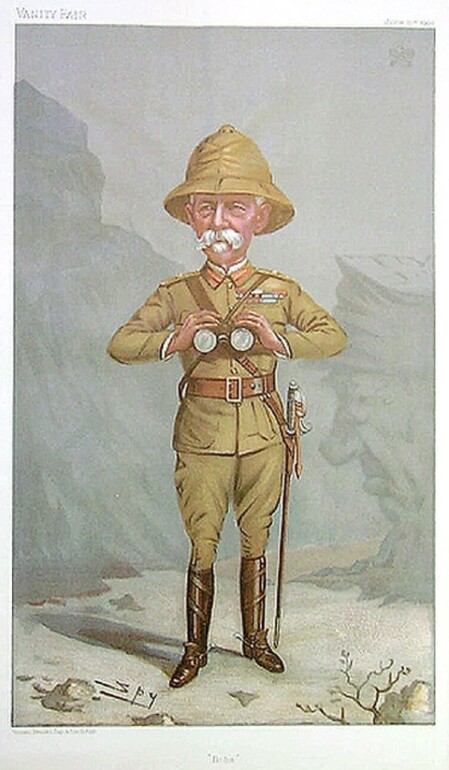
Commander-in-Chief of the British Army
With additional troops, including forces from Canada,
Australia and New Zealand, and aided by Kitchener, Roberts launched his ‘March
on Pretoria’ sweeping through the Transvaal, taking Bloemfontein (March),
Johannesburg (May) and Pretoria (June) before returning to London . In January
1901 he was appointed Commander-in-Chief of the British Army on Wolseley’s retirement
before he himself retired in February 1904 when the post was abolished. Roberts continued to campaign
in favour of compulsory military service. He died in November 1914 at St-Omer,
on his way to inspect the troops on the Western Front.