



Governor Macquarie's Governorship
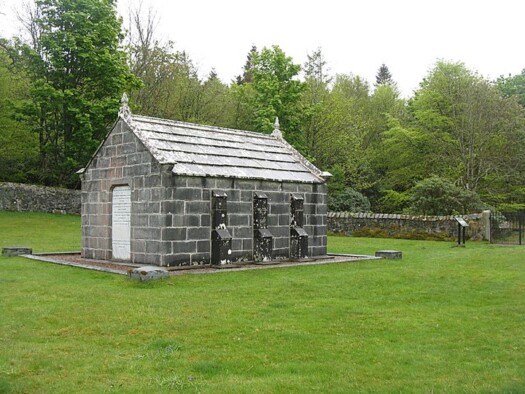
Lachlan Macquarie's mausoleum near Gruline on the Island of Mull
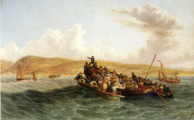
Setting sail from Portsmouth
On 22 May 1809 Lachlan Macquarie set sail from Portsmouth on
HMS Dromedary to take over as Governor of New South Wales from the outgoing
governor, William Bligh following a mutiny of the New South Wales corps. He
arrived in Sydney Cove on 28 December 1809, the first army officer to take up
this position, the role previously having been filled by naval officers. The
mutiny had been led by John Macarthur and Macquarie’s first job was to deal
with the mutineers is such a way as to demonstrate who was in charge of the
colony and yet not to incite further insurrection.
His opening address
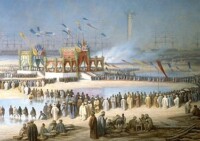
In his opening address on New Year’s Day 1810, which was
part of the swearing-in ceremony, Macquarie expressed the view that there could be more harmony amongst all
classes living in the colony. He proceeded over the following days to take
action to reconcile the leaders of the mutiny to his governorship by
reinstating officers removed from their posts by Bligh. Macquarie also revoked
all the pardons, leases and grants of land made by the rebels however he soon
cancelled these orders when he was deluged with petitions from those affected.
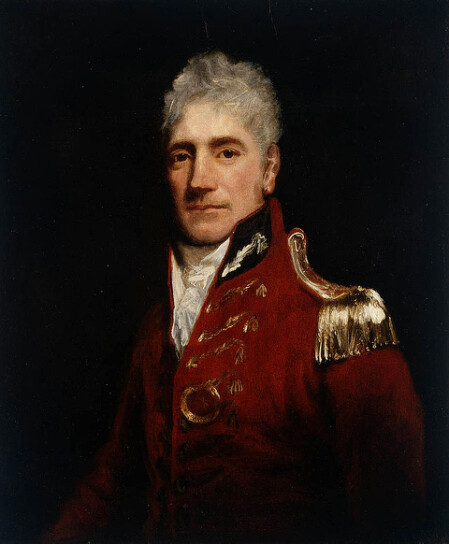
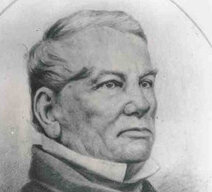
Governor Lachlan Macquarie
His first year
In his first year as governor, Macquarie set about developing the Sydney community so that it looked and felt more like an urban town with attractive buildings and parks. He also adopted the economic institutions he deemed necessary to meet he needs of a growing economy.
Macquarie himself introduced a plan for a new street layout which transformed Sydney, Paramatta and the new townships. He had a new barracks constructed, completed by the end of 1810, which provided far more comfortable accommodation for the colony’s soldiers, and he also had a new road built to Parramatta which opened in April 1811
He arranged for the funding of a new hospital by giving the builder a limited monopoly on imported spirits. A new market place was opened in Sydney in October 1810 and the first public fair took place in Parramatta in 1813. To encourage more trade, a coinage system was introduced in 1813 and this was followed by the creation of the colony’s bank in 1816.
Macquarie was less successful though in getting farmers ti
improve their production with the result that
there cycles of famine and plenty
continued. At the end of his first year as governor Macquarie set out on a tour
of the new towns established in the outlying parts of the colony. He continued
to encourage the development of new towns by choosing possible sites for
construction.
Following the opening up of the land beyond the Blue Mountains,
Macquarie selected the site for the town of Bathurst. On a tour of the
settlement of Hobart on present day Tasmania, Macquarie was appalled by the
primitive nature of the settlement that he ordered the government surveyor,
James Meehan, to produce plans for a permanent street layout. By the time he
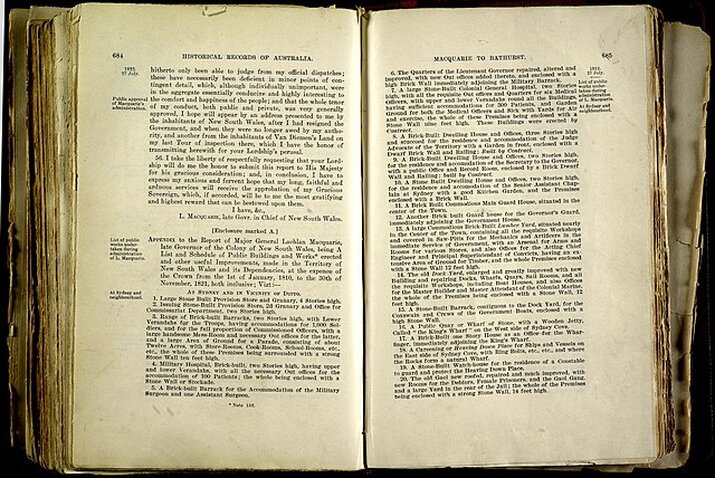
returned home to England Macquarie could claim that 265 public works had been
carried out.
<
>
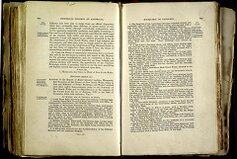
Macquarie's own record of his projects
He tied to improve morals
As well as improving the infrastructure of New South Wales, Macquarie tried to improve the morals of the inhabitants under his authority. He denounced cohabitation outside marriage and constables were used to enforce laws against breaking the Sabbath. He introduced a regular church parade on Sundays for convicts and he tightened up the licensing regulations reducing the number of public houses to just twenty.
Macquarie believed that the future success of the colony depended on how he treated convicts. He sought to reform convicts and encourage them to live a law-abiding Christian life. Once convicts showed that they were willing to reform they were rewarded by being admitted into society. Many of these ‘emancipists’ rose to prominence in their chosen profession, much to the anger of those colonists who believed that convicts deserved no such treatment. Francis Greenway was an example of a convict who having served his time and then stayed on in the colony became a prominent architect whilst Dr William Redfern was a former convict who became the colonial surgeon and Andrew Thompson became a magistrate.
The Exclusionists
There existed a number of people within the colony who
opposed Macquarie’s policy of integrating former convicts to the settlement.
They were called ‘The Exclusionists’ and they were so outraged at Macquarie’s
reforms they refused to work alongside any
‘emancipists’. Such a man was the Reverend Samuel Marsden who refused to work
alongside ‘emancipist’ justices. Jeffrey Hart Best, a judge of the Supreme
Court, kept his court closed rather than allow ‘emancipists’ to work as attorneys alongside him. Macquarie was
supported by the London government led
by Lord Liverpool and Marsden was recalled to England in 1818.
Macquarie’s attitude to aborigines reflected his
humanitarian attitude although he remained an autocrat and was always willing
to use military force to achieve his goals. On arrival in Sydney, Macquarie had
expressed the wish that the native people be treated with kindness and respect
and for the first four years he had ne need to resort to using force.
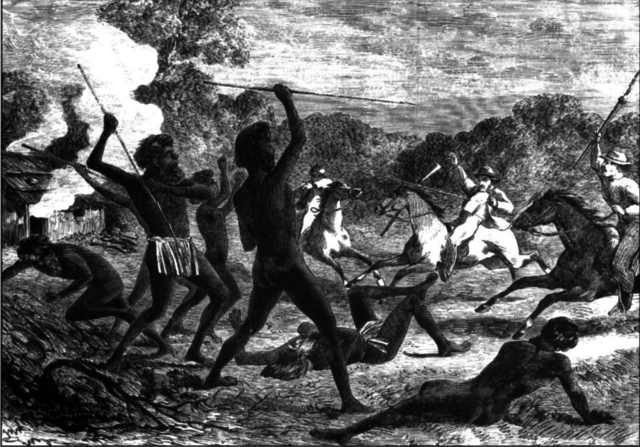
Aborigines fighting against European invaders
A conference with aborigines
To improve relations between the Aborigines and the settler population, Macquarie organised a conference at Parramatta in 1814 and then opened an institution for the education of native children. Macquarie began to bestow medals, titles and gifts on Aborigines but this attempt to gain their loyalty and ultimately to anglicise Aborigines failed completely.
When Aborigines showed a reluctance to show gratitude for what the British believed they were doing for them and instead began to resent British efforts to civilise them, Macquarie ordered the mobilisation of the military to punish Aborigines deemed to be troublemakers or dissidents. Many were thrown off their land and the military was authorised to shoot on sight and then hang up dead bodies on trees as an example to those who resisted the British.
Macquarie’s family was always very important to him and although he had much success in the first years of the governorship, nothing gave him more pleasure than the birth of his son, after six miscarriages, on March 28, 1818. He noted that this event made his happiness on earth complete. It certainly gave him the support he needed in the second part of his governorship, a period of six years during which he began to have his policies questioned and his authority undermined.
In 1816 there had been violence at Silverdale between
settlers and Aborigines. This was followed by a massacre of at least 14 men,
women and children in Appin during a punitive expedition led by Captain John
Wallis and ordered by Macquarie against the Gundungurra and Dharawal people.
Wallis’s force of 33 grenadiers, on 17 April 1816 drove men, women and children over a cliff where they met
their deaths. Wallis was rewarded by being promoted to become Commander of the
Newcastle convict settlement.
Hostilities between settlers and Aborigines continued. In
1818 in the Minnamurra River area, local
settlers attacked and killed at least six members of the Wodiwodi people camped
on the banks of the river on the pretext that they were retrieving two muskets
lent to a group of Aboriginal people living on the river. Macquarie now announced that native people needed
a passport to enter settler areas and he began to issue search and destroy
warrants. Using such tactics, Macquarie managed to reduce the level of violence
for the rest of his time in new South Wales.
What satisfaction Macquarie could claim for his
administration of the colony was balanced by the growing criticism of his
governorship, particularly from the Secretary of the Colonies for the way he
handled the seizure of the American schooner, Traveller. This came at a
time when Macquarie had submitted his resignation, following eight years’
service, which at first was rejected. Macquarie now found himself under
criticism from a judge, John Brigge, appointed by Bathurst.
Bigge was critical of the social reforms of Macquarie, and
particularly his public works policy and his policy of reforming convicts.
Bigge found the public works scheme expensive and claimed that if the convicts
were used as cheap labour, government expenditure could be reduced. The policy
of appointing former convicts to high position in the administration was a
particular target of Bigge’s.
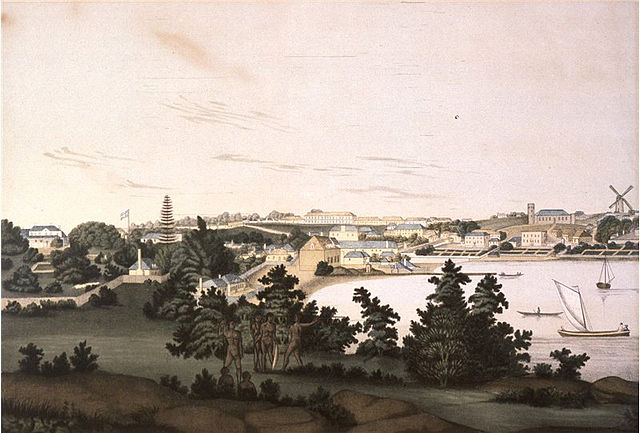
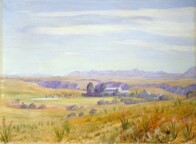
Sydney 1810 by John Eyre
Return to Scotland
At the end of 1820 Macquarie’s third resignation was accepted although he was not able to leave New South Wales until 12 February 1822, arriving at Deptford on 5 July. A report by Bigge on Macquarie’s governorship, had already been delivered to the House of Commons for debate, however Macquarie quickly produced his own report into his governorship and arranged to meet Bathurst who assured him of the King’s gratitude for his work. Macquarie was received by King George IV on 5 August, the same day as Bigge’s report was tabled for debate in the House of Commons.
Macquarie by now had had enough of London and returned home to Scotland, from where he travelled to Switzerland with his wife who was in poor health, and his son. When he returned to London it was to begin his defence against Bigge’s accusations, and to save his reputation and his pension. Macquarie presented a 43 page commentary on his administration in October 1823 although the government needed a lot of persuading to publish the commentary as a parliamentary paper.
Macquarie continued to fight the accusations made by Bigge throughout 1824. He was £500 in debt to his bankers and his hopes of building a castle on his estate had faded. Instead, he had to make do with a small house that was dark and damp. His pension became ever more urgent and he must have been gratified to hear from Bathurst personally that he would receive a pension of £1,000. He prepared to set off for Scotland but then fell ill and on 1 July died at his lodgings.
Macquarie is remembered today for his policy of reform and for being one of the most enlightened and progressive of governors. However, in recent years his repressive policy towards the Aborigines has received much attention and the details of the violence which he authorised has tarnished his reputation as a reformist governor. A lasting legacy of his though will be the naming of ‘Australia’, a term which he first used in 1817.