


British MPs from an Ethnic Minority
The most ethnically diverse House of Commons
The General Election of 2019 produced the most ethnically diverse House of Commons in British history with 65 of 650 MPs said to be from an ethnic minority. When Boris Johnson became Prime Minister, he selected the most ethnically diverse Cabinet the UK has ever had which included Sajid Javid, Priti Patel, Alok Sharma, Rishi Sunak, James Cleverley and Kwasi Kwarteng. Previously there had been just five Ministers from an ethnic minority. They were Paul Boateng, Chief Secretary to the Treasury under Tony Blair, Valerie Amos, International Development Secretary and Leader of the House of Lords under Tony Blair, Sayeeda Warsi, Minister without portfolio under David Cameron, Sajid Javid, Secretary of state for culture, media and sport and Secretary of State for Business, Innovation and Skills under David Cameron, as well as Secretary of State for Housing, Communities and Local Government and Home Secretary under Theresa May, and Priti Patel, Secretary of State for International Development under Theresa May.
General Election 1987
In October 2922, Richi Sunak became the the first person of south Asian heritage and the first person from an ethnic minority to become Prime Minister. The House of Commons with just 65MPs out of 650 from an ethnic minority may not yet represent the diversity of the population as a whole, but Sunak’s appointment marks an historic moment in British history.
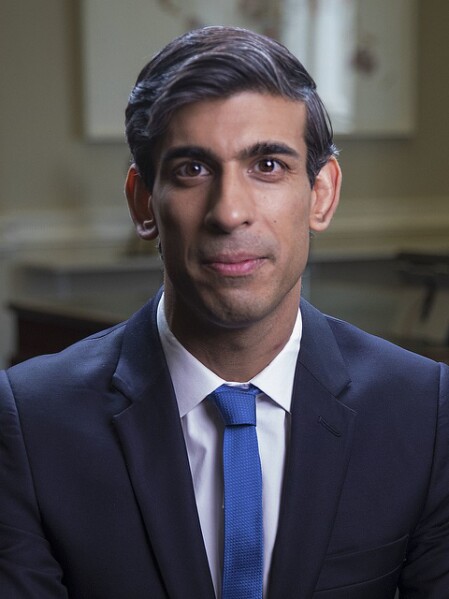
Richi Sunak
It was the General Election of 1987 when the first MPs from an ethnic minority were elected when four MPS from an ethnic minority were chosen. They were though not the first to be elected in the history of the House of Commons. History books normally refer to Dababhai Naoroji as the first MP from an ethnic minority in 1892 or sometimes David Ochterlony Dyce Sombre in 1841.
James Townshend- the first MP from an ethnic minority?
The House of Commons Library recently (October 2020) produced a piece of research in which they listed a number of other MPs from an ethnic minority who have been hidden from history. Several of these were the sons of slaveholders or of enslaved women. The list is not a definitive one: family records were often incomplete and as ethnicity is self-defined and not recorded on official documents, historians often rely on what they can find out about family origin to determine ethnicity. What is often not known is how these MPs identified.
It is thought that the first MP from an ethnic minority was James Townshend who was elected in 1767 for West Looe. Townshend had a British grandfather who worked for the Royal African Company and a grandmother of African descent who also enslaved people. Their daughter Bridget moved to Britain and had ten children, one of whom was James Townshend.
Richard Beckford
Following Townshend
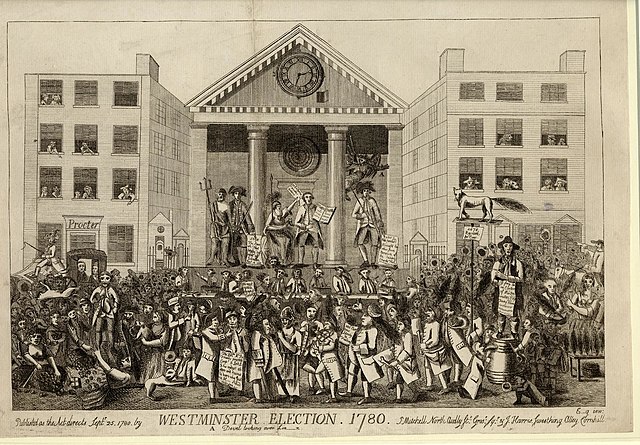
was Richard Beckford who was elected for Bridport in 1780. Beckford was the son
of a plantation owner and an enslaved Jamaican woman. His father was one of the
largest plantation owners in Jamaica. He was one of seven known illegitimate children
of his father Alderman Beckford, and the only one to enter public life. He
contested his father’s will with his half-brother but was not successful, so he
did not have the family patronage to help him enter Parliament. He was subsequently,
with the support of the Duke of Norfolk, MP for Arundel, 1784-1790 and then
Leominster, 1791-96.
John Stewart, Charles Cecil Martyn, David Ochterlony Dyce Sombre and Henry Redhead Yorke
In 1832, John
Stewart, who is thought to have had a mixed ethnic background, was elected for
Lymington. Ten years later, in 1841, three MPS were elected although two of
them did not last long as MPs. Charles Cecil Martyn whose mother is thought to
be of Indian origin was elected for Southampton, but the election was annulled on
the ground of bribery. Another who lost his seat due to alleged corruption was
David Ochterlony Dyce Sombre who was elected for Sudbury but lost his seat the
following year. Another elected in 1841 was Henry Redhead Yorke, the grandson of an
Antigua plantation owner, possibly of Creole-British descent, and a freed
enslaved woman from Barbuda. Yorke was elected for York in 1841 and then
re-elected in 1847. He died in 1848 having committed suicide by taking a dose
of cyanide in Regent’s Park.
Peter McLagan
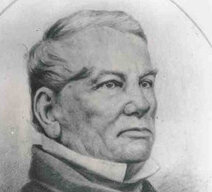
Peter McLagan was Scotland’s first non-white and first black MP. He was MP for Linlithgow between 1865 and 1893. He was born in British Guiana in 1823. His father was Peter McLagan, a plantation owner, who received over £21,000 with his business partner as compensation following the end of slavery in the British Empire. His mother was an unknown black woman. Peter McLagan left British Guinea when he was a child and was educated in Scotland attending university in Edinburgh. He was elected as an MP for Linlithgow at the 1865 General Election and then re-elected at the next six elections. As an MP he supported Women’s Suffrage, Irish Home Rule, and the campaign for women doctors.
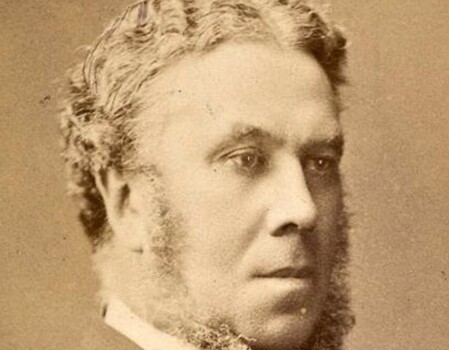
Peter McLagan
Dadabhai Naoriji
Dadabhai Naoroji is perhaps
the most well-known of this group of MPs. He was born in 1825 in Navsari, India
into a Parsi family living in Bombay. He was an Indian political leader, who
helped to set up the Indian National Congress. A Professor of Mathematics, a
Liberal Party MP representing Finsbury Central 1892-1895, a reformist writer
whose book Poverty and Un-British Rule in India focused attention on the
wealth drain from India to Britain. Naoriji travelled to England in 1855
becoming a partner in Cama Co, the fist
Indian company established in Britain. In 1859 he set up his own cotton trading
company. He became Professor of Gujerati at University College, London and
campaigned to open up the Indian Civil Service for Indians, which was granted
in 1870.
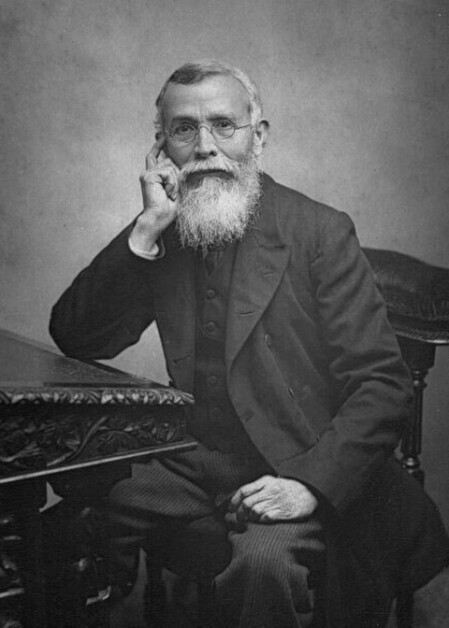
Naoriji at the time of his election to the House of Commons
Back in India, he soon became actively involved in encouraging the discussion of Indian social, political, and literary topics establishing the East India Association to promote an Indian viewpoint to the British public. He served a Prime Minister of Baroda and was involved in the creation of the Indian National Congress, becoming President of the Congress a number of times.
He returned to England in the mid-1880s and was chosen to fight Holborn for the Liberals in 1886. He lost the election but managed to win the selection battle for the Central Finsbury constituency, intent on getting into parliament where he could speak on Indian matters and gain the support of leading politicians, something that he could not do in India.
Naoroji espoused many radical and unfashionable causes, including the granting of the vote to women, and he became the first Indian member of a Royal Commission. He was ousted at the 1895 election and retired to India in 1907.
Mancherjee Bhownaggee
After Naoroji there were a number of MPS from an ethnic minority background. At the 1895 General Election, won by a Conservative landslide, Mancherjee Bhownaggree won the Bethnal Green North East constituency as a person of Parsi heritage. Bhownaggree was the head of the Parsi organisation in Europe. He was a
supporter of British rule in India during his time in the House of Commons and
opposed any move towards home rule. He campaigned against the discrimination against
Indians in South Africa and other territories. He wrote a detailed report on
the position of Indians in the Transval which the Colonial Secretary, Lord Lyttleton
found difficulty in criticising. He was the longest-serving British Asian MP until Keith Vaz (1987-2019).
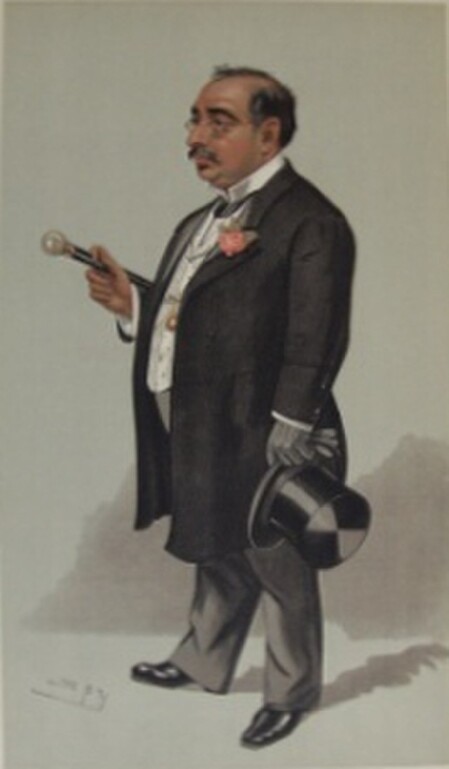
Mancherjee Bhownaggree
Ernest Soares
Ernest Soares was the son of Jose Xavier Soares, a Liverpool merchant of Indian descent who could trace his roots to Goa, India and Hannah Hollingsworth of Liverpool. He was educated at St Johns, Cambridge taking a degree in law after which he joined a firm of solicitors in Manchester. He was elected to represent Barnstaple, in Devon, in the House of Commons in 1900 and served in Asquith’s Liberal government as a Junior Lord of the Treasury from 1910-1911. Poor health forced him to resign in 1911 after which he was given a knighthood.
Shapurji Saklatvala
Shapurji Saklatvala was the first person of Asian heritage to become an
MP for the Labour Party. he was also one of the few MPs who represented the
Communist party of Great Britain in the House of Commons. He was educated at St
Xavier’s School and College in Bombay before joining Tata to work as a coal and
iron prospector. Poor health, largely caused by malaria, forced him to travel
to England where he ran Tata’s Manchester’s office. He entered the legal
profession but left before he qualified as a barrister.
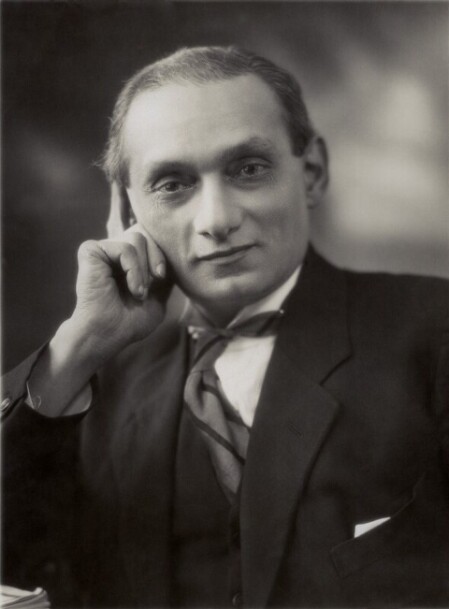
Shapurji Saklatvala
Saklatvala was a committed socialist and joined the Independent Labour party (ILP) in 1909. He was inspired by the Russian Bolshevik Revolution and tried to get the ILP to affiliate with the Communist International When this failed Saklatvala left the ILP to join the new Communist Party of Great Britain. In the October 1922 general Election Saklatvala stood for the Communis Party of Great Britain (with the support of the Labour Party) in Battersea North and won by 2,000 votes. At the November 1923 General Election, Saklatvala stood again in Battersea North with the support of the Labour Party but failed to retain his seat. He stood again in the 1924 General Election, this time without official labour Party support, and won the election by just 544 votes, the only member of the CPGB to be elected to the House of Commons.
In 1926 Saklatvala was imprisoned for two months for sedition, following a speech he made during the General Strike. He was also active within the League against Imperialism at this time. Saklatvala failed to retain his Battersea North seat in 1929 and he was to lose all the remaining campaigns he fought to enter the House of Commons.
PJ Crowhurst
December 2022