




Talks
You will find here details of the talks I am currently offering. Each talk last about an hour and consists of an illustrated powerpoint presentation. I am happy, given sufficient advance warning, to prepare a talk on every topic that lies within the scope of this website. I am currently preparing a talk on Ranjitsinhj, the Indian cricketer who became the Jam Sahib of Nawanagar in 1907 and continued to rule the this independent state on the west coast of India until his death in 1933.
Kipling's Rottingdean Years
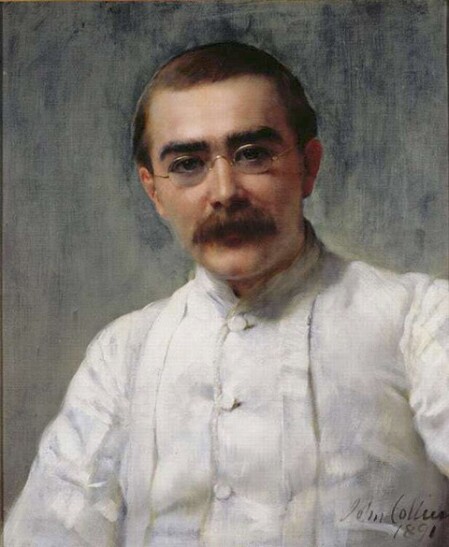
Rudyard Kipling lived in Rottingdean, a small village just four miles from Brighton, for only five years but they were to be years that had a huge impact on his life, his writings and how he was perceived. Kipling and his wife Carrie moved at the age of 32 with their young family initially to the holiday home of his aunt, Geogiana Burne-Jones, but then to a more permanent home across the village green (The Elms). For the next five years the family were to experience joy but also great sadness. The family began to set down roots and establish a sense of place but the death of Josephine in America in March 1899 and the onset of the Boer War changed Kipling. He became a sadder and a harder person, difficult for others to reach and understand. He produced some outstanding work like ‘Kim’ that was praised by the critics but also began to produce work that reflected his journey into politics. This talk uses Kipling's work to reflect his time both in Rottingdean and South Africa between 1897 and 1902. For more on Kipling click here

General Garnet Wolseley
General Wolseley was the archetypal Victorian Imperial General. He was present at some of the most important wars of the imperial century and rose from relatively humble origins to become Commander-in-Chief of the British army at the time of the Boer War. He oversaw some major reforms of the army bringing it up to date and enabling it to fight a number of colonial wars in conditions totally unsuitable for European soldiers. He believed passionately in Britain's mission to civilise having witnessed the Cawnpore massacre and was at all time concerned for the welfare of his men.
Wolseley was commander of the British force that defeated an Egyptian force at Tel-el-Kebir which led to Britain regarding the Near East as crucial to its interests. He also led the Gordon relief expedition which failed by one day to rescue General Gordon. His victory over the Ashanti was reported widely in Britain and was one of many such expeditions to be regarded by the British as the victory of a Christian country over a savage people needing to be civilised. Was he the greatest Victorian general? This is just one of the questions to be answered in an assessment of Wolseley's career which draws on many of the letters he wrote to his wife, Louisa. For more on Wolsely click here
Cecil Rhodes
It was Cecil Rhodes who believed that: "we are the finest race in the world, and that the more of the world we inhabit, the better it is for the human race'. Just fancy: those parts that are at present inhabited by the most despicable specimens if human beings, what an alteration there would be if they were brought under Anglo-a plan devised by and for capitalists which planned to solve the nation's labour difficulties by confining rural Africans to tribal reserves and imposing a tax on every hut. To survive Africans had to enter the cash economy and sell their labour to whites. Together with these changes Rhodes imposed apartheid in the towns. Non-whites now experienced segregation in schools, prisons, hospitals, theatres and on public transport. They were disqualified from jury service and removed in their thousands form the electoral rolls. This talk explains Rhodes' rise to power in South Africa, his attempt to overthrow the Boer leader, Kruger, and his role in the Boer War. Rhodes was a giant of the Empire and although his views are now distasteful, he was regarded as a great Imperialist at the end of the c19th. For more on Rhodes click here

Cecil Rhodes

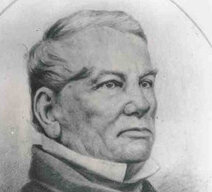
It was Lord Kitchener, here, who introduced the burning of farms and the internment of Boer families.
The Boer War
This talk takes you through the main causes and events of the Second Boer War 1899-1902 which shook the British Empire to the core and was responsible for the British abandoning its policy of splendid isolation that had been the basis of British Foreign Policy for much of the c19th.
The causes have been much debated. Was this a war about capitalism and fought for the interests of the Randlords who ran the gold industry on the Witwatersrand or was this a war about who was to control the tip of south Africa? Salisbury said the war was to teach the Boers who was boss. Was it, or was this a war to extend the dominance of the Anglo- For a whole section on the Boer War, click here
Olaf Caroe
Olaf Caroe was born in 1892 was the grandson of a Danish immigrant. He became one of the great civil servants of the British Empire joining the Indian Civil Service as an Assistant Commissioner and rising to the highest levels of the service becoming Foreign Secretary to the Indian government and then Governor of the North West Frontier Province. During his time in India he was the epitome of an India Civil Service officer in the first half of the c20th, a time when the Empire was at its height, but also displaying signs of imminent decline. Caroe had all the values, virtues and qualities required of an officer, especially one serving on the North West Frontier. He rose to the challenge of serving as an Assistant Commissioner and dealing with the Pathan tribes of the frontier but then reached the pinnacle of his career in 1946 becoming Governor of the North West Frontier. The North West Province during the tine of Caroe’s tenure as Governor was pivotal to the outcome of the ‘independence talks’ and in the end, despite what Caroe considered was his good record as Governor, Mountbatten relieved Caroe of his post in order to appease Nehru. The Governorship of the North West Province was Caroe’s last official role as a public citizen. Hence forth in retirement, as a private citizen, he devoted his time to trying to convince governments of the logic of his view on the importance of the area he had spent a lifetime of work in. This talk traces Caroe's life from his time as a junior civil servant in India in the 1920s to his time in retirement in Steyning when he became one of the county's experts on 'The Great Game'.

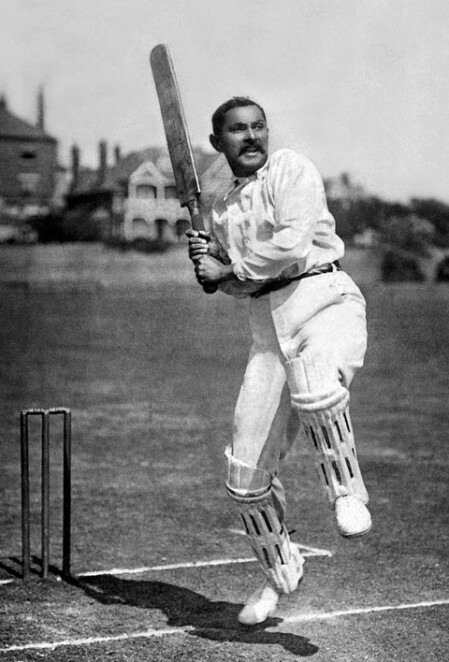
Ranjitsinhji - the Maharaja Jam Saheb of Nawanagar
Ranji was one of cricket’s most important figures. He became the first non-white to play for England in 1896 and became a cricketing celebrity. He discovered early in his career how important it was to court friendships in high places and the need to entertain lavishly and be generous. This extravagant lifestyle won him many friends but was unsustainable in the long term although his inability to pay for his hospitality eventually turned friends against him. Ranji’s success at cricket and his extravagant lifestyle though were to enable him to build up the support he needed from the British to become Jam Saheb or ruler of his native state of Nawanagar. At a very early age, Ranji had become a provisional heir to the gaddi or throne of Nawanagar. The rest of his life then became a preparation for the time when he could claim the throne. With the support of the British, Ranji eventually became Jam Saheb of Nawanagar and assumed the responsibility of ruling a Princely state. Ranji however used his new power and funds to support his life as an English gentleman, a life that he had come to enjoy. New palaces were built and new homes bought in England and Ireland. Despite his responsibilities for his people, Ranji preferred the lifestyle of an English lord in Ireland. This talk examines the role that Ranji played as an independent prince in India, his relationship with the British and how he saw himself.
Non-British Empire Talks

North Laine c1850
The Historical Development of North Laine, Brighton
Ruff's print of North Laine c1850, right, shows the area as a mix of residential, industrial and commercial buildings. It had become Brighton's industrial suburb and would remain so until industry and residential accommodation began to move out of the centre to new larger premises on the edges of the town from the 1920s. Seen in Ruff's image are St Peter's Church, Brighton Station, Evershed's soapworks to the east of the station, Butts & Sons timber yards in Trafalgar Lane and the Regent Iron and Brass Foundry in Foundry St.
Not visible are the numerous other commercial and industrial premises which included many slaughter houses, malthouses, breweries, stables, ginger beer and mineral factories, bone mills etc. The area is Brighjon’s industrial and commercial centre. It is where water is used to make beer, ginger beer and mineral water. Where animals brought into Brighton either by train or on foot are slaughtered in the many slaughter houses and processed in to meat, fertiliser, leather, candles. This talk traces the development from 1765 up to the present, focusing on the c19th development of the area as Brighton's industrial suburb but also dealing with the threats to the area in the 1970s and 1980s when there were Council plans to demolish much of North Laine.

The Drill Hall for the Artillery Volunteers
The Buildings and People of North Laine
In 1977 North Laine became a Conservation Area because much of the original mid c19th townscape remained intact, and the area was a good example of what a mixed use industrial, commercial and residential Victorian area looked like. Many of the historical buildings of the mid to late c19th remain, including warehouses, drill halls, breweries, slipper baths, chapels, and although mid Victorian slum areas have been cleared the street layout is still there to be seen. North Laine has always been a residential community above all else, and in this talk I will talk about people like Denis Hobden, Peggy Ramsay, William Moon, Tom Sayers, James Hannington, Anita Roddick, William Shelton, Violet Kaye and William Kebbell.