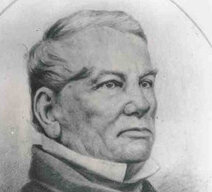





Sir Ralph Darling
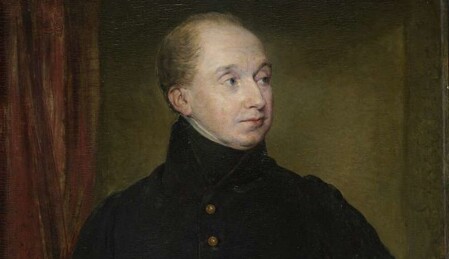
An illustrious military and civil career
Sir Ralph Darling was a British military officer who
had an illustrious career in the army
before taking on the civil role of Governor of New South Wales 1825-1831. He
had entered the army as an enlisted man and rose to Deputy Adjutant General. As
Governor of New South Wales, Darling introduced many improvements to the
machinery of the colonial government, including well needed monetary and
banking reforms but he found it difficult to move away from the authoritarian mode
of rule that he was used to in the army.
Darling was born in Ireland in 1772, the eldest of
three sons of Christopher Darling, a sergeant in the 45th Regiment
of Foot, who went on to become adjutant of the 45th. At the age of
14, Darling enlisted as a private in his father’s regiment and served in the
ranks on garrison duty in the West Indies for two years. In 1793, after seven years in the army, Darling was
given an officer’s commission as an
ensign in the 45th and continued to serve in the West Indies until
1802. He was promoted to captain in 1796 and became military secretary to Sir
Ralph Abercromby, the British Commander-in-Chief West Indies. Darling excelled
at his new administrative duties and on the front line, and he continued to
receive rapid promotions, despite his humble origins. Darling had not paid for
a commission unlike most officers, but he had benefitted from a tradition that
saw the sons of existing soldiers gain commissions.
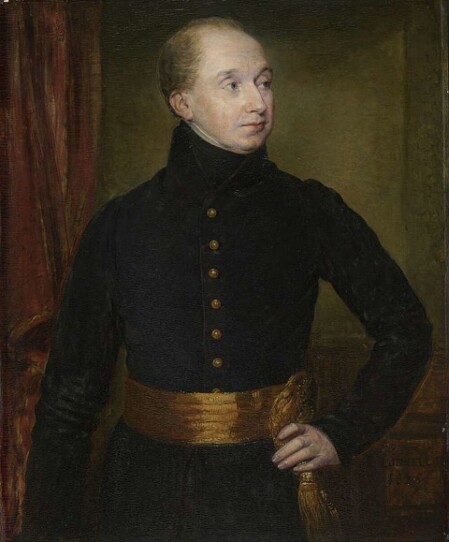
Sir Ralph Darling
Rapid promotions
Darling was promoted to major in 1800 and then lieutenant-colonel in 1801. He held a number of staff posts in London over the following years, including serving as senior assistant adjutant general at the Horse Guards in August 1806, before seeing action at the Battle of Corunna, Spain, in 1808. The following year, 1809, Darling was sent to the Netherlands as deputy adjutant general in the unsuccessful British expedition at Walcheren. Returning to London he learnt the value of hard and efficient work from his commanding officer, the Commander-in-Chief of the army, the Duke of York. Darling himself was responsible for sending to Spain 800 officers who were living on lodging allowances in Britain.
Marriage and Mauritius
In 1813 Darling was appointed to major-general and in 1814 to deputy adjutant general when he was responsible for army recruitment, discipline, and the general efficiency of the army. Being responsible for army recruitment he was able to advance the careers of his younger brothers, Henry and William and later his nephew Charles. In 1817 Darling married Eliza Dumaresq, 26 years
younger than himself and in February 1819 Darling was sent to Port Louis,
Mauritius, to take over the military government of the newly acquired colony,
his first civil position. The island had been taken from the French in 1811 and
most of the island’s European residents were French. The economy of the island
was based on the sugar industry which relied on the labour of the 70,000 negro
slaves. The slave trade using British ships had been declared illegal in 1807
but the plantation owners on the island continued to smuggle in slaves. Darling
was appointed to end this trade and to do what his predecessor had failed to
do. Darling set about his task with little consideration of the views of the
local council and the plantation owners and not for the first time he found
himself clashing with the local elites, especially after his dissolution of the
island council. In 1820 Darling’s brother-in-law, Henry, arrived in Mauritius. He had been sent by the
army but Darling quickly procured his services as military secretary. Having
family around him was to be a feature of how he governed in Mauritius and later
in New South Wales. He could trust only those really close to him.
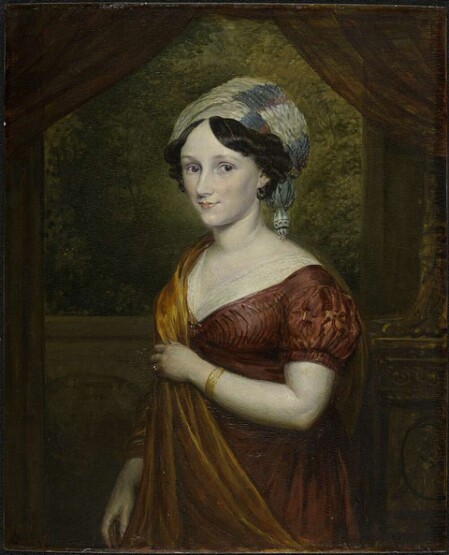
Eliza Darling
New South Wales
Although Darling may have been an unpopular governor of Mauritius, his determination, hard and work to bring about an end of the slave trade into Mauritius led to his appointment as Governor of New South Wales in 1824. Darling and his wife sailed from England aboard the Catherine Stewart Forbes in 1825, arriving in Hobart in November, where he proclaimed the separate government of Van Diemen’s Land. Reaching Sydney on 17 December he set about improving the machinery of government and defining the colony’s boundaries. Darling had brought with him from Mauritius, his brother-in-law Henry who now became his private secretary. Another of Eliza’s brother, William became Darling’s chief civil engineer.
The Family Circle
With his family around him Darling felt he was in a good position to bring about the change that he was instructed to as well as introduce other reforms of his own initiative. He did not have the power to act completely freely as he was under orders to work with a newly constituted Executive Council and the Legislative Council. He was also required to consult with the Chief justice, Sir Francis Forbes, who determined whether proposals for new legislation were legal or indeed contravened existing laws. When Forbes began to assert the rule of law, he began to criticise Darling’s autocratic methods.
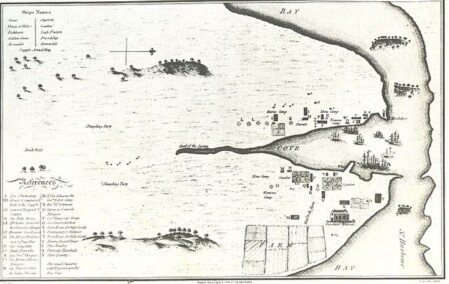
An early map of Sydney Harbour, c1790
An autocratic governor
The two men were to clash frequently as Darling was not used to have his decisions questioned. Darling resented the attempt of his critics to create a more democratic House of Assembly but hen in 1828 a new Act was passed by the metropolitan government, the legislature was enlarged, which Darling supported. Darling retained the initiative in introducing new laws, but members of the Legislative Council were able to record their dissent. The Executive Council though remained largely under the Governor’s control.
He reformed the banking system
It was in the field of money and banking that Darling had his greatest success. He imposed stricter controls over the banks following an economic depression and following a government enquiry into the misuse of funds by government officials, orders were given from London for the regular collection of all public monies. Darling was able to double the colony’s revenue and was able to fund a number of reforms and road projects without the need for additional taxation.
Settlement
Darling initiated the construction of the convict built Great North Road linking the Hawkesbury settlements near Sydney with those in the Hunter Valley. He also promoted a number of expeditions of discovery, including seeking the source of the Richmond and Swan Rivers. He extended by six degrees the colony’s western boundary and defined the boundaries of the Nineteen Counties, which were the limits of settlement. Darling’s land policy reflected the arbitrary nature
of his government. He established a Land Board soon after his arrival in
Sydney, and land was supposed to be allocated in accordance with the amount of
capital a settler had however the granting of land to the daughters of the
wealthy to be used as dowries, and to officials as a reward for loyal service,
made many enemies.
Darling had arrived in New South Wales with
instructions to assign convicts capable of reform to the settlers however the
Colonial Office gave first choice to the
Australian Agricultural Company and Darling himself used hundreds of convicts
in chain gangs on the various government works so that there was a shortage of
labour for settlers. He did create an Assignment Board to hear the complaints
of settlers but all too often those who complained about poor treatment were
often punished by having their own convict servants removed.
Darling disliked criticism and he resented attempts to
hold the Executive to account, believing that those who championed individual
liberty were likely to be subversive. When two soldiers committed theft to get
themselves discharged from the army, Darling changed their sentence of transportation to one of seven years work
on the chain gangs. The two privates, Joseph Sudds and Patrick Thompson, were
then drummed out of their regiment.
His achievements
Local newspapers then used the incident to stir up
feelings against Darling and his government. Darling responded by regulating
newspapers, empowering the courts to order banishment for a second offence. Darling’s authoritarian attitude was seen in his
refusal to allow a theatre in Sydney. He even introduced a law banning drama
unless expressly authorised by the colonial secretary. Despite his lack of tolerance for constitutional
reform and the theatre, Darling did improve the treatment of female convicts
and the education of child prisoners. He promoted the use of Christian teaching
as a means of rehabilitation and he attempted to provide protection under the
law for the Aboriginal people.
Darling left New South Wales in 1831 and returned to Britain settling in Cheltenham where the family lived until 1837. His critics in New South Wales continued to campaign for an enquiry into his actions as governor. Eventually in 1835, a select committee of the House of Commons was established to examine Darling’s conduct in New South Wales. Evidence was taken from just three witnesses and the hasty report was presented to the House and accepted on 1 September 1835.
The following day Darling was summoned by the King and knighted. He was however not to be actively employed in any military or civil role again and he spent the remainder of his life in retirement raising his young children. In 1837 the family moved from Cheltenham to Brighton where they lived until Darling’s death in 1858. In Brighton the family lived initially in Hampton Lodge, Montpelier Rd from 1837-1850 and then from 1850 until Sir Ralph's death in 1850, the family lived at 39 Brunswick Square.
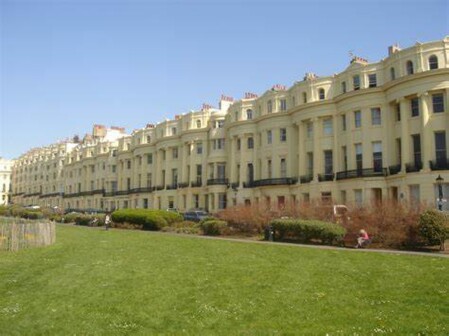
Brunswick Square, Brighton