


The Early Life of Lachlan Macquarie
Joining the army
Lachlan
Macquarie was born in 1762 on 31 January on the island of Ulva in the Inner
Hebrides. He was the son of Lachlan Macquarie, a cousin of the last chieftain
of the Macquarie clan and Margaret, the only sister of Murdoch Macquarie,
chieftain of Lochbuy in Mull. His parents had a part share in a small farm
leased from the Duke of Argyle and they were relatively quite poor.
Lachlan
might have attended the Royal High School in Edinburgh however by the time he
volunteered for the army in 1776 he had acquired a basic education. In the army
Lachlan was attached to the 84th Foot as an ensign, going to North
America with the regiment. He was initially posted to Nova Scotia and then to
New York and Charleston where the regiment undertook garrison duty. In 1781 he
was promoted to lieutenant and transferred to Jamaica. Lachlan returned to
Scotland in 1784, living on his half-pay as the regiment had been disbanded.
Three
years later in 1787 Lachlan was offered promotion as the senior lieutenant in
the 77th regiment provided he could raise fifteen soldiers. Having
achieved this he sailed for India arriving in Bombay in August 1788 where he
remained for two years during which he saw active service in the Third Mysore
War.
Macquarie
was promoted to major of a brigade of troops on the Malabar coast in 1793 and
was by now earning sufficient money to get married to Jane Jarvis, daughter of
the Chief Justice of Antigua who owned a number of plantations there. Macquarie
was now moving in high social circles which involved greater expense on his
behalf. His regiment was moved from Bombay to Calicut where his social
engagements were less frequent which allowed him to pay off the debts he had
built up.
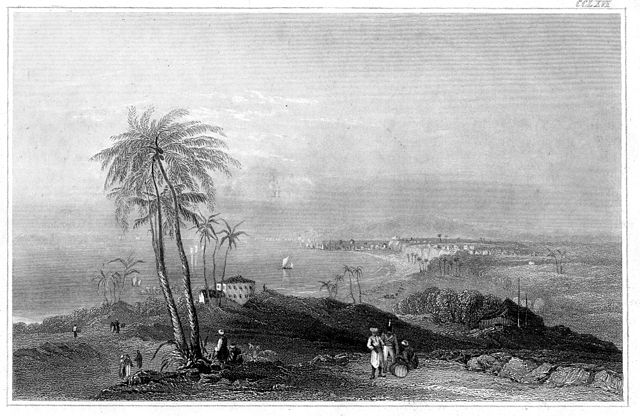
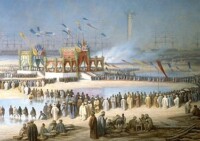
Early c19th Bombay
Macquarie
saw active service in the siege of Cochin in 1795 and was present at the
capture of Colombo and Galle in Ceylon, now Sri Lanka. He was now appointed to
the military/civil position of Governor but on hearing that his wife was ill he
returned to Calicut where she died on 15 July 1796, aged twenty four. Macquarie
now received £6,000 as part of his marriage settlement.
In
May 1797, Macquarie led troops against the forces of Pazhassi
Raja, a warrior Hindu prince and de facto head of the kingdom of Kottayam in
Malabar. Macquarie’s regiment suffered heavy losses and in revenge the British
set alight all the villages in the area. Eventually the East India Company
signed a peace treaty with Pazhassi. Shortly after this Macquarie saw action in
the Fourth Anglo-Mysore war and was present at the storming of Tipu Sultan’s
palace when a combined force of British East India Company troops,
supported by the Marathas
and the Nizam of Hyderabad defeated Tipu. He was killed on 4 May 1799 while defending his stronghold of Seringapatam.
Macquarie received £1,300 in prize money following the looting of Tipu Sultan’s
palace.
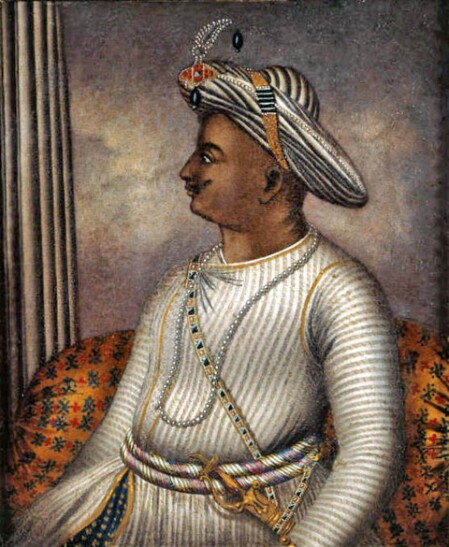
Tipu Sultan
In April 1800 Macquarie was appointed the military secretary to Governor Duncan of Bombay and this was followed by his appointment to become the deputy adjutant general of a large Anglo-Indian army sent to Egypt to expel the French. Once that had been achieved Macquarie remained behind as deputy adjutant general. During this time Macquarie met with his brother Charles who had been seriously wounded.
In 1803 Macquarie returned to England to attend urgent family business. He left Bombay on 6 January and arrived in Brighton on 7 May where he disembarked, and had a fine lunch at the Castle Inn, according to him the finest meal he had enjoyed since he had previously been in Britain. He then acquired part of the Lochbury estate which he was able to purchase with the £20,000 he had accumulated whilst on service in India. By buying the estate he hoped to establish a permanent memorial to his wife by naming the purchased estate after her.
Within a week of his return war with France broke out again
and Macquarie was appointed to serve in London as Assistant Adjutant General
under Lord Harrington. He was now a lieutenant colonel and within a week of his
appointment was being introduced to the King. Despite his social awkwardness,
Macquarie began to enjoy social life in London and it was not until June 1804
that he returned to Scotland. He dedicated his newly acquired estate to his
wife, naming it Jarvisfield and it was on this visit that he met his future
wife, Elizabeth.
Marriage to Elizabeth
Macquarie was ordered back to India in 1805 to take charge
of his old regiment, the 86th Regiment of Foot. Elizabeth promised
to wait for his return. This second period of duty in India was relatively
short for in October 1805 he learnt that he was to return to Britain to take
command of the 73rd Regiment as lieutenant-colonel. He decided to
return home via the Persian Gulf and Russia, taking diplomatic messages with
him for which he was eventually rewarded with £750 from the government. Just
over two weeks after disembarking in London he got married to Elizabeth Campbell
in Devon. The couple then travelled to Perth in Scotland as Macquarie took
command of 73rd Regiment and where, a year later, his wife gave
birth to a daughter in 1808 which died in infancy, an event the couple were
never to get over.
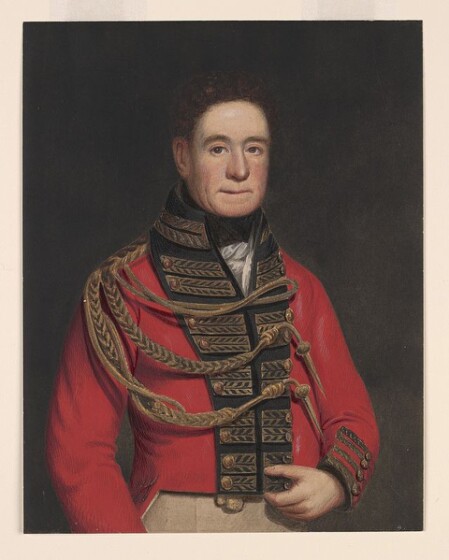
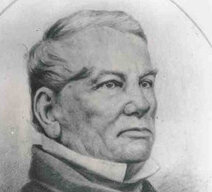
Lachlan Macquarie painted in 1774
Distraction from their grief was provided when Macquarie was ordered to accompany the 73rd to New South Wales. He was accompanied on the voyage by major-general Miles Nightingale who had been appointed to replace the outgoing governor, William Bligh following the mutiny of the New South Wales Corps.
Appointed Governor
Macquarie was reluctant to go as he feared that the tour might damage his chances of further promotion. He decided to write to the Secretary of the Colonies, Lord Castlereagh, to ask to become Lieutenant-Governor to which Castlereagh agreed. When Nightingale changed his mind about becoming governor, Macquarie wrote back to Castlereagh asking for the post, to which he assented.
Macquarie sailed for Australia aboard HMS Dromedary, escorted by HMS Hindostan, departing Portsmouth on 22 May 1809 and arriving in Sydney Cove on 28 December 1809. He was the first army officer to take up the position of governor as all previous governors had been naval officers. Also on board was Ellis Bent, the newly appointed judge advocate and his family. So it was that the first trained law officer arrived with the last of the autocratic and non-constitutional governors.