



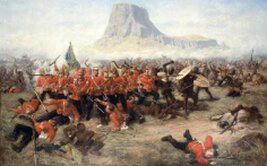
The Last Stand at Isandhlwana
by Charles Edwin Fripp

<
>
This
painting depicts the greatest catastrophe to strike the British army in the
c19th. A force of 1,750 men made up of six companies of the 24th (2nd
Warwickshires) Regiment supported by African auxiliaries was destroyed by a
Zulu army of 25,000 using their traditional tactics of encirclement.
The British
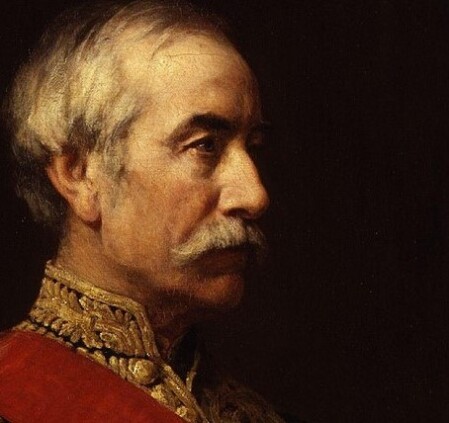
force occupied a temporary camp established by General Chelmsford who himself
had taken a force to look for the Zulus who were thought to be in the area.
Chelmsford had no knowledge of where the Zulus were and in what numbers. He
could not conceive of his force being attacked by a Zulu army and the camp had
not even been in as a defensive position.
Not only did Chelmsford divide this force but his total army had been
divided into three for an attack on Zululand which had been organised by him in
contravention of instructions from London.
The force
that was left by Chelmsford to guard the temporary camp was disorganised and
unprotected. It was arranged in front of a large mountain and when the Zulus
attacked, the British lines were too thinly protected with little artillery.
Rather than the British square which Fripp depicts, the soldiers fought off the
Zulus in small groups, and were overwhelmed by the sheer force of their numbers
and the lack of any effective overall command.
Fripp
arrived at the scene of the battle around three months later to cover the Zulu
war for The Graphic. He had been in Africa a year before to cover the
Xhosa War. Fripp saw the scattered remains of the British soldiers, rotting on
the battlefield but decided to use the same formula as Elizabeth Butler in The
28th Regiment at Quatre Bas and show an image that depicted
courage and discipline, and showed the battle from the point of view of the
British soldier. The raised colours, Martini-Henry guns and the determined
upright appearance of the soldiers contrasts with the swarming warriors.
Later the
same day, just ten kilometres away on the banks of the Buffalo river, a small
group of about 150 British soldiers managed to hold off a vastly superior force
of 3-4,000 Zulus at Rorkes Drift. Eleven Victoria Crosses were awarded for
bravery at Rorke’s Drift and the events helped to overshadow what had happened
at Isandhlwana.
Chelmsford
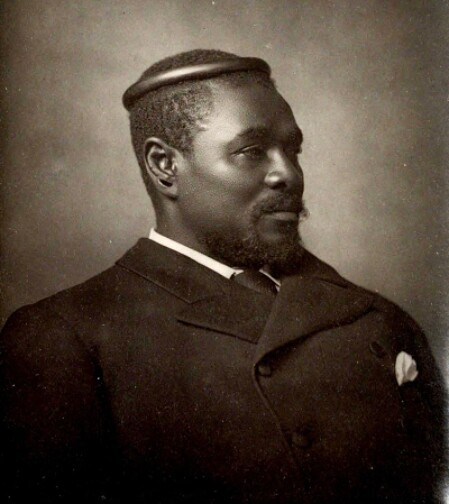
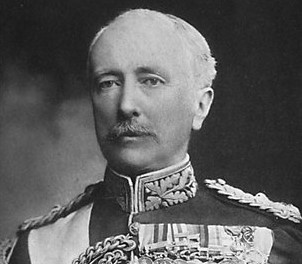
was eventually recalled and replaced by General Garnet Wolseley who pacified
the Zulu nation and hunted down the Zulu leader, Cetewayo. The independent
power of the Zulu power was destroyed as Wolseley set about appointing Zulu
chiefs who he thought would be loyal to the British.
Related Pages