




The Legacies of
British Slave Ownership project
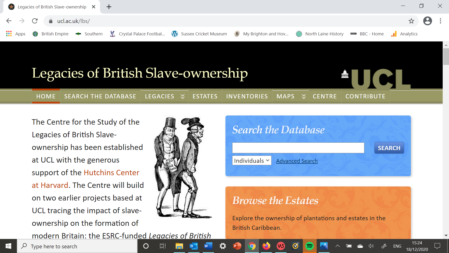
The Legacies of British Slave Ownership project and the UCL website
The Centre for the Study of the Legacies of British Slave-ownership was established at the University of London (UCL) in 2009 and has produced a database of the records of the Slave Compensation Commission (SCC), called Legacies of British Slave Ownership (LBS)
The SCC was set up to administer the distribution of the £20 million compensation that was paid out to successful claimants following the abolition of slavery in the British Empire in 1833
The records held by the SCC provide a virtually complete bureaucratic record of everyone who claimed property in people at the time of abolition. There were about 46,000 claimants for the loss of ‘enslaved property’ in the Caribbean, the Cape of Good Hope and Mauritius and although not everyone who submitted a claim was successful the vast majority were. Using the records, the LBS project built up a picture of who owned enslaved property and identified the estates on which they worked.
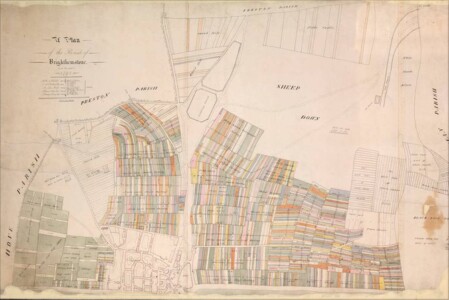
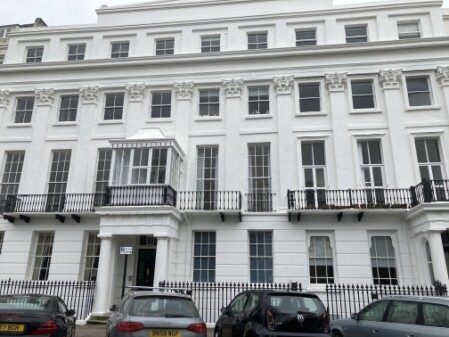
When using the LBS database, it is important to remember a number of things. Firstly, it is not a record of just slave owners. It is a record of all those who were linked to a compensation claim and therefore includes not just plantation and slave owners but also trustees, mortgagees, legatees, as well as those who were unsuccessful in making a claim. In the Search Guidance Notes it is made clear that “The database includes slave-owners but also beneficiaries and agents acting for owners. Not everyone in the database is a slave-owner.”

Comments welcome.Plese use the Contact Form
The guidance for those using the database explains that “Some [in the database] were, for example, executors or trustees for slave-owners, chosen either because they were relatives of the slave-owners or because they were members of the professions such as lawyers or clergymen”. When an article was posted on the University of Brighton website in January 2019, stating that “Sixty-nine slave-owners and former slave-owners had a property in Brighton or Hove in the 19th century”, it was making the mistake in thinking that everyone on the database was a slave owner. The other point to remember when using the database is that there is no record of where the money that was earnt from the slave trade went. There is no money trail, and even though we know that nearly half of the compensation money stayed in Britain we do not know how most of this money was used.
Analysis of the LBS database and the records (and particularly the work of Nicholas Draper) does tell us that the slave trade and the money earnt by the beneficiaries of the slave trade and the compensation paid out in the 1830s had a huge impact on the development of Britain in the period 1830-1870. The British economy (and ultimately the global economy) was transformed. Nicholas Draper writes in ‘Legacies of British Slave Ownership’ that the analysis of the “commercial legacies of the slave-owners and others financially interested in slavery at the time of its demise allows a re-examination of this received wisdom, and presents an altogether more complex picture that resituates many (former) slave-owners as important contributors to the transformation of the British economy between the 1830s and the 1870s, at the same time as it confirms that other slave-owners were indeed swept away by their inability to adapt to challenges originating both before and especially, after Emancipation”. Nearly half of the compensation money paid out stayed in Britain. Much of this went to absentee plantation and slave owners, but it also went to British merchants who were an important part of the Atlantic trade. Many of these merchants were based in London or Liverpool and, in addition to arranging for the flow of goods both into and out of Britain, they arranged finance for plantation and ship owners, and sometimes had an interest in plantations. Little previously was known about the extent to which this class was involved in the Atlantic trade and the essential role they played in keeping the Atlantic Trade flowing.
Much of the biographical information about the people making the 46,000 claims forms a major part of the database set up by UCL and made available to all. In addition to the database, a number of books have been published by those associated with the project, especially Legacies of British Slave Ownership by Hall, Draper, McClelland, Donington and Lang, published in 2014, and The Price of Emancipation by Nicholas Draper, published in 2010.