



The Petworth Emigration Scheme
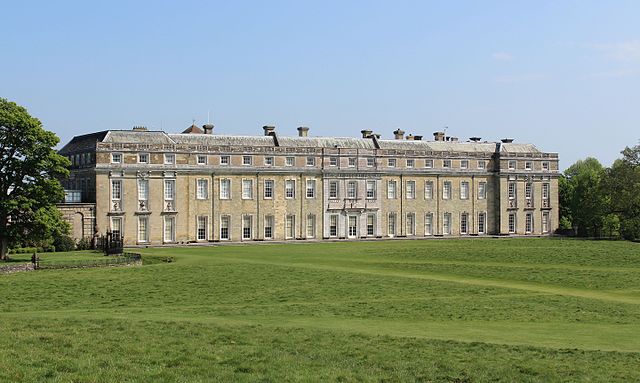
Petworth House, home of the Lord and Lady Egremont
A period of agricultural depression
The years after the ending of the Napoleonic Wars in 1815 was a period of political, economic and social unrest highlighted by the Peterloo Massacre of 1819 and the Swing Riots of the 1830s. This would eventually lead to political reform embodied by the Reform Act of 1832 and an era of free trade following the repeal of the Corn Laws in the 1840s. However, in between this time there were years in which farming prices fell, accompanied by wage reductions and a steady rise in unemployment, exacerbated by the demobilisation of soldiers. This was also a period of rapid population growth and following the publication of publication of the Reverend Thomas Malthus’ ‘Essay on the Principle of Population' in 1798, there was discussion about the catastrophes that might follow: famine or war as countries fought for scarce resources.
The prevailing system of poor relief was largely based on the Speenhamland decision of 1795, when magistrates in Berkshire linked the price of bread to the relief given to paupers. Relief could be indoor relief, provided by a workhouse or outdoor relief by which families would be given a supplement to their income. Either way there was no incentive for farmers to pay a living wage as the Parish would always provide relief or supplement wages. The Vestry was responsible for determining the poor rate which paid for poor relief and in years of population growth and falling wages there was a huge burden on the Parish to provide assistance.
With many parishes experiencing population growth rates of over 50%, a solution had to be found. One of the solutions found was the Poor Law Amendment Act of 1834 which abolished Parish allowances for dependent children and required families to live on their weekly wage or enter the new-style Union workhouses in which families were separated. Under the new Poor Law, the Poor Law Commissioners were authorised to give loans to parishes to assist parishioners to emigrate which was seen as one way of dealing with the ‘excess’ population, thereby reducing the possibility of civil unrest, which had manifested itself increasingly in as a response to the situation many poor families found themselves in.
The parishes of Sussex incurred some of the highest poor-relief costs in the years after 1815 and the workhouses providing indoor and outdoor relief were full of orphaned and deserted children, the old, infirm, and the insane. One solution to the escalating costs was to send the poor abroad as migrants in the same way as criminals after 1788 were sentenced to penal servitude in New South Wales and Tasmania. Getting rid of the poor through emigration was a hotly debated issue: William Cobbett wrote that the labourer was a prime producer of food and wealth but was heavily penalised by taxes on food and household goods. Moreover, he pointed out that it was only working people who were said to be too numerous and there was no mention of clerks, fundholders, military types and poor parsons s being too numerous. By 1837 the Poor Law Commissioners in Sussex were urging claimants for poor relief to migrate northwards to the great industrial cities where there was plenty of work available for women in the cotton factories of Lancashire.
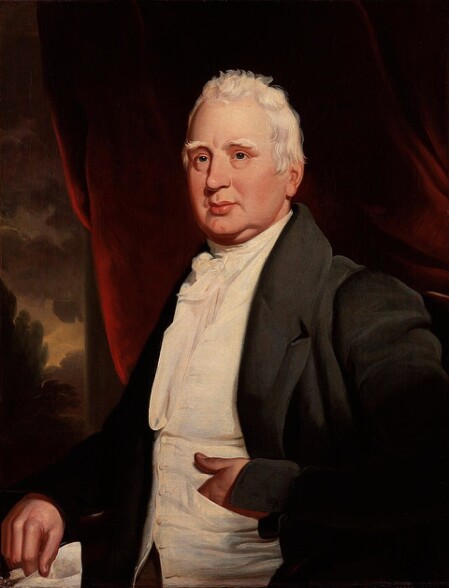
William Cobbett
The Swing Riots
The 1830s were years of agricultural depression throughout Sussex and dominated by the ‘Swing Riots.’ Farmers on the coastal plain and on the Downs began to introduce new threshing machines which took away the indoor winter work with the flail, leaving agricultural workers with a reduced income. There was then a poor harvest in 1830, and with fewer opportunities to work in the winter riots began in east Kent and quickly moved into Sussex. Agricultural labourers began to demand wage advances, stable employment and poor law relief. Threatening letters signed ‘Swing’ were sent to farmers deploying the new machines and there were public confrontations with farmers.
Eventually the army and the yeomanry restored order, and rioters were tried for arson, robbery, machine-breaking and assault and were imprisoned, executed or transported. Most farmers agreed to wage and poor-relief increases, and to a reduction in rents and tithes. Some farmers went back on agreements made and there were further outbreaks of arson throughout the 1830s.
Thomas Sockett
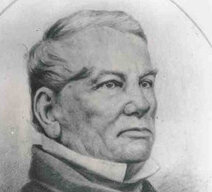
One man who believed that emigration could be the answer was Thomas Sockett of Petworth who thought it could provide poor people with a vastly improved quality of life and at the same time greatly reduce the burden on rate payers. Sockett had been the Anglican Rector of Petworth for eighteen years, the seat of the Third Earl of Egremont. He also held the living of Duncton and a parish in Lincolnshire. He had previously, from the age of nineteen, been the tutor to the Earl’s children and his secretary. He had later been encouraged by the Earl to attend Oxford University, gain a degree and then become ordained. As the Rector of Petworth, Sockett would have an independent living. He was also the Chair of Petworth Vestry and had administered poor relief in the town for over twenty years.
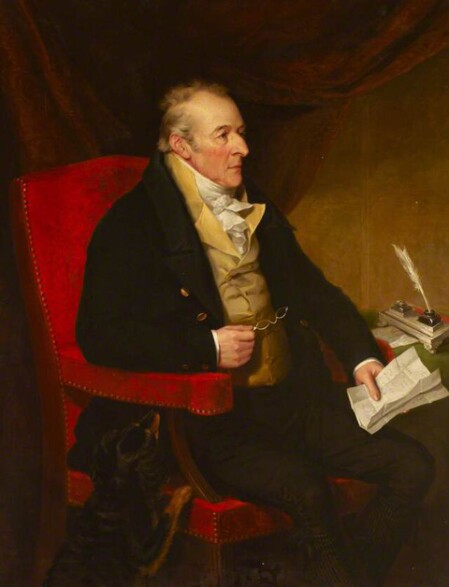
The 3rd Earl of Egremont
The Petworth Emigration scheme was an initiative sponsored by the third Earl of Egremont and organised by Sockett who formed a committee (the PEC) of three including himself, Thomas Crippes and William Knight. The objective of the scheme was to help the poor of local parishes to migrate to Canada by providing assisted passages and grants of land.
Under the Petworth scheme, prospective migrants were to be supported by their parish. Petworth emigrants were sponsored by the Earl of Egremont who paid the £10 cost of the voyage and made a grant of £5 per adult and £3.10s per child to pay for the list of necessary clothes and household goods which had been drawn up by the PEC.
The work of the PEC
The PEC encouraged other parishes and sponsors to do the same as the Earl, although this depended on the wealth of the parish concerned. The West Sussex migrants (the majority) were urged to buy what they needed from tradesmen in Petworth, especially from Mr Crippes who ran a store at his auctioneer’s office. The PEC issued information leaflets about all aspects of the voyage and the destination of the migrants- an area to the west of Toronto and Hamilton near current day Blandford.
The scheme began in 1832 with the sailing of the Lord Melville and the Eveline. The PEC drew up an agreement with shipping agents in London which specified the date on which the ships were to receive passengers together with their stores, provisions, baggage and furniture. Prior to sailing the ship was fitted out with a double row of berths, each six feet square, running the whole length of the ship. Partitions were constructed to separate single men and boys from families, and water closets were to be provided between decks. A storeroom and a water cistern were also constructed, and two cooking hearths were provided for the passengers. The PEC appointed a Superintendent who was to be responsible for the medicine chest until Montreal, maintain discipline on board amongst the passengers, and was under orders not to bring back any of the migrants sent out by the PEC. A surgeon was also appointed, unless the superintendent could perform those duties. The ship would also be provided with a library of books by the PEC.
The migrant ships
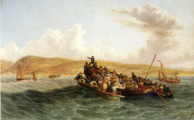
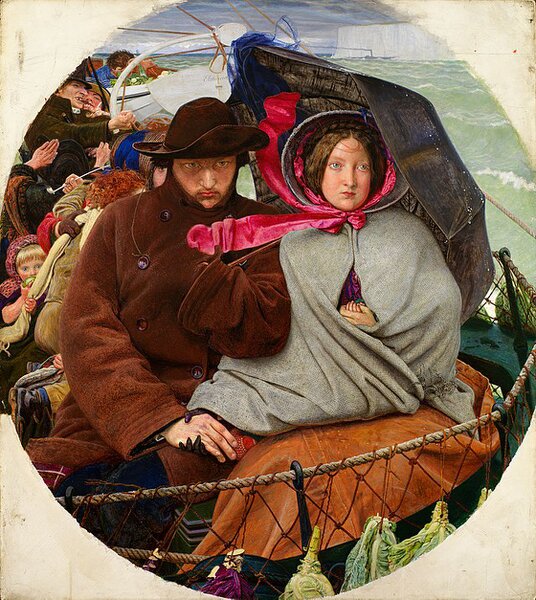
The ships that left Portsmouth in 1832 and 1833 had a large proportion of people from the Petworth area whilst later ships, sailing 1834-37, had more migrants from East Sussex and further afield, supported by an Emigration Committee that had been formed from large landowners and magistrates. The 3rd Earl of Chichester, Henry Pelham, from Stanmer headed this committee and appealed to local parishes and charities to support the funding of emigration. The ships contracted to take migrants to Canada left from Portsmouth and the crossing usually took about seven weeks. They included the England, Eveline, the British Tar, the Lord Melville and the Diana. They carried about 100 passengers and a crew of twenty.
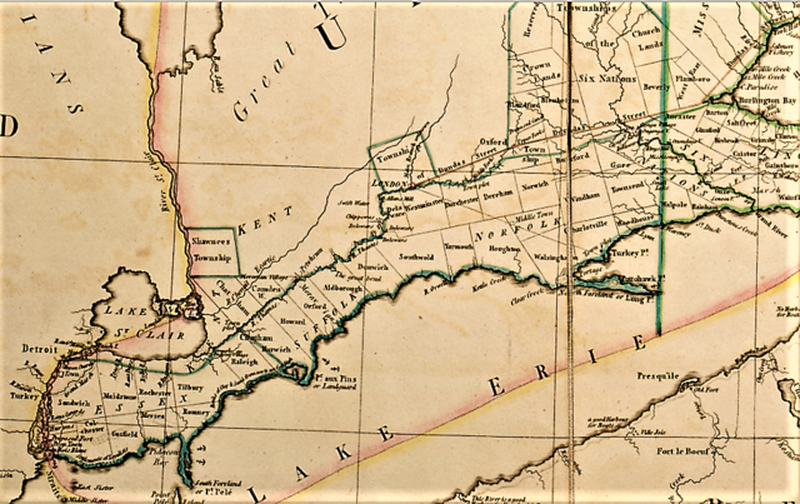
Conditions below decks were very cramped with the six-foot square berths. Cooking using rations provided by the PEC was done using stoves on deck. The ships had to submit to a health check at Grosse Island at the mouth of the St Lawrence where passengers with their luggage had to disembark for an inspection and any passengers with cholera, smallpox or measles were removed to a shore hospital. At Montreal the superintendent had the choice between disembarking onto a smaller ship for the trip through the newly built Rideau canal or transferring onto a barge that would be towed by steam tugs further down the St Lawrence to Prescott where a steamboat took the passengers to Kingston and on to Toronto. Richard Neal, one of the Petworth emigrants wrote home how his barge was towed along with five others by a steamboat. Here the migrants went ashore, and many got drunk for they had not been allowed alcohol on board ship.
<
>
Where the migrants went
Once in Canada - at that time divided into Upper Canada and Lower Canada- the migrants began to leave their ships to look for work. Some found work in the first port, Montreal, and on the building of the Rideau Canal, but most went on to Toronto and Hamilton. The Governor of Upper Canada at the time, Sir John Colbourne, believed that the assistance which the Petworth scheme provided was necessary to avoid great misery. What Colbourne saw of the migrants once they were in Canada convinced him of the value of the scheme. He believed that most arrived healthy as a result of being provided with good conditions on board the ships but were handicapped by poverty and young children. He had numerous debates with the Colonial Office that wanted to end the assistance schemes. Toronto, then called York was where the remaining emigrants disembarked, and many went their separate ways. Some to find work in York where it was possible to get a month’s board and lodging for the same price as just a month’s rent in England. Richard Neal, a bricklayer by trade had no problem getting work in Dundas for 5s a day, including board and lodging. He reckoned it was possible to earn enough in three days to keep a family for a week. William Upton of Fittleworth, Sussex travelled as far as York when he discovered his case was lost. He went on to Hamilton where he discovered the case in a warehouse and then found work for 12s 6d a week including board and lodging. He wrote home to his mother saying he had come to a beautiful country where it was possible for young people to earn money fast. In his letter home he referred to a Mr McKensey who had arrived in Canada five years previously with just 5s and was now (1832) worth £500. He was working in a sawmill, one of the area’s main industries. Simon Titmouse, who came from Bassingbourne, in Cambridgeshire but travelled with the Petworth migrants wrote home that ‘The country is discouraging at first, but the longer one is in it, the better one begins to like it. Any stout, hard labouring man, with a family, may do better in this country for them, than he can do at home.’
Over 1,800 people went to Canada under the Petworth Scheme between 1832 and 1837. The majority of the migrants were unemployed single men and families dependent on a single wage, often with middle aged parents with children. There were also skilled artisans and trades folk who may have earnt good money in England in the summer months but were laid off in the winter. Colbourne, as Governor, gave grants of five acres to all emigrants, sufficient to develop a small farm whilst ex-soldiers qualified for 100 acres if they could show their demobilisation papers. Single women could find work as a domestic servant easily and single men could find plenty of work as agricultural workers. The harsh winter climate and the clearing of land made being a farmer a strenuous occupation but if migrants had the strength and determination, they could create a new prosperous life for themselves and their children.
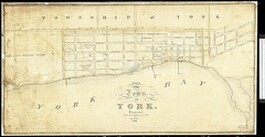
Images of early Toronto (then called York)
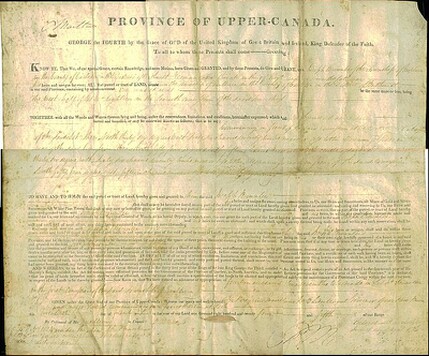
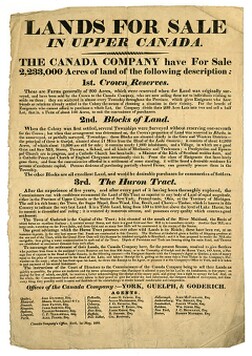
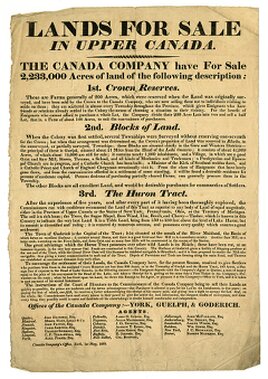
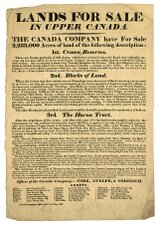
How land was sold
<
>
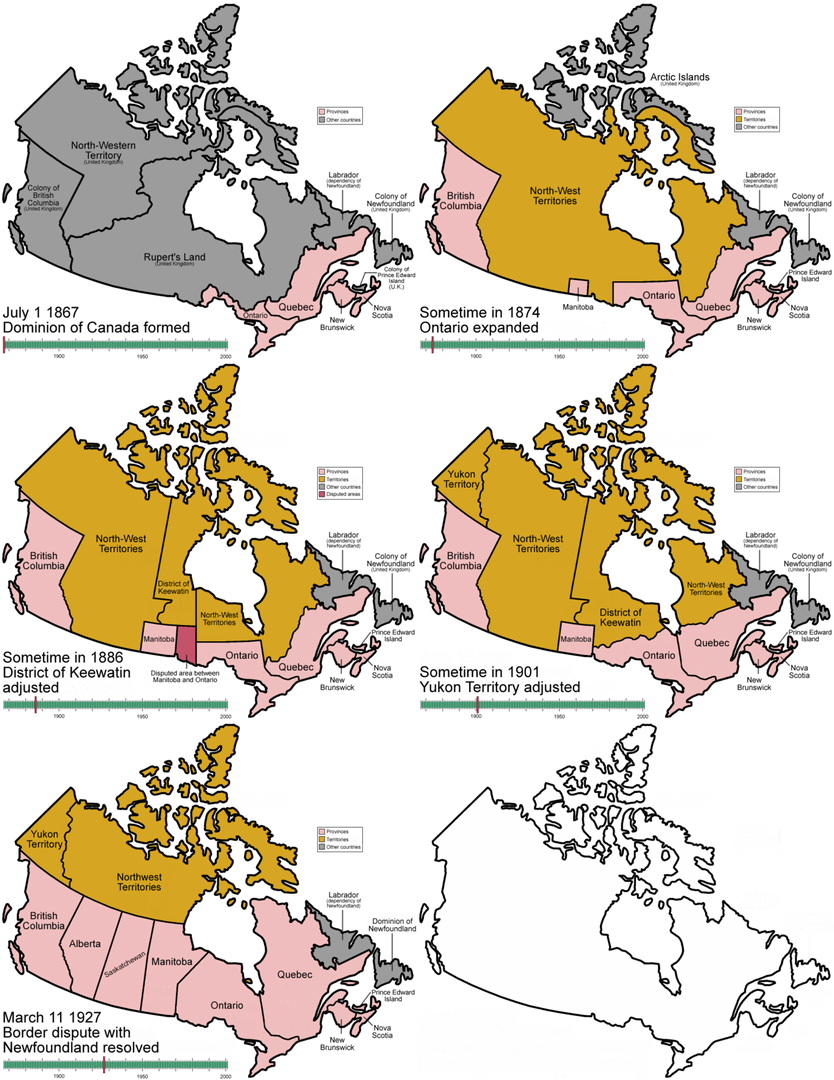
Upper and Lower Canada prior to Federation in 1867
<
>
By Peter Crowhurst, November 2024
Further reading
Wendy Cameron and Mary McDougall Maude Assisting Emigration to Upper Canada: The Petworth Project, 1832-1837, McGill-Queen's University Press, 2000
Sheila Haines ed, No Trifling Matter, Centre for Continuing Education, the University of Sussex, 1990,
Susanna Moodie, Roughing it in the Bush, Fifth House, 2011
The Petworth Emigration Project, http://petworthemigrations.com/