



The Red River Expedition, Canada
Tension increased between the USA and Britain after 1861
In April 1861 the Civil War broke out between the US states, and
for a time it was thought that Britain might get drawn in, for in November 1861
a British ship the RMS Trent was
stopped by a Union frigate, the San
Jacinto. Two Confederate representatives were found on board and arrested
by the Union frigate. Britain then demanded
the release of the captive diplomats.
With the American public demanding war, tension escalated between the
two countries until Lincoln, not wanting a war with Britain, released the two
men concerned. At the time there were just 4,500 British regular troops and
10,000 poorly trained militia in Canada
making the country an easy target for the US should Lincoln have decided to
invade. The Duke of Cambridge, the Commander-in-Chief of the army decided to
reinforce the forces in Canada and improve the fighting potential of the local
militia.
By February 1862 there were an
additional 18,000 regular troops in Canada and Garnet Wolseley was sent as
Assistant Quartermaster General. He arrived in Halifax on 5 January but as the
route to Montreal was iced up, the group of officers forming the advance party
(which included Wolseley as it was his job to arrange the housing for the troops)
travelled incognito by steamer to Boston
in the US and then by train to Montreal.
Wolseley appointed as commander of the training camp
In 1865 Wolseley was appointed
as commander of a new militia officer training camp near Montreal in which he
would receive a thousand new cadets every three months. There was a minimal
threat after 1865 from the United States but there were times when tension
increased, and it was important that Britain could call upon a well-led local
militia if needed. In addition to this threat there was always the threat from
the Fenians, set up in New York to achieve a republic in Ireland and always
ready to make a nuisance of themselves in Canada.
In 1866 the Fenians crossed into
Canada from Buffalo, New York. There was a brief skirmish with the local
militia, following which Wolseley was sent to the area to help the local
commanding officer better prepare for any subsequent invasion. Training new men
in the art of warfare and developing their character and morale was useful
training for Wolseley for he had as yet not been in command of any expedition.
When a protest began in the Red River region amongst the Métis people against the sale of land to the Dominion of Canada which included land they regarded as their own homeland, Wolseley was given the chance to test his ideas out and his quality of leadership by being given command of an expedition to quell the trouble.
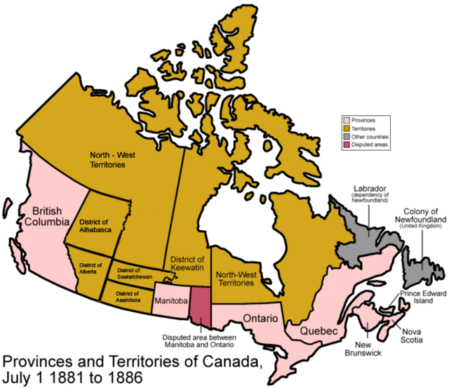
The British North America Act, 1867 created the Dominion of Canada by bringing together the North American British "Provinces" of Canada (previously Lower and Upper Canada), New Brunswick, and Nova Scotia.
Uprising in the Red River region
The new federal government was
given the power to negotiate the entry of new provinces into the Union without
the need to seek the permission of the existing provinces. In 1870 it purchased
the former Rupert’s Land and the Northwest territory that had been owned by the
Hudson’s Bay Company (HBC) and included the land of the Métis people.
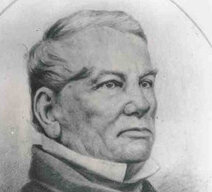
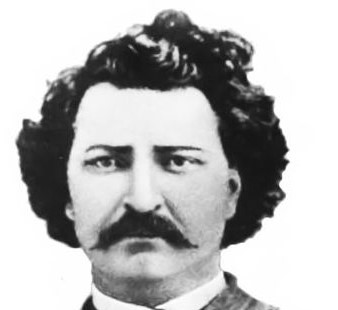
By September 1869, Louis Riel had
emerged as spokesperson of the Métis, just as the Dominion of Canada was
arranging the transfer of Rupert’s Land and the Northwest territory from the
HBC. In November 1869, Riel led a group
that stopped a surveying group under the leadership William McDougall, the provisional
first Lieutenant-Governor of the new territory, from entering the Red River
region. The group then took over Fort Gary, the administrative centre of the
HBC and established a provisional government to open negotiations with the authorities in Ottawa. Discussions
began between representatives of the Metis and the Canadian authorities in
Ottawa during which demands for a bilingual provincial government and a reserve
of 1.4 million acres of land for Métis children were agreed.
When a member of the English speaking community in the
Red River, Thomas Scutt, was court martialled for opposing the uprising by the Métis and the creation of a
provincial government, he was executed and shot, meaning that the leader of the
uprising, Louis Riel had added the crime
of murder to that of rebellion, although
at the time of the execution, the Red River was not under British
administration.
There was also concern amongst the authorities in
Ottawa that a rebellion 1,200 miles from Toronto could encourage a Fenian
response or even an invasion from the United States. There had to be a quick
response and to deal with the threat Wolseley, on 5 April 1870, was ordered to
organise an expedition to the heartlands
of the new Canada. Few maps existed of the area which would be difficult to
reach by a large force. To reach the destination meant travelling through the
great lakes, along rivers with numerous rapids and other obstacles and through
forests with no established trails. Wolseley was to show in the way he
approached the campaign that he would not take chances with the safety of his
men.
Wolseley's expedition to Fort Garry
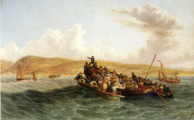
Wolseley divided the route to Fort Garry in to four stages. The first would be ninety four miles by train from Toronto to Collingwood on Lake Huron. Lakes Huron and Superior would be crossed by steamer to the base of the operations which would be set up at Thunder Bay. A road of forty eight miles would then have to be constructed through virgin forest to take the force to Lake Shebandowan from where specially constructed boats would carry the force 600 miles through a wilderness to Fort Garry. For this operation Wolseley had 1200 men, largely consisting of British regulars but also with two battalions of Canadian militia.
Wolseley was well known for the close attention he paid to the preparations. He wanted boats that were light enough to be carried over the 47 rapids and strong enough to carry fifteen men and their supplies. The boats were specifically built in Canada, supervised by Wolseley at every stage and thoroughly tested. They had sails and also were equipped to be rowed for when there was little wind. Wolseley tested all the equipment and where it was not up to the task he adapted as he did with the regulation axe which he found useless for cutting through the type of forest that faced them.
The force reached Thunder Bay on 21 May 1870, and a hospital and stockade were built to protect the supplies and the garrison of local militia. The road to the next destination was not finished when the force left Thunder Bay, and the last section had to be constructed by the force itself, working in a mosquito infested area. Whilst the force remained at Thunder Bay it rained for twenty three days. The force in their boats began to leave Thunder Bay on 16 July, with six to eight boats leaving each day thereafter. Wolseley left in a fast canoe on 23 July and the last boat left on the 1 August. Being in a fast canoe enabled Wolseley to go up and down the line of boats and maintain a close eye on their progress.
The routine on each day was very similar. The men
would get up and begin rowing at first light until eight o’clock when there
would be a break for breakfast. They would then row until one when they would
break for an hour lunch before rowing four or five hours when they would stop
and make camp. The soldiers slept in blankets in the open on soft mossy ground.
To eat there was beans, salt, biscuit
and sugar. No alcohol was allowed. Whenever the expedition came across one of the forty plus rapids, the
boat was unloaded and was pulled around the rapids using a specially made
harness. The supplies also had to be carried and often ten trips would be
needed to carry everything.

One of the many rapids the force had to negotiate
Arriving at Rat Portage, Wolseley received more
requests for speed. Here there were some boats of the Hudson’s Bay Company to
take them down the fast flowing Winnipeg River. At Fort Alexander at the
confluence of the Winnipeg and the Red River, Wolseley learnt that Riel had six
hundred men.
Fort Francis was reached on 4 August 1870, where Wolseley received news from a spy that panic had set in amongst the settlers of Fort Garry. Louis Riel was making ready to resist the expedition with a small group of supporters and the rival groups were reported to be at each other’s throats. Wolseley tried to push his troops hard and at one point the force pressed ahead without a guide, resulting in them getting terribly lost.

Fort Garry, the administrative centre of Louis Riel's provisional government
The final few days
On 21 August, the expedition left Fort Alexander for
the final section. The river was very shallow, and the boats kept
grounding. It was also very hot, being
mid-summer. On 23 August the force was just twenty miles from Fort Garry and was
received by cheering crowds of loyal settlers. Supplies were unloaded so that a
mounted column could be organised to reconnoitre the final few miles. As this
column moved south through small communities it was received by loyal crowds of
settlers shouting their support and the peeling of church bells. The mounted
column made the final few miles on 24 August in pouring rain, approaching the
fort from the west to cut off Riel’s retreat. An open gate was found and on
entering Riel was found to have gone, along with all of his supporters. Riel
had heard the bugles of the British troops whilst eating his breakfast and escaped
to the United States, swimming across the border. Wolseley’s troops were formed
up in the main square and the guns gave a royal salute with three cheers being said
for the Queen.
Wolseley’s
first command had been a success with no loss of life. Normally after a
successful conclusion to an expedition all the officers would have been
recommended for promotion. Some of the officers were, but Wolseley refused to
put the doctor’s name forward as he had had so little to do. Wolseley himself
was made a Knight Commander of the Order of
St Michael and St George. As the expedition took place so far away from
Britain with few means of communications, there was little news of what had been
accomplished by Wolseley and it would take further expeditions closer to home
before he was to be known as the nation’s colonial problem solver.
Riel was executed as a traitor by the British although
the quarrel the Metis had had was with the HBC. Their only concern was to
protect the culture, language and land rights of the Métis people in the
face of increasing settlement of the Red River region by British settlers. Whether
there could have been a compromise but for the execution of Thomas Scott, it is
difficult to say. The British did compromise with indigenous people when they
posed a real threat and it was possible to negotiate with local leaders. This
was far cheaper than outright war but when there were demands on the land from
British settlers, there was usually only one outcome and that was support from
the British government for the settlers. One only has to look at the Xhosa wars
of the c19th in the Eastern Cape of South Africa and the Maori Wars of the
1860s in New Zealand to realise that compromise with local elites only went so
far.
Peter Crowhurst, first published April 2019, edited June 2024
Further Reading:
Sir Garnet Wolseley by Hanif Kochanski, 1999
Related Pages