




What was the British Empire?
The British Empire was the largest empire the world has seen. At its height of power and influence, in the late 19th century, it occupied almost a quarter of the world’s surface area. It was an empire that was three hundred years in the making and was made by different competing private interests that had different versions of empire. It was an empire without a dominant ideology, with weak central control, and often made with the consent of local elites. By the end of the 19th century, the British believed the British Empire to be a force for good and as much a moral enterprise as a business one, yet it was an empire that was made and maintained with force or the threat of force.
Presenting empires in a stereotypical way is unhelpful
Nowadays empires are often portrayed by the media as evil and based on racism, oppression and economic exploitation. Whilst it is important to see empires for what they were, and that includes the brutality, the atrocities, the cultural destruction and the economic dislocation, we must remember that empires were the normal form of political organisation in world history, and that they were also the agents of economic improvement and cultural advancement. To continually portray empires in a stereotypical way is unhelpful and obscures the reality of empires. This website focuses on Britain’s Imperial Century, the period between 1815 and 1914 when the British Empire increased in size from 2 million square miles to over twelve million square miles, and seeks to show the realities of the British Empire.
Defining empire and imperialism
It is important to define our terms at the outset. Empires were the preferred form of political organisation until well into the 20th century and had been for centuries. An empire was a group of states, or peoples under the control of a single ruling power whilst imperialism is the process or policy by which a dominant power seeks to create and maintain an empire. British imperialism was therefore the process by which other territories were assimilated into Britain’s political, economic, and cultural system in order to enhance its wealth and power. This was usually done by establishing formal control of territories through a surrender of sovereignty through conquest or a treaty imposed by threat or force.
This surrender of sovereignty came with direct or sometimes indirect administrative control. Britain also had an informal empire which consisted of states or territories with whom Britain had links to foster trade or investment. This came about through treaties, sometimes unequal, or the use of armed intervention. Britain’s formal empire can be traced back to Cabot’s voyages to Newfoundland in 1497 and 1498 although some would say that Britain’s empire building began with the occupation of parts of Ireland in the late 12th century. The peak of the British Empire was in the late Victorian era and John Darwin in an article Widening the Gap (1997) claims that the global phase of British imperialism began in the 1830s, when migration from Britain exceeded 100,000 for the first time and the factory system was producing such quantities of machine-woollen that new markets were needed.
The term ‘imperialism' has had different interpretations over time and is often used a term of abuse. The term entered the English language in the 1840s to describe the potentially hostile policy of Prince Louis Napoleon in France. In the 1870s it was used to describe Disraeli’s aggressive policy in South Africa against the Zulu nation and later in the same decade imperialism came to be linked to a policy of federation. Later in the 19th century imperialism came to mean an enlightened policy of bringing civilisation to the undeveloped world.
With Britain industrialising before any other country, and becoming the workshop of the world, industrialists wanted the best possible trading terms for their products, and this led to a demand for Free Trade which was achieved by the mid-1840s. With the Repeal of the Corn Laws in 1846, Britain began to impose free trade on the rest of the world and establish a global trading system based on free trade. The 1830s was also the decade when missionaries began to spread throughout Africa and Asia, and the evangelical mission to convert took hold of Exeter Hall, the London home of the movement to help less developed peoples to civilise and become Christians.
In 1900 the British Empire covered a fifth of the globe and included 400 million subjects living in vastly different landscapes and climates and following numerous different faiths. There were over 70 territories governed in many different ways including colonies like Canada which had been granted self-government, colonies with Governors ruling with or often without a legislative council, and protectorates with minimal British involvement.
Informal empire
Britain’s informal empire is often ignored however trade with this informal empire was greater than with the formal empire. Apart from India, exports to and from the formal empire were quite small and made a minimal contribution to the wealth of Britain. Informal empire though saw trade developed with countries without the need to establish formal empire. The nature of this informal empire varied although John Darwin, in a 1997 article Imperialism and the Victorians says there were two basic models of informal trade -an eastern and a western model. The western model saw Britain work through private interests with only occasional involvement of diplomats and armed force. This way of establishing new trade links was applied to Latin America and particularly to Argentina, Peru, and Brazil. More formal power could not be used in Latin America as it would have been counter-productive. It was not possible for Britain to use military or naval power ( a military occupation would require a level of armed might that Britain did not possess) and diplomatic pressure could only achieve so much. In the east though, British pressure was more formalised with treaties backed up with military force that was available. Even then, the actions that Britain took were opportunistic rather than planned as when Palmerston decided on a military response to the threatened Chinese blockade of British trade with Canton. Such military force when it came had to be a joint venture with the French as the demands of the Crimean War and the Indian Rebellion meant that resources were limited. The subsequent destruction of Peking in 1860 to enforce the 1857 treaty with China was undertaken with France. Managing the informal empire required a flexible response and could involve sudden changes in policy as when in 1840 the Colonial Office decided to annex New Zealand and sign a treaty with Maori chiefs, after a decade of opposition to such an annexation. On this occasion it was the threat of the New Zealand Company sending settlers to New Zealand, where the presence of traders and missionaries had already created an unstable situation, that forced the Colonial Office to act.
Empire as a default form of state organisation
Empire was never a British or even European phenomenon. For much of human history empire has been the default mode of state organisation. Every European power has had at one time or another an empire, and in Africa empires were well established in West Africa and Southern Africa. Such empires often brutalised neighbouring peoples exacting tribute on less militaristic peoples. Slavery was practised and in certain parts of the world continued to be practised well into the 20th century. The British Empire though was the largest empire in world history and when it became involved in slavery in the 17th century, it expanded the slave trade to new levels. Today nearly all the main global leaders, China, Russia, the United States, and India have become the powers they are through the assimilation of neighbouring peoples to create what they would today call a nation state. All these powers exhibit elements of imperialism today.
The moral ascendency
The British Empire claimed to be a liberal empire and be different from other empires of the time and previous models. The abolition of slavery in the British Empire in the 1830s gave Britain a moral ascendency and the growth of the empire was justified by the claim made by evangelicals and the Colonial Office that Britain’s object in annexing territories was to civilise the undeveloped world. It came to be seen as Britain’s divine duty to send young men abroad, educated in the newly reformed public schools, to administer the colonies of the empire, based on British trade and the development of Christian values. Queen Victoria became a cult figure in the colonies as the mystique of the British was developed to support the notion of British superiority. Native peoples were going to be prepared for a future of self-government in a colony that had the basis of an agricultural system that would enable it to trade with the rest of the world and become fully independent. This was a myth and however much some of the young men believed in what they were doing to civilise local people, the British never granted self-government on the basis of colonies becoming economically and politically mature.
No masterplan
The British Empire lacked any kind of coherence. There was no masterplan, and decisions on relations with local people, the signing of treaties and going to war were often made by the men on the spot. Competing interest groups- missionaries, businessmen, entrepreneurs, settlers provided the impetus for the expansion for the Victorian empire but often their interests collided. The Colonial Office often found itself having to act as the referee between these interests. Missionaries resented the presence of settlers who wanted land that native peoples possessed., whilst industrialists often wanted to create a work force out of local labour. The Colonial Office had to adapt according to the changing situation within colonies. In the Cape Colony in South Africa in the 1830s, the colonial authority annexed land inhabited by the Xhosa people during a period of warfare between the settlers and the Xhosa people. The Colonial Office decided to reverse the decision and return the land but within a few years was forced due to increased demand for land to annex the territory (British Kaffraria).
The major focus
The way the empire worked defined the nature of British imperialism. The major focus of the British Empire was to develop trade - to bring the primary products grown or mined in colonies (including rubber, tin, gold, wool, meat, timber, cotton , coffee, and tea) to British ports and carry for export the products of Britain’s industrialised towns and cities. The scattered territories of the empire were protected by the world’s largest navy and goods from and into Britain were carried by the world’s largest merchant fleet. A financial system based in London facilitated the exchange of goods, and the investments in new ventures overseas. To provide the security needed against any possible uprising, there were garrisons of the British army in strategic locations, supplemented by colonial forces. The Indian army numbered 300,000 and was crucial to the maintenance of internal and external security. Administering the colonies was an army of administrative servants, including civil servants, politicians, soldiers, and police as well as the business-men running the various plantations and other local industries. Revenue was raised out of local taxation wherever possible so that the empire could be self -funding and not a burden on the British taxpayer.
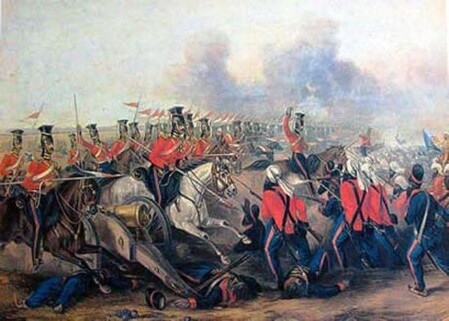
There was always the threat of violence. The British Empire was built on violence as control of colonies was often established through conquest. Local uprisings against British rule were frequent although with limited military resources the British preferred to rule through local elites as they did with the 600 Indian princes who were nominal rulers of their dynasties. Major rebellions were put down with a combination of regular British troops and colonial forces together with support of colonial militia made up of local settlers.
Decline
The 20th century saw the rapid decline of the British Empire. The peak of the British Empire in terms of territorial acquisition was the early 1920s when the League of Nations mandated Britain to be responsible for preparing a number of territories for independence. These included Iraq, Palestine, and Jordan. A strong lobby continued to portray the empire as a force for good, and the relationship between the white dominions of Canada, New Zealand, and Australia as a model of international co-operation but critics of the empire were denouncing the empire as the tool of industrialists and financiers. In 1944 Eric Williams wrote a doctoral thesis in which he claimed that Britain’s industrial revolution was based on the wealth generated by the slave trade and slavery. The influence of such critics was limited and figures like Cecil Rhodes continued to be revered, with visits to his grave being made by the Prince of Wales in 1925, the future George VI in 1934 and the current Queen in 1946. The creation of the United Nations began to introduce a new world order with the United Nations Charter rejecting all forms of colonialism in favour of self-determination and the creation of nation states.
By Peter Crowhurst, April 2021
Further Reading:
John Darwin, Unfinished Empire, 2012
John Darwin, Imperialism and the Victorians, English Historical Review, June 1997
Lawrence James, The Rise and Fall of the British Empire, 1994
Robert Johnson, British Imperialism, 2003
Related Pages: