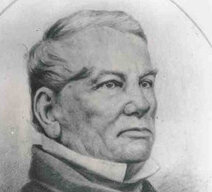




William Des Voeux
William Des
Voeux was typical of the late Victorian colonial governor who went largely
unheralded, devoting a lifetime of service to the British crown and then
returning to live out a retirement in a leafy suburb with neighbours oblivious
of his and his wives’ service and life. Most of the 300 governors and
administrators appointed by the Secretary of State of the Colonies saw their
role as to arbitrate between the needs of the white planters and business providing
justice and fair play whilst improving the facilities and the conditions of
life and work of the local population.
Most of
these men came from simple backgrounds and having been appointed to their
positions worked long hours in inhospitable conditions living in poor
accommodation and yet having to fund their lifestyle and expenses out of their
own pocket. Many returned from the rainforests of South America and the Far
East with reoccurring malaria and having suffered from sunstroke, poor food and
various tropical diseases.
He thought he would try his luck in the colonies
William Des Voeux came from a well to do family with
several members of the family in high positions in the British administration
or government. He was sent to Balliol College, Oxford but when his father gave
him an ultimatum to commit himself to a life in the Church, William decided he
would try his luck in the colonies where there were plenty of opportunities for
a man of ambition. William sailed to Canada in 1856 suffering terribly from
seasickness but having landed in Montreal in winter decided that a farmer’s
life was not for him. He travelled to Toronto and there he began studies for a
law degree, eventually passing his exams five years later in 1861. Through a
family connection to the Secretary of State William secured a position as a
magistrate in the colonial service which sent him to British Guinea on a salary
of £700 (£50,900) in 1863.
William began his life as a colonial magistrate in
southern British Guinea, travelling the many rivers and backwaters to outlying
police stations where he would hold court outside the station. The area was rainforest
– hot, oppressive and infested with rattle snakes, huge mosquitoes and likely
to leave inhabitants with yellow fever. Each day he would get up early to be
taken by canoe on a four or five hour trip to hear cases brought to him by the
local people or Chinese or Indian indentured servants giving sentences up to
six months hard labour or a $50 fine. He would stay in cockroach infested tin
huts with lizards, centipedes, termites and snakes, and bathe in rivers with electric
eels.
The coast of Guyana
After four years in the south of the colony he was
moved to the coast - the heart of the
large sugar plantations. William had always tried to give fair justice in his
verdicts and sentences but on the coat he found himself up against the plantation
owners who expected him to be an ally of theirs and see indentured labour as
there to maximise the profits of the owners. William though was not prepared to
be a stooge for the rich plantation owners. The laws of the colony were already
draconian with punishments given out for breach of contract and where the word
of the white plantation owner or manager was enough to convict any plantation
worker. Cases against the white owners or managers were expected to be
dismissed but William took his job seriously enough to punish cruel managers
and owners. When pregnant women were expected to work until their confinement
or when whole gangs were charged together William dispensed justice equally
without fear. On one occasion when a Chinese worker had both arms and legs
broken and then died after the plantation doctor ordered him home in a cart,
William had the body exhumed to determine what had happened and then dealt with
the manager concerned.
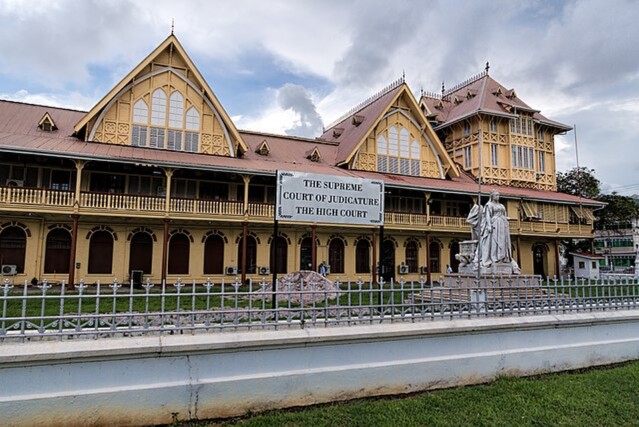
The former courthouse in Georgetown
He managed to escape Guyana
William Des Voeux had to distance himself more and
more from the white community making himself isolated and depressed. He
suffered from threats against him and complaints to the Governor went unheard.
Eventually William managed to get himself transferred to the small island of St
Lucia where he was given the post of administrator, being solely responsible
for the administration of the island together with a small group of civil
servants.
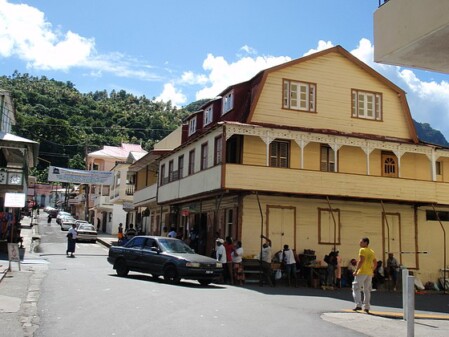
St Lucia
On arrival on the island in 1869 William found the
administration in a shambles. The temporary administrator was a drunkard,
various posts were empty, taxes were not being collected and indentured workers
were again being exploited. William set up house by himself in Government House
at the top of a hill and began the long process of improving facilities on the
island and ensuring justice for all. He was soon to dismiss the Chief Justice
after petitions to London but as in British Guinea was to alienate the
plantation owners by his actions especially after stopping and helping an old
black women who was struggling with a load up a hill.
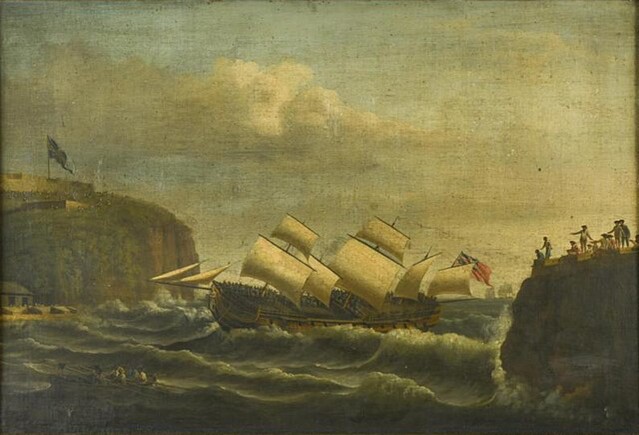
The Amazon entering St Lucia harbour
On his first Christmas on the island, by himself in Government House, he decided to write a report about riots that had broken out in British Guinea. His subsequent 100,000 word report helped to persuade the Colonial Office to launch an investigation and send a commission to British Guinea to investigate.
William travelled to Georgetown to give evidence (over three days) and although the evidence he gave was criticised as not having sufficient concrete evidence, the Commissioners did discover enough evidence to introduce reforms of the island’s administration. Doctors became civil servants, laws were changed, and vigilance over magistrates was improved. These reforms became a model for other small colonies such as Mauritius and Trinidad.
William des Voeux returned to St Lucia to continue his work of improving the island, working hard to draft new laws, and then sometimes spending whole days arguing a case for their introduction by the legislature. He would spend days travelling around the island on horseback visiting all the institutions, assessing the worth of the colony’s servants and if necessary dismissing incompetent ones and replacing them with corrupt free and educated men.
Marriage
In 1873 on one of his routine visits to England William met and fell in love. This was often the pattern with colonial servants who often began their carers abroad at a young age and only began to think of marriage when they had established themselves. On a trip back to London in 1874 to raise capital for a new sugar factory William became engaged to Marion Pender whom he had met on a previous visit. Marion joined him following their marriage in 1875 and William then sought promotion to acquire a better paid position as he would now be expected to provide for a more luxurious accommodation for his wife and for entertainment that was more lavish than before.
Trinidad and Hong Kong
In 1877 William Des Voeux accepted an offer from the
Secretary of the Colonies to become acting Governor of Trinidad. The couple did
not stay long there as his reputation for defending the rights of local people
and indentured servants did not endear him to the white plantation community.
Within a year the couple were on their way to Fiji where William was Governor.
In 1887, following a period as Governor of
Newfoundland, William was appointed as
the tenth Governor of Hong Kong a prestigious position and a reward for his
long and prestigious service in the Colonial Service this far. During his time
in Hong Kong the Peak Tram was introduced providing cheap transport to people
living on the Peak. He was to give protection to the Peak and other high areas
of the island from encroachment by tenements and a year before his departure
from the island in 1891, he helped to introduce electricity to the colony by
the establishment of the Hong Kong Electric Company.
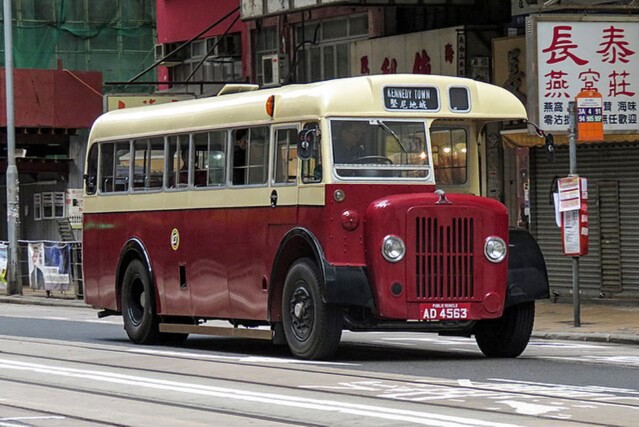
Des Voeux Rd in Hong Kong
In 1891, after a lifetime of service to the British
Empire, William and Marion Des Voeux returned to Britain to enter retirement.
He was created a Knight of the Order of St Michael and St George and published
his memoirs in 1903.
Related Pages