



Territories of the British Empire
A-I

<
>
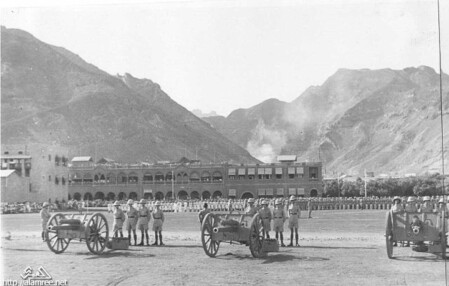
Aden
Aden was annexed by Britain in 1839 to be used
as a coaling station on the route to India. The offshore island of Perim and
the large island of Sokotra (formerly a British protectorate) were added later.
Aden was administered as a dependency of British India until 1837 when it
became a Crown Colony. Treaties with the Hadramaut, Wahidi and Mahri sultanates
made much of southern Arabia a British protectorate. Increasing Arab
nationalism led to the formation of a London-sponsored South Arabian Federation
of Emirates in 1963. Following the withdrawal of British forces in 1967 the
former colony and protectorate became the People’s Republic of South Yemen.
Alberta
Alberta was controlled by the Hudson’s Bay
Company under a charter granted in 1670 to Charles II. From 1870 until 1905 it
formed part of the North West Territories of the Dominion administered as a
colony from Ottawa until the establishment of a legislature in 1888 and a non-elective
executive in 1897. Full provincial status was granted in 1905.
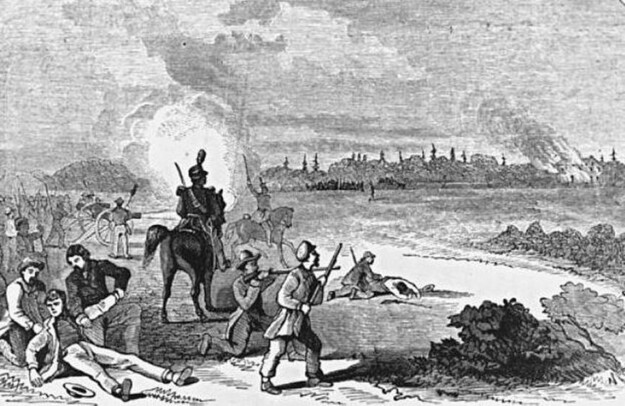
See ‘The Red River Expedition’

Fort Garry, scene of the 'Red River rebellion'
Antigua and Barbuda
Antigua is a Caribbean island in the Lesser
Antilles group. It was colonised by Britain in 1632 with a settlement
established on the neighbouring island of Barbuda in 1661.Large sugar estates
and natural harbours made Antigua an important possession and the main naval
base in the eastern Caribbean. Nelson was based on Antigua in 1805 prior to the
Battle of Trafalgar. The Codrington family had the largest sugar-planting
business, owning the most extensive estates on Antigua and leasing estates on
Barbuda. The two island sere administered as part of the Leeward Islands
Federation for 85 years until in 1956 Antigua became a Crown Colony within the
West Indies Federation until 1962. The island became an associated state of the
UK in 1967 gaining full independence with the Commonwealth on 1 November 1981.
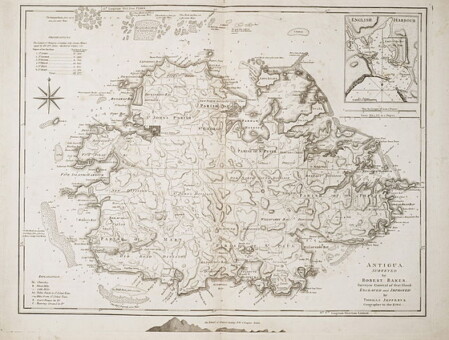
English Harbour in Antigua
Ascension
Ascension is a volcanic island in the South
Atlantic which was garrisoned by the British in 1815, fearing that it might
serve as a base for a rescue effort of Napoleon from St Helena. The island was
a cable station under Admiralty control until 1922 when it came under the
administration of the Colonial Office. A satellite communications centre was set
up in 1966 and an air strip was constructed as a base for aircraft flying to
the Falklands from 1982.

Australia
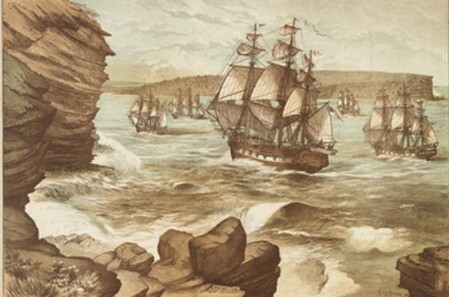
The eastern coast of Australia was charted by Cook in 1769-70 and
named New South Wales. The First Fleet established a penal colony at Botany Bay
in 1788 and settlements followed in in Newcastle (1801), Hobart and Launceston
in Tasmania (1803-4) and Perth in Western Australia (1829). The opening up of
the interior followed the crossing of the Blue Mountains in 1814 and the
journeys of Sturt, Mitchell and Eyre between 1829 and 1841.
Development of the interior was hindered by shortages of
labour and lack of interest by the British government. Convict labour was used
until free settlers were sufficient in number to manage without them. By 1830,
53,000 convicts had arrived but in 1840 convicts were excluded from New South
Wales and finally from Western Australia in 1867. Extensive land grants, sheep
rearing and then the discovery of gold (in 1851-54) opened up Australia in the
mid-19th century by which time there was a flourishing trade in wool
with Britain. The Australian Colonies Act 1850 gave self-government to New
South Wales, Tasmania, South Australia and Victoria. Queensland, which had been
part of New South Wales until 1859, acquired a legislative assembly in 1860,
and Western Australia dis so in 1890. The idea of federalism grew slowly but in
1900 the Australian Commonwealth Act created a federal parliament in a new
capital, Canberra. The new nation contributed considerably forces in the Second
Anglo-Boer War (1899-1902) and both World Wars.
See The Aborigine Wars, The 1788 Fleet, The Importance of
Terra Nullius
Bahamas
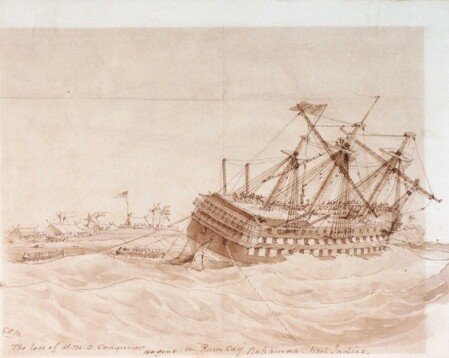
The Bahamas is a Caribbean archipelago of around
700 small islands of which only 20 are settled. British settlers arrived from
Bermuda in 1629 and a company of merchant adventurers established a trading
settlement on the island of Eleuthera in 1649.Soain tried to annex the island
in 1781 but following the Treaty of Paris (1783) they became a British Crown
Colony and the island remained as such until January 1964 when self-government
was granted. The Bahamas became fully independent in 1973.
Bahrain
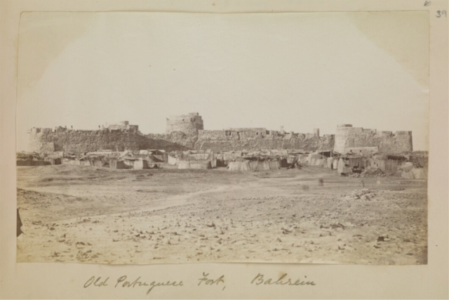
Bahrein is an archipelago
in the Persian Gulf that became a protectorate in 1861, having previously been
an independent emirate that had signed treaties with the British. Treaties on
defence arrangements with the British were signed in 1882 and 1892.
Barbados
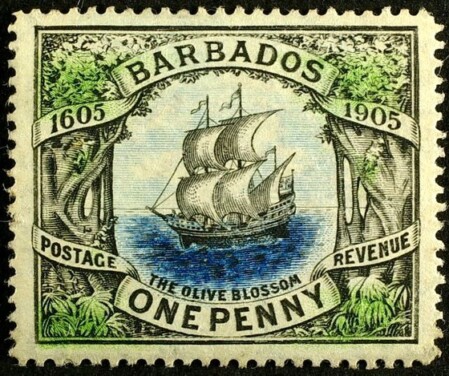
Barbados was colonised by British settlers in 1627 together with other nearby islands. It became a Crown Colony in 1662 shortly the first of many sugar plantations were established on the island. It had been to be developed intended as a tobacco colony with white indentured servants forming the labour force but switched in 1660 to sugar with African labour replacing the white indentured servants. Sugar remained the main export.
Basutoland
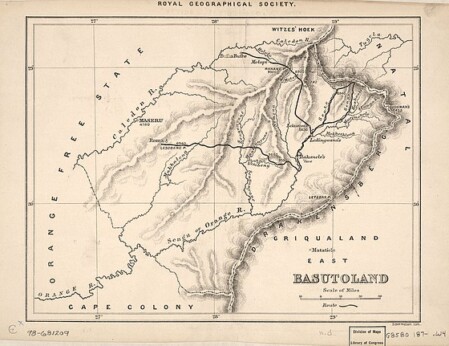
Basutoland ( now Lesotho) a mountainous enclave in South Africa that was home to a number of tribes who had fled the Zulus and then the Boers in the early years of the 19th century. British protection was granted in 1868 although the territory was absorbed into the Cape Colony in 1871. Direct control from London was restored in 1882 and this remained the arrangement for 70 years.
Bechuanaland
In the mid-19th century the land, known to the British as Bechuanaland, between the Cape Colony and the Zambesi was inhabited by the Setswana-speaking confederacy which consisted of numerous tribes from the Thlaping in the south to the Ngwato in the north. There was fierce competition for land and water between these tribes and also with the neighbouring Tswana people and the Khoikhoi settlements. The area was regarded by the British as providing an important corridor to the north.
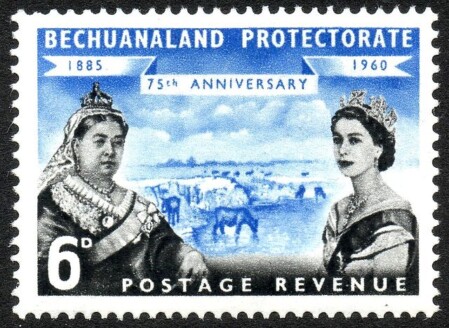
In 1885, the British government concerned over possible German interests in the region ordered a military force under the command of General Warren to establish British control of the region. With a force of 4,000 men Warren had little difficulty in establishing authority, declaring the area under British protection in early 1885.
Later in the year, the British government annexed the southern part of Bechuanaland south of the Molopo River and created a Crown Colony and continued with a protectorate for the remaining territory north of the Molopo. The Crown Colony was later absorbed into the Cape Colony in 1895. The three main chiefs travelled to England and the Colonial Office gave them an assurance that provided they gave their assent to a railway from Mafeking to Bulawayo, the region north of the Molopo would remain a protectorate and despite the opposition of the Cape Prime Minister, Cecil Rhodes, this arrangement remained for 70 years.
Bermuda
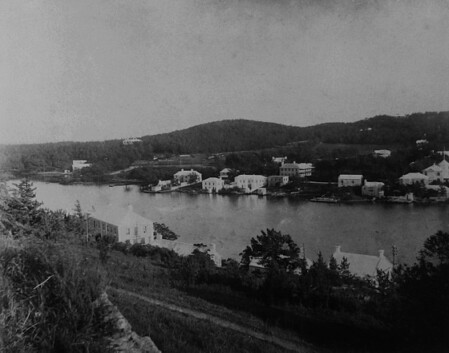
Bermuda is one of the few remaining dependant colonies. It was inhabited from 1609 when it was claimed after a Virginia Company ship foundered there. The island was given a charter in 1612 and became a Crown Colony in 1684. Throughout the 19th century thee was a major naval base on the island.
British Kaffraria
British Kaffaria was a region of South Africa between the Great Kei River and Natal which became a Crown Colony from 1847 to 1866 after which it was annexed to the Cape Colony.
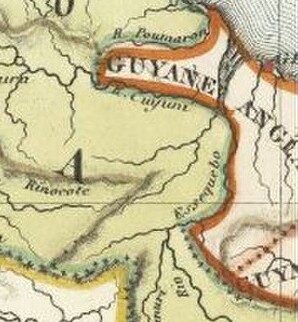
British Guyana
British Guyana was the only British territory on the South American mainland. It was first settled by the Dutch in 1616 but occupied by the British in 1796 and 1803. In 1831 the settlements were brought together to form the colony of British Guyana. With the abolition of slavery, migrants from the East Indies were settled to work the sugar plantations.
British Virgin Islands
The British Virgin Islands is a group of 36 islands off the Greater Antilles in the Caribbean. The island were settled by the Dutch in 1648 and seized by the British in 1766. From 1871 until 1958 the islands were part of the federated Crown Colony of the Leeward Islands. In 1867 the status of the islands was confirmed as a colonial dependency. Executive authority remains vested in a governor appointed by the London government.
Brunei
The Sultanate of Brunei was a British
protectorate from 1888 until 1983.
Buganda
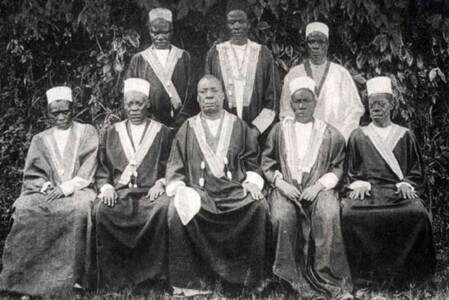
Buganda was originally a kingdom in eastern Africa. The
British East Africa Company employed Frederick Lugard to persuade tribal chiefs
to sign agreements with the British in 1890-91. Uganda was declared a British
protectorate in 1894 at a time when the British government was concerned by
French ambitions in the region, particularly in the upper Nile area. In 1897
the ruler of Buganda, Kababa Mwanga led a rebellion against the British
presence and an agreement was concluded by which the Buganda people were given
freehold tenure of their land and their traditional council, the Kukiko,
continued to operate.
Burma
The Honourable East India Company (HEIC ) established
three trading stations in Burma by 1612. The Burmese empire had re-established
some of its former power by the early c19th so that by 1824 it was considered a
threat to the British trading interests of Assam and Bengal. After the 1st
Burmese war of 1824-6, Assam, Arakan and Tenasserim were annexed. Following a
second war in 1852, Lord Dalhousie annexed Pegu. In 1862 several of these
territories were joined together as British Lower Burma. In 1885 King Thebaw,
encouraged by the French, confiscated the property of the Bombay-Burma Company.
A strong British army deposed Thebaw, and Burma was administered from India as
an Indian province until 1937 when it received non-colonial status and was
given limited self-government.

Canada
The first British presence in Canada was the
settlement on Newfoundland established by Gilbert in 1583 and then from 1621 there
was a Scottish p presence on Nova Scotia although the French only formally
ceded the peninsula at the Treaty of Utrecht in 1713. The Hudson Bay Company
was incorporated in 1670 and established forts at Fort Rupert and Fort Albany
but the British presence was precarious until Wolfe defeated the French at
Montreal and the Treaty of Paris was signed in 1763 whereby the French
territories were ceded to Britain.
Nova Scotia was recognised as a colony in 1769
and New Brunswick in 1784. The loss of the American colonies led to the flight
of more than 40,000 colonists to Canada which strengthened the British
presence. In 1791 Pitt's Canada Act created Upper and Lower Canada giving them
representative institutions. Settlers were unhappy at the arrangements made and
in 1837 there were two rebellions leading to Lord Durham being sent to
investigate the causes of the dissatisfaction. The Durham Report recommended
responsible government which was agreed to in 1848 leading to the British North
America Act of 1867 which formally constituted the dominion of Canada.
The founding provinces were Quebec, Ontario,
New Brunswick, Nova Scotia and these were joined later by Manitoba (1870),
British Columbia (1871), Prince Edward Island (1873), Alberta (1905),
Saskatchewan (11905) and Newfoundland (1949).
Cape Colony
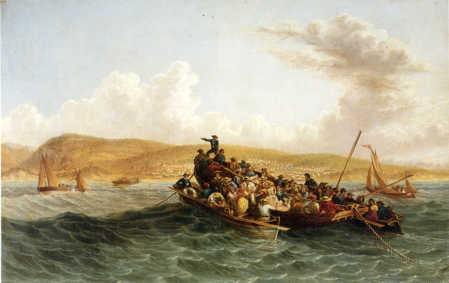
The Dutch East India Company founded a
settlement at the Cape of South Africa in 1662 to act as a re-provision
station. During the Napoleonic Wars, the British seized the colony in 1795 and
restored the colony to the Dutch in 1802 before seizing it again in 1806. It
was eventually ceded to Britain in 1814. Administration was at first autocratic
before representative government was established in 1853. During this time
there was an exodus (from 1835) of the Dutch settlers who wanted to escape the
British administration (and particularly the abolition of slavery in 1834). There
were also five military campaigns fought against Bantu Kaffirs and Zulus. In
1843 Cape Colony assumed responsibility for the territory of Natal which was
constituted as a Crown Colony in 1856. In 1852 the British recognised the Boer
colony of the Transvaal and two years later recognised the creation of the
Orange River colony.
The discovery of diamonds in 1867 in
Griqualand led to a diamond rush and the annexation of the area to the Cape
Colony. In 1910 Cape Colony became part of the Union of South Africa.
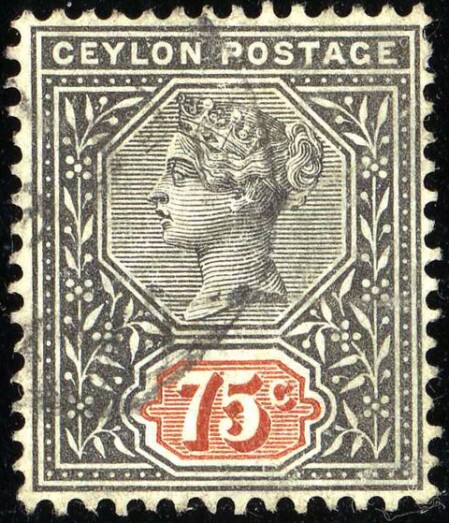
Ceylon
Ceylon (now Sri Lanka) is an island at the
southern tip of India separated from the mainland by the 33 mile wide Palk
Strait. It was annexed to the Madras presidency of the HEIC in 1796. Previously
Portuguese traders had established settlements but in 1658 lost them to the
Dutch East India Company. Ceylon was declared a British colony in 1802 although
at that time the central Sinhalese Kandyan Kingdom had not been destroyed. Kandyan
Kingdom was destroyed in 1815 and an executive council and legislative council
established fo rthe whole island in 1831-2. British authorities were used to consulting
the leading Sinhalese families, but it was not until after 1919 that reforms
were introduced to allow representation from all classes. During World War Two,
Trincomalee was the main base for the Eastern Fleet, and from 1944 the HQ of South
East Command was established at Kandy.
Cyprus
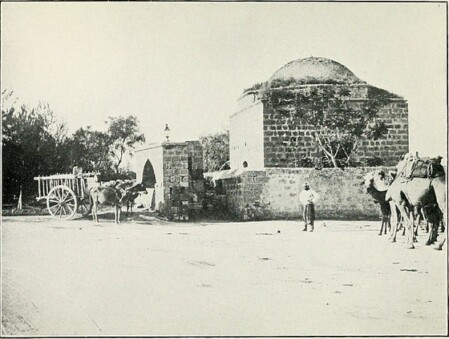
Cyprus is a small island in the eastern
Mediterranean. It became a British protectorate in 1878, when General Garnet
Wolseley became its first British administrator. He was tasked with
ascertaining whether Cyprus had a suitable base for Britain’s Mediterranean
Fleet (it hadn’t). The island remained
within the Ottoman Empire until it was declared a British colony in 1914. In May1925
Cyprus became a Crown Colony. The main issue for the British was how to deal
with demands for union with Greece from 80% of the population who were Greek.
Differences between Greeks and Turks led to riots and the suspension of the
Legislative Assembly in 1931. A Consultative Assembly met in 1946 but the basic
differences between the two ethnic groups remained so that the Legislative
Assembly was not reconstituted until after independence in 1960.
Egypt
Egypt was never formally a part of the British Empire
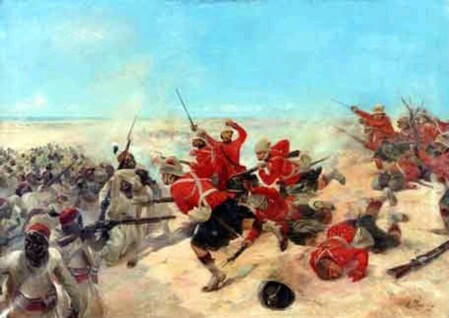
but it was a British Protectorate from 1914 to 1922. It was subjected to an
element of British control following the British invasion led by General Garnet
Wolseley in 1882 which had been sent to Egypt to quell a nationalist revolt led
by Arabi Pasha. For four years from 1878 Britain together with France had taken
on the administration of Egypt which was virtually bankrupt at a time when
British and French investment in Egypt, particularly the newly built Suez Canal,
was very high. The revolt by Pasha threatened British interests in the country,
now holding a strategic position on the route to India. The military occupation
became semi-permanent as a result of a rebellion in the Sudan then occupied by
Egyptian forces and the administration of the country particularly its
financial arrangements were overseen by British officials. Alexandria became
the principal base for the Royal Navy in the eastern Mediterranean, 5,000
British troops were stationed in Egypt and by the end of the 19th century over half of Egypt's trade was with Britain.
Falkland Islands
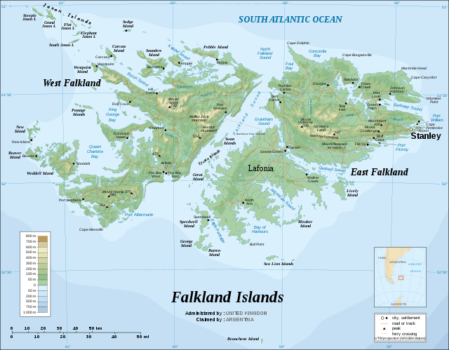
The Falkland Islands are British dependant territories in the
south Atlantic, 300 miles esat of the Strait of Magellan and 8,000 miles from
the UK. Spain, France and Britain all tried to establish settlements on the
islands but only the British (in 1771) were successful. This settlement proved
uneconomic and the British withdrew in 1774. When the newly independent
Argentina sought to take possession of the islands, the British sent a naval
expedition in 1832 and made the Falklands islands a Crown Colony. Argentina
never abandoned its claim and took the issue to the United Nations in 1946. In
the 1970s Argentina began to reiterate its claim on the islands and Britain sent warships to the area. Discussions on the political
status of the island continued however Prime Minister Thatcher reduced the military
presence which prompted an invasion by Argentine forces in March 1982. The
Thatcher government responded by sending a task force of 20 warships and 6,000
troops and recovered the islands by 14 June.
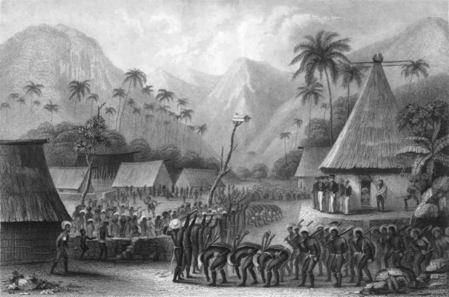
Fiji
Fiji is
a group of islands in the south west Pacific. Tasman discovered the presence of
the islands in 1643. Cook visited the
islands in 1774 and Bligh surveyed them
after the mutiny on the Bounty in 1789. In October 1874 the British negotiated
treaties with Fijian leaders and the island was constituted as a Crown Colony.
Indians were brought in to work as indentured servants on the islands’ sugar
plantations and over the years came to outnumber Fijians.
Gambia
Gambia is made up of territory on both sides of the
Gambia river extending for 200 miles inland. The area was discovered by
Portuguese traders in the 15th century and English traders followed from
1587. James Island in the middle of the river became a major base of the Royal
African Company from 1661 but following the abolition of the slave trade
Britain sought to control the merchants and the territory directly. In 1816 a
garrison was established to ensure compliance with the abolition of the slave
trade. The Gambia became a Crown Colony in 1843 and its borders were
established in 1888 following discussions with the French. The main export was
ground nuts but due to the prevalence of disease the colony was never an
economic asset.
Gibraltar
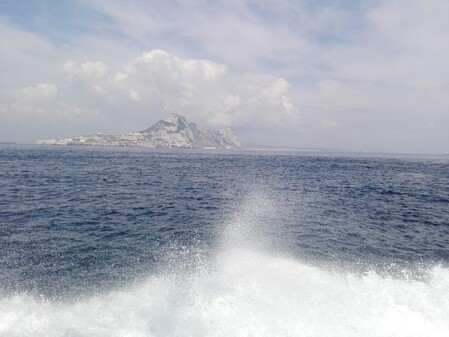
Gibraltar, Britain’s smallest colony, was taken from the Spanish by Admiral Sir George Rooke in 1704. The capture was formalised in the Treaty of Utrecht in 1713. The town was frequently under siege, notably in 1779-81. The rock served as a major British naval base throughout the 19th and 29th centuries when its warships covered the western Mediterranean and the routes to the southern Atlantic.
Gold Coast/Ghana
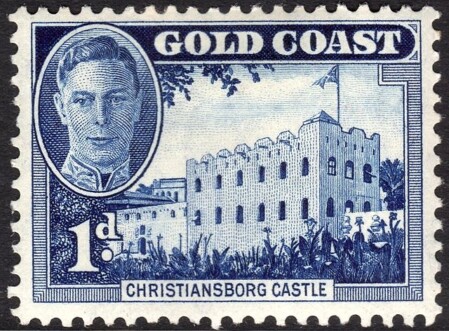
The Gold Coast consisted of some 330 miles of coast along the West Africa coast. British interests began with the Royal African Company in 1676 when settlements for the trade in gold and slaves were established. The British, Danes Swedes and the Dutch all competed for trading stations along the coast until Britain acquired the Danish and Dutch coastal forts in 1850. Britain’s main concern in the area was to protect the coastal trading stations from attacks from the Asante confederacy. The coastal lands were administered directly by Britain from 1821, and from 1896, following the scramble for territory at the end of the 19th century, Britain annexed the interior. The final Asante territories wee annexed in 1901 when the northern territory became a Protectorate of the Crown Colony. In March 1946 a new constitution gave the Africans a majority in the colony’s legislature. In 1957, under the leadership of Kwame Nkrumah, Ghana became the first black African dominion and within three years had achieved independence.
Grenada
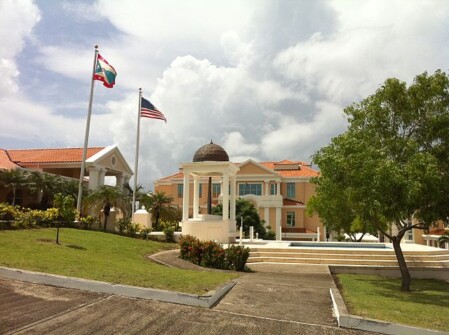
Grenada was colonized by the French but then taken by the British in 1762 before being restored tot the French in 1779. It was finally ceded to the British in 1783 by the Treaty of Versailles. The export of spices became the territories’ main export. From 1885 until the creation of the British West Indies Federation in 1958, Grenada was a Crown Colony. Independence was granted on 7 February 1974.
Hong Kong
The sparsely populated Hong Kong island served as a home for pirates until it was taken by the British on 26 January 1841 during the First Opium War. Official annexation came with the Treaty of Nanking, 1842, and the island became a Crown Colony in 1843. Kowloon was acquired in 1860, and in 1898 the New Territories were leased from China, by when the territory consisted of some 90 square miles. The colony developed as Britain's main naval and trading base in the far east with a railway to Canton in China which opened in 1910.

India
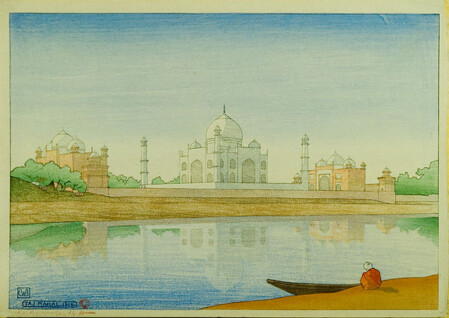
A British presence was established in India
following the creation of the Honourable East India Company (HEIC) in 1600 but
it was in the 18th century that British
power was established in India by Clive, Governor of Bengal, with the collapse
of the Moghul Empire. Conflict with the French and the Nizam of Hyderabad led
to the spread of British influence and with the capture of the Mysore capital
in 1799, the HEIC controlled Bengal, Bihar, Benares and much of the Bay of
Bengal as far as the Coromandel Peninsula. Permanent settlement of Bengal began
in 1793. The early 19th century saw rapid
expanse of the area under British influence, mainly to secure the western
regions from the Russian threat. Under Governor Dalhousie, much progress was
made with the Grand Trunk Road built and railways and the telegraph extended
but attempts to change some Indian traditions eventually led to the Mutiny of
1857 after which the British government took India back under central control.
It was accepted that India could never become a colony and was controlled by a
Secretary of State for India. In 1876, Disraeli, in an attempt to gain more
electoral support made Victoria Empress of India. The exploitation of
India though was to lead to the development of national pride which became the focus of the
Congress Party after its foundation in 1885.
Ionian Islands
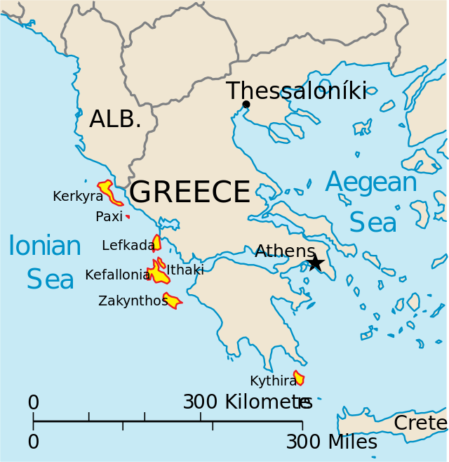
The Ionian Islands including Corfu lie 20
miles off the north-west coast of modern Greece. The islands were Venetian
until 1797 when they were occupied by the French. In October 1809 the British
occupied most of the islands (although not Corfu until 1814). The British established
a protectorate to prevent the Russians or the Ottomans from possible invasion. ‘The
United States of the Ionian Islands’ was established in 1815, protected by the
Royal Navy and administered by British Commissioners. The Protectorate lasted
until 1864 when the islands were returned to an independent Greece. The British
legacy in Corfu are the fortifications, a three storey palace and a cricket
square in the main town.