




The Campaign to Abolish the Slave Trade

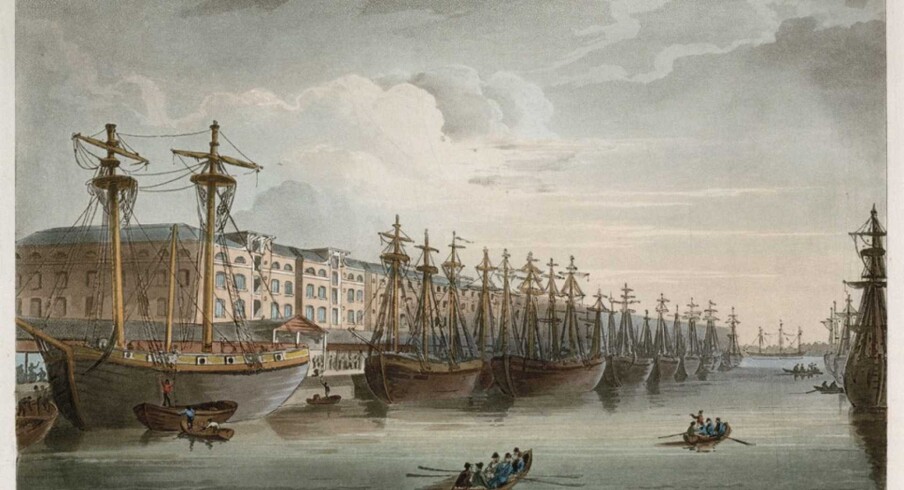
Three million slaves transported in British ships
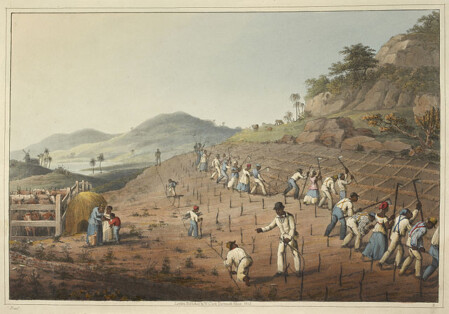
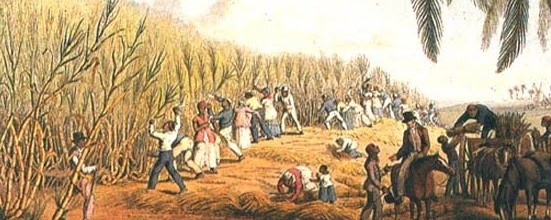
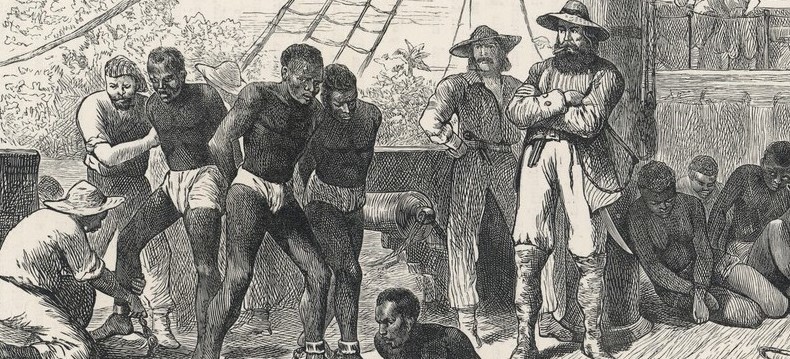
Between 1680 and 1807 over three million enslaved people from Africa were transported in British ships to be sold as slaves in the Americas and the Caribbean. This trade made huge amounts of money for those involved and helped to finance the industrialisation revolution in Britain. The trade reached its height in the years before 1800 when 300,000 Africans were taken by force to the Caribbean by which time a vigorous campaign against the inhumanity of the trade was reaching thousands in Britain. The campaign almost petered out during the 1790s as a result of years of the wars with France but then with the death of Pitt in 1806 the campaign in Parliament revived and in March 1807 an Act to ban the trade in slaves was passed.
Why the slave trade was abolished at its height has interested historians. Was it the campaigning style of the evangelical movement that managed to mobilise a nation using methods that were to become the norm in politics thereafter, was it the self-interest of those involved in the trade who realised that profits were dwindling or was it the threats of violence from increasingly frequent slave rebellions? What brought about a change in heart of a population that had been able to justify the trade in humanity by claiming that Africans were not able to receive the salvation of God and could thus be regarded as mere chattels. It was not unusual for people within the Anglican church to be owners or part-owners of enslaved people and even slaves who had been freed became involved in ventures to establish plantations depending on the labour of slaves.
It became easy for the British to justify the
enslavement of Africans. In the early days of the trade in the late 17th
century, the creation of wealth was regarded as justifying enslavement. The
conversion of the West Indian islands to commercial agriculture, the supply
of commodities that were of benefit to
all and the scale of the profits to be made overrode any humanitarian
considerations. Further arguments based on race further helped to strength the
arguments raised to defend the system, despite European legal conventions.
The Quakers led the way in demanding abolition
Early criticisms of
the slave trade came from Quakers, particularly from those in the American
colonies. It was the work of Anthony Benezet in producing hundreds of tracts
against the slave trade, disseminating them on both sides of the Atlantic that
first ignited opposition to the trade. The first Englishman to write on the
subject was John Wesley who produced Thoughts upon Slavery in 1774, but
it was Benezet’s contacts with Grenville Sharp that and in particular their
discussions about the use of petitions that would prove to be a turning point.
The Mansfield Judgement
Sharp was one of the earliest defenders of those English blacks who had come to Britain in the wake of the American War of Independence. During that war thousands of slaves used the political and military chaos of the 1770s to escape and move north. The British sought their support and offered freedom to those who went over to the British side. Following the defeat of the British in 1781, many of these ‘loyal blacks’ scattered and went initially to Canada from where they managed to get to London where the legal status of black people had been clarified by the Mansfield judgement of 1772 which declared that a slave who sought his or her freedom in England could not be forced to return to slavery in the colonies.

Granville Sharp
The judgement was not actively enforced by the courts and it was left to individuals to fight their own case often against plantation owners who fought to enforce the repatriation of former slaves Sharp was tireless in helping blacks to establish their right to remain in Britain and in publishing details of the inhumanity of the trade in slaves and of their living and working conditions on plantations in the West Indies. Many blacks who had made their way to Britain were also persuaded to join a resettlement scheme that saw them taken to Sierra Leone, in West Africa. Although the coastal region of Sierra Leone had been a notorious region for the salve traders, 400 were persuaded to sail there in April 1787. They were later joined by more black ‘loyalists’ from Nova Scotia in 1792.
The Mansfield judgement, the publicity around the setting up of the colony in Sierra Leone and the work of Grenville Sharp helped to raise awareness of the slave trade amongst a nation that was for the most part unaware on the worst inhumanities. The publishing of the details of the Zong case shocked and move many. The Zong was a slave ship that was on the middle passage when it began to run out of supplies. Captain Collingwood decided to throw 131 slaves overboard and hoped to recoup the financial loss by claiming on the ship’s insurance. When the story was made public in 1783, with the judge declaring that the case of the slaves was the same as if horses or cattle had been thrown overboard, momentum was given to the campaign that would see a huge propaganda campaign launched by opponents of the slave trade.
In London Quakers petitioned Parliament for the first
time in 1783 and then began to produce literature describing the slave trade in
newspapers throughout Britain and denouncing the trade for its immorality and
for its offence to religious sensibilities. The campaign was joined by Thomas
Clarkson in 1786 and he through his campaigning throughout the country helped
to create a nationwide network of Quaker groups. It was Clarkson who also
persuaded William Wilberforce, a MP at Westminster, to work with him on the campaign to abolish
the slave trade. Together these two men would be the public face of a campaign
that would pioneer new ways of persuading the members of Parliament to pass
legislation to abolish the slave trade. Wilberforce would focus his efforts on
establishing links with fellow parliamentarians and building up support in the
two houses whilst Clarkson would write leaflets, work on petitions and address
meetings the length and breadth of the country. The decision was made early on
that the focus would be on the Atlantic slave trade rather than attack slavery
itself. It was felt that if the trade in slaves could be stopped then there
might be an improvement in living and working conditions. It would also be
easier to persuade the West Indies lobby to accept the abolition of the trade.
Abolition of slavery itself was not something that most planters would accept,
as the ‘free’ labour of the slaves made producing sugar and tobacco profitable
when additional labour costs would make the plantations of the West Indies
unable to compete against the more profitable plantations in central America
and Brazil.
The London Abolition Committee
In May 1787, the London Abolition Committee was formed
and soon thousands of articles were being circulated around the country. Images
of slaves aboard slave ships wee widely made available and Wedgewood produced
an iconic plaque of a slave with the words, Am I not a man and a brother?
In 1788 John Newton, a former slave trader, published Thoughts upon the
African Slave Trade which helped to dispel any doubts which people might
have had about the real horrors of the trade in humans. The petitions began to
reflect the support the movement had. In 1788 102 petitions arrived at
Parliament from all over the country. In 1792 519 arrived and MPs were in no
doubt as to what the public mood was. The 1787 Manchester petition alone had
10,700 signatures. Meetings on abolition were well attended often to hear
Thomas Clarkson who travelled thousands of miles to give his lectures.
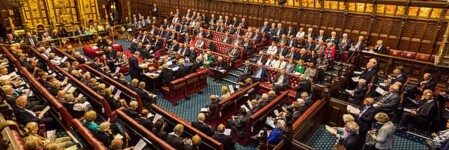
Parliament was sent hundred of petitions in a new type of campaigning
In February 1788, a Committee of the Privy Council investigated the African trade and in May there was a debate in the House of Commons on the trade. By this time, the testimony of former slaves or traders was having an impact. Olaudah Equiano, a former slave, published his autobiography in 1789, and held audiences spellbound by his descriptions of the African trade.
John Newton
John Newton, the author of ‘Amazing Grace’, and a former slave trader who had turned to a life as a preacher, addressed the Privy Council Committee and spoke of how ‘several captains of slave ships were honest, humane men; but not all so’ and how it is usual for captains, after insurrections and plots happen to flog the slaves. Some captains on board, on whose ships he had been, added the thumb screw, and one in particular told him repeatedly that he had put slaves to death after an insurrection by various modes of torture.
Slaves rebel on Saint Dominigue
A slave revolt in 1791 on the French colony of Saint
Domingue brought home to the public the instability of the slave system and the
atrocious conditions on the plantations whilst plantation owners in the West
Indies began to question their own safety. The British attempted to bring the
island under their control in 1793 but the violence escalated enabling planters
to point out that freedom for the slaves would only bring anarchy. The British
invasion had been repulsed with heavy loss of British life and there was
concern that freedom for slaves could well put white lives at risk. Further
slave revolts in Grenada, St Vincent, St Lucia, and Jamaica tended to strength
the planters in their resolve and convince the West Indies lobby in Parliament
that now was not the time to abolish the slave trade.
The commercial benefits of the slave system were still sufficient to silence critics of
the system and when in 1793 Britain and France went to war with one another, attention in Parliament
was diverted away from the issue of the slave trade. Wilberforce continued to
raise the issue in Parliament but with hunger and social unrest, the issue of
the slave trade had little support. When in 1798 Wilberforce failed again to
bring about a debate on the slave trade, he resolved to wait until the time was
right.
In February 1804 Wilberforce again brought his motion
for abolition before Parliament, receiving widespread support outside
parliament. Leaflets were quickly published, and the campaign began anew. There
was increasing support in the Commons, but the Lords proved to be as
obstructive as ever. Eventually the Prime Minister, Pitt, agreed to support a ban on the slave trade
with newly captured territories but in January 1806 he died. The resulting
Fox-Grenville government resolved to support a ban, but Fox died before a bill
went through. The General Election was held in 1806 with abolition the major
issue. With constituents putting pressure on candidates a pro-abolition House
of Commons passed an abolition act in early 1807 and this time the House of
Lords accepted the inevitable and passed the bill to abolish the slave trade
for British ships.
The trade in slaves continued unabated. It is
estimated that in the early 19th century, 100,000 Africans were
taken out of their lands every year by ships which continued to trade in
slaves. Lord Castlereagh tried at the 1815 peace negotiations to persuade the
French, Portuguese and Spanish governments to abolish the slave trade as soon
as possible, declaring that slavery was repugnant to the principles to
humanity but it would take many more years for the trade and the
institution of slavery to end. The USA did abolish the slave trade for American
ships in 1808 and supported Britain in its efforts to stamp out the trade, but
it was not until the 1860s that the trade and the institution ended in the
Americas.
Historians continue to debate why the British Parliament ended the trade for British ships. In 1944 Eric Williams published his book ‘Capitalism and Slavery’ and argued that it was economic self-interest that brought about the end to the slave trade and not the humanitarian element. He argued that with plantation slavery no longer being as profitable, the estate owners were losing their political support in Britain and the banks and merchants were beginning to see free market labour and the factories of the industrial revolution as the investments of the future. Historians continue to debate whether the British plantations were becoming less profitable. It is the case that the British plantations benefitted from having no tariffs on their sugar unlike the Brazilian and Dutch plantations.
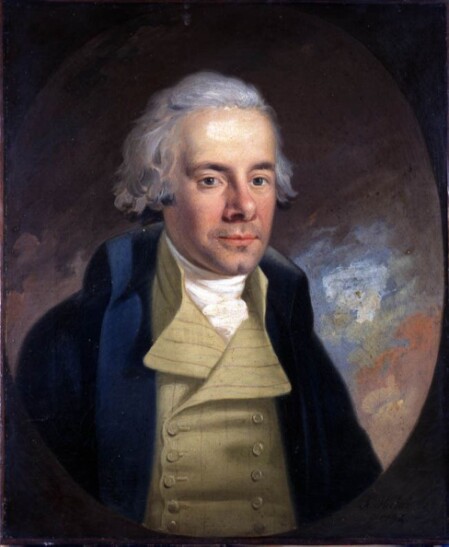
William Wilberforce
It is argued that the soil in many West Indian islands was becoming less fertile however a number of the island ere continuing to turn out a good profit and in British Guyana, there were new plantations which brought excellent profits. The continuing threat of violence and the knowledge of what had happened in St Domingue and other islands may have concerned some, but the trade was thriving in the last year of the c18th with more than 1,000 British ships involved in the trade. Banks and merchants continued to provide credit for the trade and it seemed to be as stable as it had ever been yet within a short span of years MPs were persuaded to end a trade that Britain had dominated for over a century and a trade whose profits had helped to finance the industrialisation of Britain.
Minds were changed
There is no doubt that the British were persuaded of the inhumanity of the slave trade. Whereas once the British could claim that African slaves were not civilised and were savages not worthy of being saved by God, the arguments of evangelicals had persuaded otherwise. It would not be long before British missionaries were working on sugar plantations in the West Indies and in saving souls, finding their own salvation. The work of the Quakers and the evangelical movement helped to change the minds of the British on the slave trade and it would be the same type of campaign that would in the near future abolish slavery altogether in the British Empire and enable the British to claim the moral high ground.
Related Pages