




The Impact of the Slave Trade on Britain
The Atlantic trade overtook Europe
The beginnings of modern economic growth can be traced back to the establishment of the first cotton factories of the industrial revolution in the early 19th century, however urbanisation, industrial diversification and export-led industrialisation had already begun in the c18th. British industry and trade had been transformed in the 18th century with the development of a consumer economy that was based around trade with the Americas. In 1700 the bulk of British exports went to Europe and consisted mainly of woollen textiles but by the end of the century, the Americas had overtaken Europe as the destination for British exports and although woollen goods were still sent to Europe, a wide variety of manufactured products were being sent to the Americas. laying the ground for the industrial revolution of the late c18th.
The Atlantic economy became the focus of the world’s main trade routes in the c18th, and the slave plantations of the Caribbean were central to this trade which involved not just Britain and Europe but India and the Far East. Initially the workforce for the plantations had been indentured labour from Ireland. As early as the 1620s Irish labourers travelled to the American colonies and the West Indies as indentured labour, with many of them working on the sugar and tobacco plantations. As many as 60-65% of migrants to the Americas in the c17th were indentured servants and by 1640 more than half of the population in areas of the West Indies were Irish indentured servants, small farmers or artisans.
In 1660 the Royal African Company was granted a charter giving it the sole right to search for and trade in gold along the west African coast. The charter also mentioned trading in slaves and by the end of the century, the Company was buying and selling at least 5,ooo slaves a year to the plantations in the West Indies. Its monopoly in the slave trade was lost in 1698 to be followed by a huge expansion in the numbers of slaves carried in British ships across the Atlantic.
The peak of British involvement was in the third quarter of the c18th when over 800,000 slaves were transported in British ships to the West Indies or the American colonies. This figure represented 43% of the total number transported across the Atlantic.
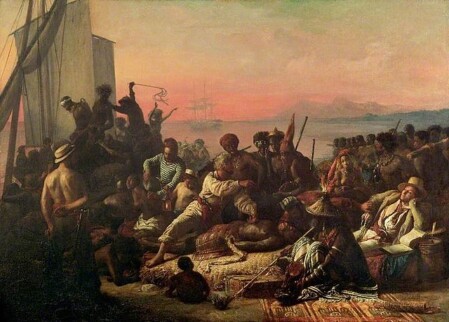
Ships from British ports sailed to west Africa loaded with manufactured goods from Britain as well as wines from France, Indian textiles, food from Ireland, porcelain from China. These products were used to acquire slaves from traders in west Africa who were then sold in markets in ports in Jamaica and Barbados. 26,000 voyages are thought to have made the journey between about 1650 and 1850, carrying over twelve million slaves of whom about a quarter would die en-route. 6,000 voyages departed from Liverpool, Bristol, and London in the 17th century alone and 50% of British shipping was involved in the trade in enslaved people at the time of abolition in 1807. The trading system of the Atlantic was complex and there existed a symbiotic relationship with the American colonies that existed by providing the sugar plantations in the West Indies with food, timber and facilities for the repair of shipping.
Most slaves were bound for Jamaica
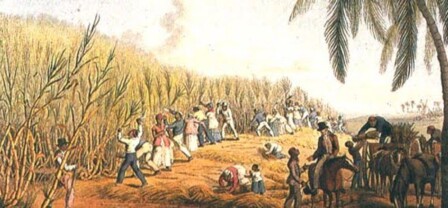
The majority of the slaves aboard the British ships were bound for Jamaica and the British Caribbean, to be sold to work on sugar plantations, producing sugar for the British market. In 1775 total sugar imports accounted for 20% of all British imports and were five times as much as tobacco imports. In the 1770s the value of British imports from Jamaica were five times as much as the total of imports from all of the American colonies, although over the following thirty years imports of cotton to Britain were gradually to rival sugar.
The trade in slaves to work the sugar and cotton plantations of the American colonies and the Caribbean saw over eleven million Africans sent into enforced labour, transforming the face of the Americas, and enhancing the wealth of Europeans whether as settlers in the American colonies or at home.
Slavery in the West Indies was absolutely brutal. Disease was ever present in the region and the cultivation of sugar was especially harsh as overseers drove slaves hard to maximise profits. A regime of terror existed without any legal restraint. Slaves were whipped frequently and brutally, and their wounds were treated with salt pickle, lime juice and pepper. A slave owner Thomas Thistlewood recorded in his diary how he would mark the bodies of slaves by slitting their noses and cutting off ears and he also recorded his sexual exploitation of the female slaves. Slaves were dehumanised and traumatised and ultimately this knowledge, once common knowledge in Britain, led to a change in attitude towards the planters who were increasingly seen as tyrannical and their lifestyle as debauched.
It was the British taste for sugar that changed everything and drove the demand for the trade in slaves. The British colonies in the Caribbean were all over time converted into sugar economies, changing the landscape, and making the slave economy central to economic life on the islands. First Barbados, and the Leeward islands in the 1630s and later Jamaica converted much of their countryside into sugar plantations so that the number of plantations soared into the hundreds with a black population that outnumbered the white settler population. In the 17th century and early 18th century, sugar was imported into Britain as an expensive luxury, often used by apothecaries, and used by the wealthy elites but by the late c18th sugar became a cheap necessity found on the most common person’s table. Tea was by then being drunk not only in the morning and evening but even at dinner time. The British acquired a sweet tooth and sugar began to be used in a wide variety of products as drinking tea became the focal point of fashionable people’s lives. The tea was bought from China, imported by the East India Company, and the tax on it was the largest contributor to the Treasury. Tableware now was also being imported in ever growing amounts. By 1720 nine million lbs of tea were imported, increasing to 37 million by 1750. By 1790 the East India Company was importing 215 million pieces of porcelain as everyone was drinking tea.
This explosion in tea drinking and tobacco smoking was made possible by British dominance of the Atlantic slave system, and the emergence during the 18th century of Britain as the major Atlantic economic and military power, having defeated France in a series of wars, both in the Americas and in India. The whole system was made possible by naval power which enabled commercial interests to flourish and the British to enjoy the pleasure of sugar.
Profits were huge
The profits from the trade in sugar and slaves was large. Around 1770 profits from the sugar plantations and the commercial activities associated with the slave trade were £3.8 million whilst returns from the shipping companies alone returned about 8% -10% profit in the last fifty years of the century making the business not only profitable but also reliable and stable.
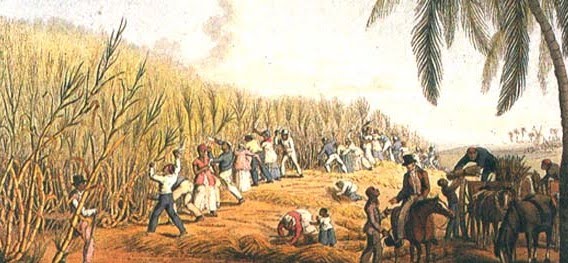
A sugar plantation in Barbados
Liverpool, Bristol and London were full of people who were rich on the Slave Trade
The Atlantic Trade played an important role in the development of the British shipping and shipbuilding industry. It is estimated that by 1800 15% of British built ships were being built for the slave trade and that insurance of the West India trade was over 60% of total marine insurance. Moreover, of the raw material imported into Britain in 1801, 71% were used in industrial production and of that figure 71% was produced by Africans with the cotton industry almost entirely dependent on African produced cotton from the West Indies and Brazil.
The home ports for the slave ships - Liverpool, London, Bristol, and Glasgow - were full of people who had made their money on the Atlantic Trade and these cities reflected this wealth. Ship owners, merchants and bankers accumulated huge amounts of wealth and were among the wealthiest people in the land. Investments in the Atlantic Trade became one of the most certain ways of making money and the University College of London project, Legacy of British Slave-ownership (LBS) has revealed the extent of slave ownership in the country with thousands of people having shares in the plantations of the Caribbean and owning plantations whilst remaining in Britain.
The rate of return on a slave voyage and the certainty of a successful voyage meant that many slave voyages were made on the basis of credit providing the finance for the voyage or even for the building of the ship. Profits made by wealthy merchants and bankers helped change the landscape of Britain. New country houses built with slave profits were built all over the country. Oxford college libraries were built with slave profits. The experiments of James Watt were financed with slave profits as was the West India Dock in London. The construction of many of Bath’s Palladian buildings were also constructed with the profits from the slave trade as were many of the buildings of the home ports.
The Slave Trade was no larger than any other sector of the British economy
The scale of the slave trade was certainly large, but it was no larger than many other sectors of the British economy. The profits produced by the sugar trade in 1805 was £5.4 mln which was below several other sectors including iron at £14.7 mln, woolen textiles at £12.8mln, cotton textiles at £12.8mln and sheep farming at £4.3 mln. Not far behind we coal at £4.6mln and linen textiles at £4.3 mln. These sectors alone could have funded the industrial revolution but the importance of the slave trade must not be under-estimated. Raw cotton from the Americas and the Caribbean provided much of the raw cotton needed for the expansion of the cotton industry which produced the textiles that replaced Asian textiles. The expansion of the cotton industry would not have been possible without the slaves that worked the cotton fields. Slave ships needed copper for their hulls whilst the rum distilleries in North America were made from copper as were the rods and bracelets which were used as a currency.
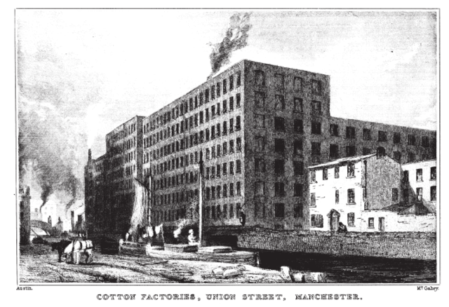
Cotton factories received their capital investment from plouging back profits from the firm
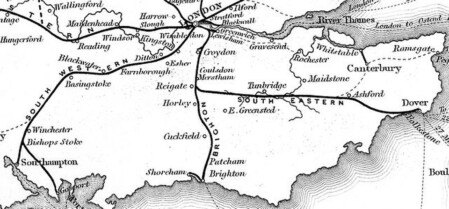
Some early railways received investment from slave compensation payments
The debates of historians
However it might appear that the expansion of the textile
industry depended on the slaves who worked the cotton plantations, cotton forms
did not require large amounts of capital. Much of the investment needed was achieved
by ploughing back the profits. The industries that needed heavy capital investment
like coal, which required the construction of deep mines and harbours, generally
received that investment from large landowners.
Merchants and bankers from London and Liverpool did
provide credit to finance the sugar plantations and the slave trade. They
provided bills of exchange which acted as money often to fund the cotton crop.
Buying and fitting out a ship for the slave trade was an expensive and risky
business and these bills of exchange played an important part in enabling those
involved in the slave trade to pay their bills.
Historians continue to argue about the role that the
salve trade played in the development of industrialisation. Eric Williams, the
author of Capitalism and Slavery, published in 1944, argued that profits from
the Slave Trade ‘provided one of the main steams of the accumulation of
capital which financed the Industrial Revolution’ and that profits from the
Slave Triangle formed a large part of the capital which financed the growth of
the metallurgical industries. Joseph Inikori in his book ‘Africans and the
Industrial revolution’ published in 2002 argued that successful
industrialisation requires exports, and that the British textile industry
provided those exports by replacing Asian textiles. He went on to say that the
growth of international trade between 1650 and 1850 depended on the Atlantic Trade
which was he claimed central to the development of British ship building and
shipping. Recently Professor Martin Daunton has made an important contribution
to the debate in his lecture at Gresham College on 7 February 2023.
Professor's Daunton's view
Professor Daunton accepts that both Williams and Inikori make valid points in what they say about how abolition of the Slave Trade came about but comes to the conclusion that it was the change in attitude of the London elite to slavery and the slave trade, brought about by the campaigns of the Quakers, that did much to reduce the political and social power of the Wesst Indies elite
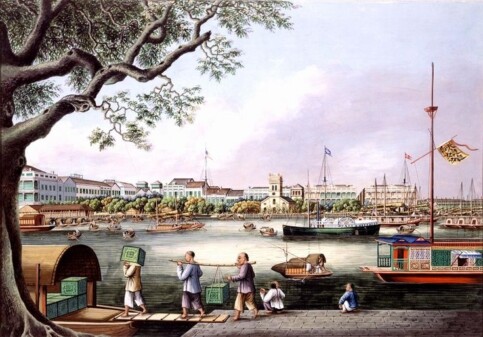
Tea was initially bought from China with opium grown in India. The importing of tea to Britain and the taxes paid on it made a huge contribution to the excehequer.
The declining prestige of the plantation owners
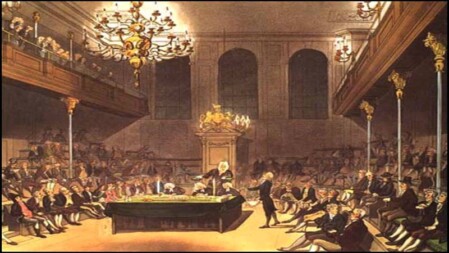
The plantation owners, and merchants involved in the
Atlantic trade, had been an important and dominant power in politics and dominated
Parliament. That they were persuaded to change their minds firstly about the
abolition of the slave trade and then the abolition of slavery reflects the
success of the propaganda campaign organised by the Quakers and the way in
which slave owners were increasingly seen by opponents of slavery portrayed
slave owners as debauched and degraded as seen in the Somerset case of 1772
when Lord Mansfield, the Chief Justice of King’s Bench argued that slavery was so
odious that nothing could support it. His ruling meant that slavery could be
selectively abolished as happened in some of the northern colonies.
Increasingly slavery was seen in England as un-English and the plantation owners
were increasingly isolated politically and socially although the Mansfield
judgement did not by itself bring about an end to slavery in Britain.
From 1783 onwards,
the Quakers began to place abolitionist literature in newspapers, adopt iconic
images and make available the thoughts and memoirs of former slaves and slave
traders. With the foundation of the London Abolition Committee, came a new way
of political campaigning that would become the standard way of communicating
the will of the public. Petitions,
public meetings, and rallies were introduced and became the norm for political
campaigns.
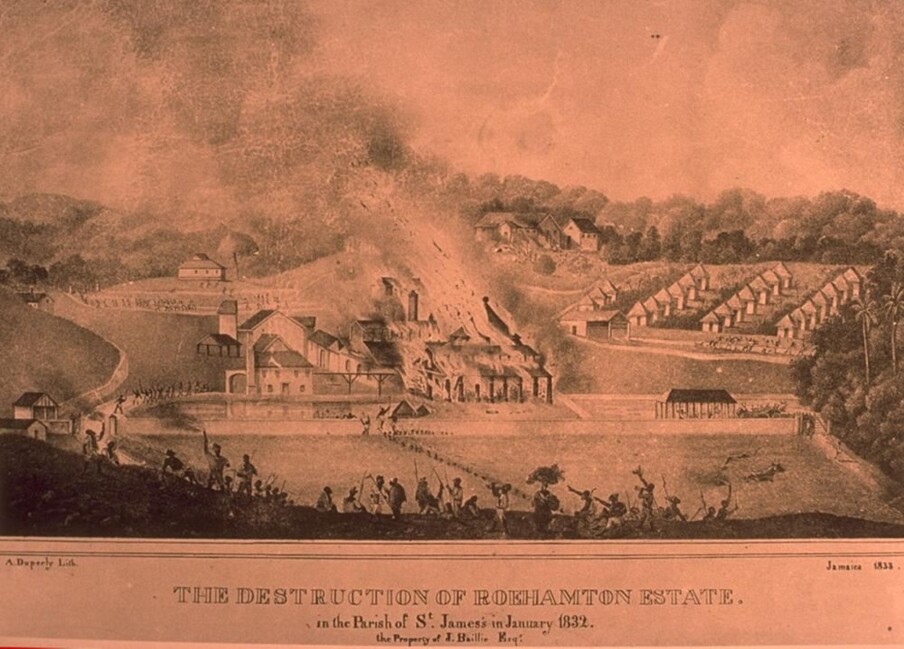
Overseerers left to themselves committed horendous brutality
The campaigns of the abolitionists made the general
public aware of the horrors being perpetrated in order to supply sugar to the
British people, but before these campaigns of the late 18th century, those
involved in the slave trade were well
aware of the inhumanity of what they were doing - the awful conditions on board the slave
ships with a death rate of over 20% together with the conditions on the
plantations where slave revolts were a common occurrence. To justify the
treatment of the black slaves, various justifications were invented, usually
based on race. The slaves were reduced in status to property and deprived of
their humanity.
White overseers often had to run a plantation by
themselves as owners returned to London to live off the profits of their
plantations. With fewer white men around, overseers quickly fell into the
violent routines they believed were necessary to maintain control. Slaves were
routinely whipped, their bodies burned, and their heads displayed. Slaves
guilty of threatening violence towards whites were tried and hanged with their
bodies left to rot. These were everyday occurrences and were part of the
management of the plantation. The only restraint was self-preservation and the
need to prevent large scale rebellion. This type of society in which there was
social interaction between whites and blacks was based on the accepted
superiority of the whites and was highly racialised. Slaves were regarded as
inferior, lacking in intelligence, and uncivilised. They were spoken of as
being savage and barbarian, and not able to develop. Such hierarchical theories
of race were developed to justify this treatment, and hence to be black was to
be a chattel.
Owners who returned to England often spent the profits they made on conspicuous consumption, particularly in the construction of grand country houses and the lifestyle which they deemed necessary if they were to be accepted into the ranks of the aristocracy. The majority of the plantation owners were Anglican and Tory, and sept their money on socialising and establishing a dynasty.
Following the abolition of slavery in the British Empire, a huge amount of money was paid out to those who were able to come to London to stake a claim.
£20 million was paid out to the owners of plantations with the slaves getting nothing. There is a debate about where this money went and whether it was used to fund industrialisation. The UCL project on the Legacy of British Slave Ownership has made available the documents relating to the compensation claims and has shown how much of the sugar trade was dominated by absentee owners, living mostly in the Home Counties. Some of the money was invested in the development of the railways and it’s no coincidence that the massive expansion of the railways in the 1840s, the so-called Railway-Mania was funded by compensation payments invested in the railway companies. Nicholas Draper showed how the UCL project demonstrated that slave owners and slave mortgagees invested heavily in the early development of the railways and there is data showing which railway companies received investments from those who received compensation payments between 1834 and 1838.
Professor Daunton warns against exaggerating the view that much of the £20 million was invested in British industry. He makes the point that over 50% of the compensation went to non-British residents in the colonies, and a large percentage of the compensation went abroad to be invested in US railways and the slave economies of the Americas. Bankers in the City of London even supported the paying out of compensation as it would help those who needed to pay off their debts. Much of the compensation money paid out to claimants living in England continued to spend their money on an extravagant lifestyle and on building grand houses, although some money was invsted in Britsh industry, particulalry on the railways.
A legacy of the Atlantic Slave Trade was certainly the development of British Exceptionalism and racism as Europeans associated black people with people who were submissive and captive. With Britain’s global military, economic and political dominance in the c19th, the British began to believe that God had ordained them to spread their power, and the word of God. Evangelicals debated whether blacks could receive the word of God and could develop in the same way as the British. When in the second half of the c19th, the missionaries began to have less success in converting native peoples, and began to meet hostility in the face of their work, even evangelicals began to think that blacks were incapable of attaining civilisation.
The abolition of slavery in the British Empire in 1833 (to be phased out using a system of apprenticeships), enabled Britain to claim the moral high ground and claim the British Empire was an empire of liberty in which subjects of the empire were being prepared for eventual democracy, and economic and political freedom. This formed the basis of the narrative told about British involvement in the slave trade, rather than the one told today about the inhumane treatment meted out to slaves.
The British had a ‘Mission to Civilise’ its people and this made the British Empire different from all others. Young men educated in Britain’s public schools would see it as their duty to work in distant lands developing industry, commerce and Christianity, whilst preparing the population for eventual self-government.
The extent to which the slave trade contributed towards British industrialisation has been much debated by historians especially since the publication of Eric Williams’ book Capitalism and Slavery (1944) which emphasised the central role that slavery played in the industrialisation of Britain, in using the profits from the slave trade to fertilise different sectors of the home economy and set the scene for the industrial revolution. For many like Robin Blackman who wrote The Making of New World Slavery in 1997, there is a clear link between making money from slavery and the financing of British capitalist development. He makes the point that British capitalism was a cause of slavery in that demand from the domestic economy for dyestuffs, sugar, rum, later coffee, and chocolate created the market for slaves. The opportunity to make such huge profits attracted investment and entrepreneurs who regarded the Caribbean as one large sugar factory to be worked 24 hours a day. These profits were so large that they all but accounted for total domestic investment by the end of the 18th century.
Other historians do not see the slave trade as so crucial to industrial development. Robert Tombs in his essay In Defence of the British Empire, claims that profits from the slave trade made individuals rich but accounted for about one per cent of national income. The Industrial Revolution’s key element was coal, of which Britain had a lot. The debate continues and the recent contribution of Professor Daunton has been a welcome addition.
By Peter Crowhurst, updated June 2023
Further reading:
Martin Daunton, Slavery and the British Economy, Gresham College, 2023
Nicholas Draper, The Price of Emancipation: Slave Ownership a, Compensation and British Society at the End of Slavery, Cambridge University Press, 2010
Joseph Inikori, Africans and the Industrial Revolution, 2002
James Walvin, A Short History of Slavery, Penguin Books, 2007
Eric Williams, Capitalism and Slavery, 1944
Related Pages