



Louis Riel and the Metis Resistance to Canadian Expansion
The Creation of the Canadian Federation
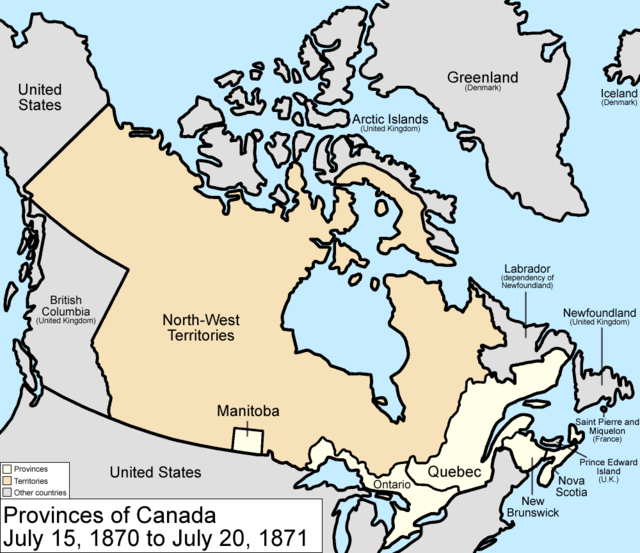
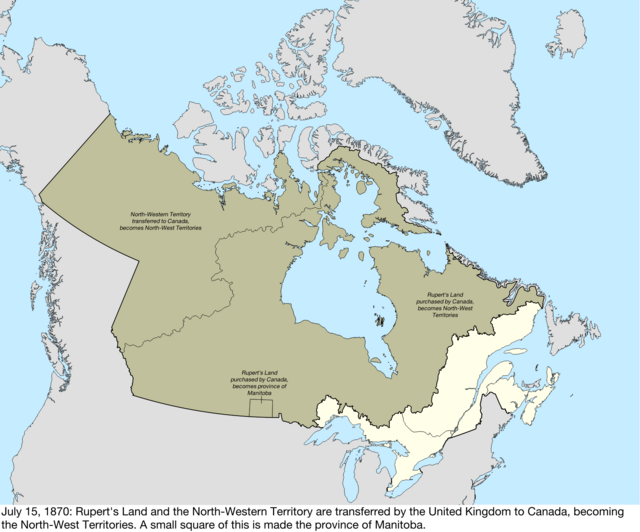
In 1867 the Canadian provinces of Lower and Upper Canada (largely present-day Quebec and Ontario), Nova Scotia and New Brunswick joined together to create the dominion of Canada. This was the culmination of the process started in the 1840s to grant more self-government to the people of those provinces. The new dominion was given the power to make laws and distribute land, and make arrangements to provide for its own defence, at a time when the rise of the USA was seen as a possible threat to the British provinces to the north. Local self-determination was the recommendation in a report produced by Lord Durham in 1839 in response to the disturbances in both Upper and Lower Canada in the mid-1830s. Three years later in 1870, the newly formed Canadian government bought for £300,000, the lands of the Hudson Bay Company (HBC) which comprised virtually all of present-day Canada except for the maritime provinces and part of Ontario and Quebec. The Hudson Bay Company was then governed from England until in 1931 a Canadian committee was made responsible to the governor and a committee in the UK.
The Hudson Bay Company
The transfer of land from the HBC to Canada was done without any consultation of those people who had lived in the areas administered by the HBC. They had to either accept the handover and what it might mean to them or resist. In the case of the Metis people of the Red River area in present day Manitoba, their lives would be threatened by the large-scale migration to Manitoba, that would be the inevitable result of the creation of this new large semi-independent state. The Metis chose to resist as their economic and cultural lives were at risk of being destroyed.
The HBC had been created by the granting of a charter in 1670 to allow the company to seek a north west passage to the Pacific, to occupy the lands adjacent to the Hudson Bay and to carry on commerce with those lands that might be profitable. The territories that were granted to the company became known as Rupert’s Land, after Prince Rupert, a cousin of Charles II and the first governor of the company. The boundaries of the territories granted were vaguely defined and were thought to extend from Labrador to the Rocky Mountains and from the source of the Red River to the Hudson Bay.
The HBC engaged in the fur trade, with its agents exploring by canoe and on foot the rivers and lakes of the interior, and establishing trading posts on the shores of James and Hudson bays and forts. Once a year the ships of the company travelled to the Hudson Bay and loaded up with the skins of beaver, foxes, bears, otters. The company also fought wars against the French and after the British defeat of the French by 1760, company agents began to establish trading posts in the vast interior.
The work of these hunter trappers, most of whom were either French or British, was dangerous for they were often working in territory not mapped by Europeans before, and occupied by indigenous people. The climate and landscape was harsh and to make their lives easier, these hunters and trappers established relationships with native women. They lived a semi-nomadic lifestyle returning to the HBC forts to exchange their cargoes of fur. The company was happy for their agents to have relationships with native women as it provided security for them and their valuable cargo, and they acted as useful intermediaries between the company and local people. Gradually the offspring of such relationships developed a culture of their own and their own separate communities. Many were devout Catholics or Protestants, spoke a dialect of their own, a mixture of old French or English, Cree or Chippewa. Such communities with their Scottish, French, Indian or English blood continued to hunt and trap, moving where the bear and beaver and later buffalo were, and devising their own laws and customs. They were a proud and independent people who by the early 19th century were concentrated mainly in the Red River areas of what is now Manitoba.
In the 1780s the HBC was challenged by a group of mainly Scottish and French Canadians, called the North West Company (NWC), Nor-Westers for short, who ignored the 1670 charter and using all the methods available to them, challenged the HBC monopoly. Native Indians were given rum or slaughtered, HBC prices were undercut and forts were burnt down, all to gain a share of the fur trade. This continued for nearly 40 years, until in 1821 the British government amalgamated the two companies and extended the company’s rights to include all the western Canada regions, totalling one and a half million square miles of territory.
The company was a hierarchical autocratic organisation and promotion was by ability, with promotion often going to Scots. A strong sense of loyalty existed amongst employees, with son often following father. The dominant force within the company was the Northern Department which covered most of the Canadian west. It operated as a corporate despot with no forum for discussion or debate. Edicts which said that furs could only be exported if they had been bought from the company and the seizures of fur, increasingly incensed indigenous people The company took no notice of the indigenous people that lived on the territories it administered and when its edicts were challenged the company pointed to its charter.
The company was essentially a collection and distribution agency, that dabbled in agriculture but only to lessen the possibility of settlement of its territories, which would be bad for the fur trade. The company deliberately did not advertise the existence of good agricultural land, although a colony had been established on the Red River, by Lord Selkirk, a shareholder in the company.
The Selkirk Colony
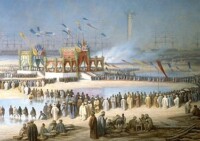
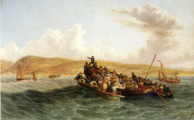
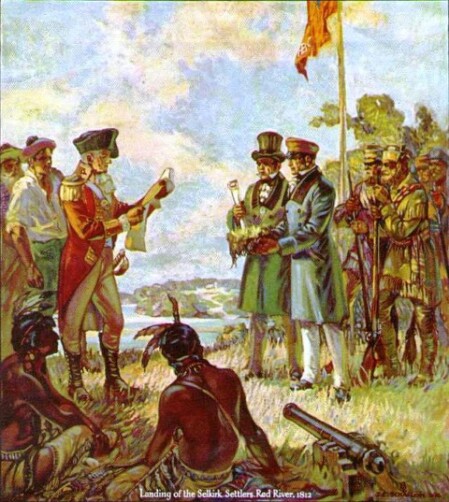
The Red River colony, an agricultural colony called Assiniboia, was founded in 1812 by Thomas Douglas, Earl of Selkirk, and initially consisted of Scottish settlers. It was located at the confluence of the Red and Assiniboine Rivers, in an area that once had been controlled by the Assiniboine but became a rendezvous for fur traders. The intention was for the colony to provide provisions for the HBC, although the Métis in the region were allied with the Nor-Westers and saw the colony as a direct threat to the trade of the NWC. Nor-Wester William McGillivray admitted in a letter of 14 March 1818 that the Métis were linked to the NWC by kinship and occupation yet ‘’looked upon themselves as members of an independent tribe of natives, entitled to a property in the soil, to a flag of their own, and to protection from the British government.’’
The landing of the Selkirk Settlers
A separate and distinct tribe
He went on to say that the ‘’métis have formed a separate and distinct tribe of Indians for a considerable time back.’’ By the time the Selkirk colony had been established, the HBC had constructed a fort across the Red River in what is now St Boniface and by 1812 the areas was home to Ojibwe, Cree traders and Métis buffalo hunters. The Métis had come west with the fur trade and by this time had established a strong community in the Red River area. Selkirk was a young idealistic peer who with a land grant of 116,000 square miles attempted to establish a Scottish settlement that was totally isolated from the settled areas in the east. The settlers however were poorly chosen and lacked the basic skills needed to establish a colony.
An unidentified Metis woman
The attitude of the British to settlement
Any new settlement of migrants had to follow a number of basic principles to survive. It had to choose a location that would be good for crop production, as the basis of any new British settlement anywhere in the British Empire was to establish a crop-based economy. To do this involved living off what was brought with them until such time as the first crop was harvested. This usually needed having the assistance of the local people and establishing acceptable terms of trade with them. The would-be settlers needed to adjust to the local environment and the native people. That meant accepting the local people and their customs, for if there were any disputes, there was no military support nearby that could be relied on for help. Would-be migrants usually began by establishing reasonable relations but often things took a turn for the worse when the settlement needed to expand.
Differing attitudes to property and family relationships often led to the British regarding native peoples as uncivilised and barbaric, and when arguments started over the ownership of land and when petty theft occurred, it often led to outright war. From the times of the earliest British colonies established on the mainland of America, there was a stark contrast between the vision of empire and what settlers aimed to achieve, and the lives of the native peoples they came across. Although there was no one single vision of empire there was a general acceptance that colonies existed to make England richer. Merchants would discover new markets and import exotic goods form the east, some of which could be exported to Europe whilst settlers would establish farms to grow products for the home nation. When possible, plantations were established for tea, sugar, tobacco etc and the labour came from indentured servants and later enslaved people. Settlers aimed to establish a peaceful and ordered society that was based on the society they had left behind: compact village communities with a landscape of manor houses, common fields with arable farming all based on a landowning class with labourers and a market system based on towns with markets and fairs. The basis for this model was an active land market with limited social mobility. It was on this model that the early settlements along the eastern seaboard in America were based and subsequent British settlements in Australia, New Zealand, South Africa and Canada.
Native societies rarely mirrored this model: they were often based on kin with their allegiance and loyalty not to the King of England, but to kinsmen and their leader. Such societies were often pastoral and mobile -not fixed and crop growing but based on hunting and the rearing of cattle. The notion of property in many native societies was quite different with property often shared. Towns were few and money scarce. There was often no strict social division as imposed by the elites in England -the clergy and the aristocracy, and marriage and children were often on an informal basis. Such a lifestyle had no place for social table etiquette. To the English, such societies such as the Métis, were seen as lawless, chaotic, barbaric, a race without order and civilisation.
From the earliest established colonies in the 16th century the English believed that it was their God given destiny to civilise the native people they came across, and that imperial rule brought civilisation to barbaric peoples. Empire was the means by which there would be social and economic improvement. The main motive for empire was to enrich Britain and provide better lives for the settlers but there was always a moral imperative which was used to justify the extension of the empire’s lands and the imposition of a new economic, legal and cultural order. Britain’s economic and technological dominance of the world in the mid-19th century when Britian was the workshop of the world only served to justify the conquest and exploitation of native peoples.
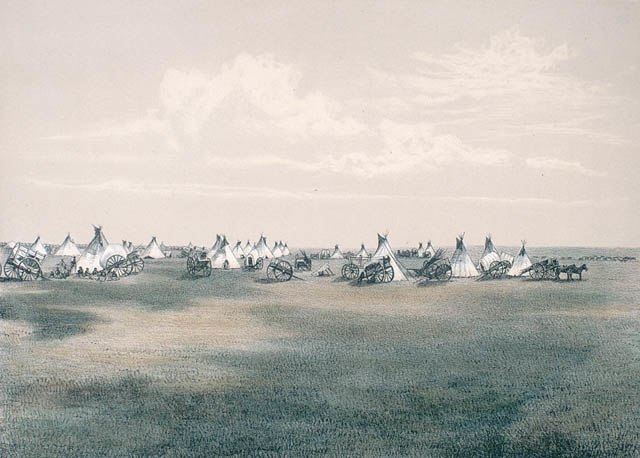
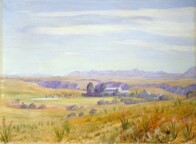
A Metis Camp, 1873
The expulsion of the Selkirk settlers by the Metis
By the 1820s the Métis lived independently of the HBC, predominantly in the Red River area from where they roamed the prairies looking for buffalo and the creeks for beaver and returned intermittently to their homes alongside the Red River. They established themselves as the main providers of fur and provisions to the NWC in the far west and they resented the nearby presence of the Selkirk colony, with its little houses and roughly ploughed fields, and the little church of St Andrew’s. The settlers were a constant reminder of the threat to the culture and very existence of the Métis. Occasionally trouble between the settlers and the Métis erupted as it did on 19 June, 1816 when a party of around 60 Métis under the leadership of Cuthbert Grant, an employee of the Nor-Wester company, set out to run provisions past the Red River colony. They plundered some outlying posts on the Assiniboine River and then stopped at Seven Oaks, near the HBC post at Fort Dreyfus. Robert Semple, the governor of the Selkirk colony led a group of around 25 settlers to talk with the Métis. A fight broke out in which Semple and 20 of his men were killed, with the Métis losing one man. Over the next few days, they forced the remaining settlers to leave the area under the threat of massacre. The colony was able to reestablish itself the following year but continued to be a constant threat to the Métis.
Differing attitudes to land ownership and freedom caused continual friction. The Métis believed that they were free to use the land and resources of the west but they had no say in the government of the region by the HBC which issued edicts which had the full power of laws, except that in the Red River area there was no means by which the HBC could enforce their edicts. In the 1830s there were rebellions against British rule in Lower and Upper Canada which resulted in the Durham Report which eventually introduced self-government and dominion status to Canada. These rebellions gave hope to the Métis who began to resist the autocratic government of the HBC. The HBC did establish the Council of Assiniboia in 1835 to run the Red River colony in an attempt to establish a western system of law, but virtually all of its members were Company men. Throughout the 1840s and 1850s the Métis challenged HBC rule, often through the courts but there were difficult years with disease taking its toll. There were multiple outbreaks of disease in the 1830s with up to seven people a day dying at its height.
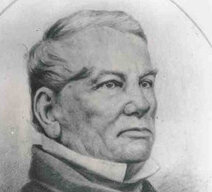
Jean Riel
The inspiration behind challenging the decisions of the courts and the gathering of large petitions was Jean Riel who on one occasion in 1849 manged to gather 400 armed Métis to surround the courthouse to disrupt the trial of trader Pierre-Guillaume Sayer which effectively ended the HBC monopoly in fur. In the 1850s, the Métis petitioned the British government to limit the Council of Assiniboia’s power. The reality was that the Council had no means of enforcing its edicts so was often forced to compromise with the local community to ensure that its laws were adhered to.
No recognition of Metis rights
By the 1850s, the Métis numbered around 5,000 in Red River but there was no recognition of their right to own property, hunt the buffalo or cut down trees for timber. The HBC courts would only recognise a paper title to land and not an ancestral right. The Métis had won a number of victories by the 1850s but in the 1860s increasing pressure on the HBC from Canada and Britain to allow many more settlers into its western regions threatened the continued lifestyle of the Métis. In 1869, the HBC agreed to give up its monopoly over Rupert’s Land and the North West but before the negotiations had concluded, Protestant settlers began to move into the colony. Given the lack of understanding of the Métis way of life and the desire of the Roman Catholic Métis to preserve their religion, land rights and culture, resistance was inevitable.
The Dominion of Canada was created in 1867 by which the provinces of Upper and Lower Canada, New Brunswick and Nova Scotia and then in 1869 the Canadian government reached an agreement with the HBC to buy Rupert’s Land. The Métis was not consulted or informed about this decision which they did not accept as they believed they had established self-government on their land long before the creation of the Dominion of Canada. They did not see themselves as Canadians and were determined to resist the imposition of Canadian authority.
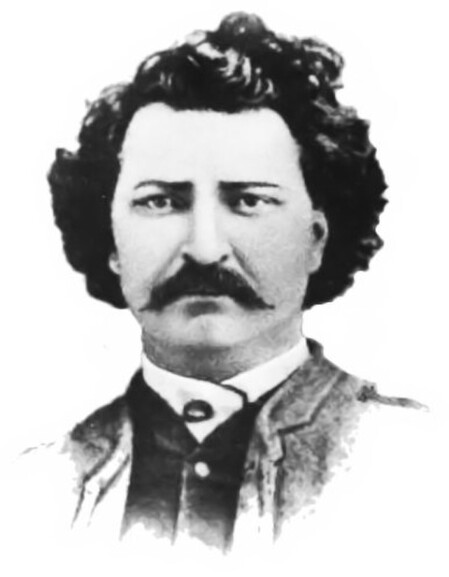
Louis Riel
The emergence of Louis Riel
In August 1869, before the official transfer of land to the Canadian government, there was an attempt by Canadian officials to re-survey the plots of land alongside the Red River. These plots had traditionally been long and narrow, fronting onto the river but the Canadian preferred to have square plots which would have the effect of limiting access to the river. With many Métis not having any paper deeds to the land, they feared the loss of their homes and farms. When, in November, 1869 a team of surveyors strayed onto the grazing land of a Métis farm, the farmer objected and went off to get help. He returned with about 15 or 16 unarmed but threatening young men whose leader walked up to the surveyors and told them ‘‘You go no further.’’
Argument was impossible and the surveyors retreated. The leader of this group was Louis Riel, son of Jean Riel, who emerged as the spokesperson for the Métis. When the newly appointed Lieutenant-Governor for the North West Territories attempted to enter Canada from the USA prior to the official transfer of land, Riel met him at the border and refused to allow him to enter Canada. Riel then with 100 horsemen seized control of Fort Garry from the HBC. He told the HBC officials that he was not a rebel and was not disloyal to the British crown but wanted to negotiate the terms by which the Métis would enter the Dominion of Canada.
A provisional government proclaimed
An elected convention met in December and proclaimed a provisional government with Riel as its leader. This was not greeted with universal enthusiasm as the population of Red River had changed much since the 1850s. There was now a large presence of new settlers who wanted Red River to become a settlement based on the type of settlement being established in Ontario. The leader of this group was John Christian Schultz who had arrived in Red River in 1869 and established a group for supporters of the annexation of Red River by the Canadian government and the migration west of settlers from Ontario. They called themselves the Canadian Party and were opposed to the establishment of self-rule by the Métis. There were frequent violent clashes between supporters and opponents of increased immigration, and the execution of one of the supporters of Schultz, Thomas Scott, has led to claims and counter-claims by historians about the role of Riel and Scott in the events of Spring 1870.
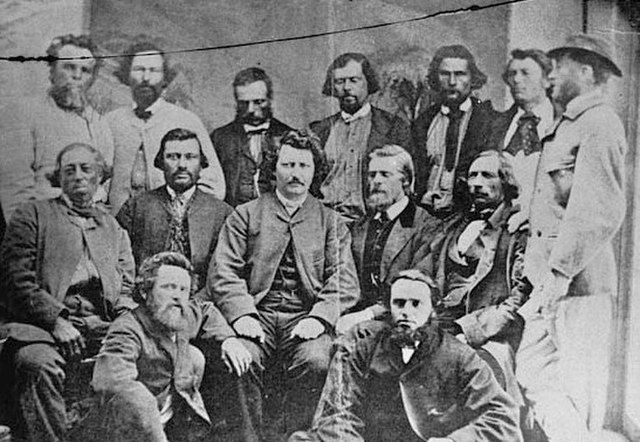
The provisional goverment of 1869
The convention of January 1870
A further convention in January 1870 met with the support both of the Métis and the old settler population and agreed that a representative government be formed which would discuss terms by which entry to the confederation could be agreed. The Provisional Government’s legislative assembly was formed in March 1870 and sent a delegation to Ottawa to negotiate Red River’s admittance to the confederation.
The outcome of the negotiations was the Manitoba Act of May 1870, which established the province of Manitoba, guaranteed Métis land rights, set aside 607,000 acres of land for the children of Métis families, and made certain commitments on language and local political control in the new province.
The execution of Thomas Scott
By the time that the Manitoba Act had been passed in May 1870, armed conflict between the Canadian party and the Métis had threatened to undo all that had been achieved. In December 1869, Schultz, Thomas Scott and over 40 supporters were arrested for challenging the decision to establish a provisional government although later Scott and Schultz escaped. A mass protest in February 1870 gathered outside Fort Garry, where the prisoners were being held , and took a young Métis as a hostage. He escaped and in doing so killed a young Scotsman. The Canadians in return caught him and killed him. The remaining prisoners were released, but Scott was re-arrested and held in Fort Garry. In prison, Scott became a thorough nuisance for the guards and was continually trying to escape. He was brought before a court and found guilty of defying the authority of the provisional government. There is a complete lack of evidence surrounding the case of Scott, making it difficult to come to a view as to how he was found guilty and the nature of his sentence. The charges against Scott have changed over time and Riel’s role in the affair has been difficult to establish. There is even debate over what happened during the execution and whether he was actually killed by the firing squad. What is not in doubt though is the raising of Scott to ‘hero’ status by eastern Protestants who were enraged by Scott’s execution. Schultz had fled from Red River back to Ontario before the execution and used Scott’s death to exploit the situation and enflame Protestant opinion. The Métis for their part portrayed Scott as a villainous character whilst Reil himself has been accused of firing the bullet that killed Scott. The whole affair of Scott’s death has been shrouded in doubt and it is impossible to say with any degree of certainty what took place.
The death of Scott did though have a part to play in the decision of the British government to send a military force to Red River led by the man who would go on to become the British Empire’s most popular and effective soldier, Lord Garnet Wolseley.
Broken promises and the execution of Riel
The province of Manitoba was created, despite Scott’s death, but the promises within the agreement were not been properly implemented. The land allocations never took place as promised, some families waiting more than a decade to receive their grants. The settlers and troops who arrived after 1870 were hostile to the Métis, and amendments to the Manitoba Act undermined the rights of the Métis. Of the 10,000 Métis in Manitoba in 1870, over 6,000 left in the following years, going to existing Métis communities in the USA, Fort Edmonton, and the South Saskatchewan River.
As the Saskatchewan Métis community grew, they sought to clarify their land rights but were ignored by the government. In response, in 1885, Riel was persuaded to leave the USA where he had made his home and come to lead a further attempt of the Métis to establish their rights. Riel had fled Red River prior to Wolseley’s arrival although he did return in 1871. He was elected to the House of Commons in 1873 though he never took his seat. He was elected twice more although again he did not take his seat. In February 1875, he was granted an amnesty by the Canadian government for his part in the events surrounding the death of Scott on condition that he accepted a banishment of five years. During his years of exile in the USA, he went through a Christian transformation accompanied by holy visions. Thinking he had lost his mind, his friends had him committed to a number of asylums but eventually he settled in Montana and in 1881 got married to a Métis woman named Marguerite Monet dite Bellehumeur. Returning to Canada in 1885, Riel led an armed conflict that was doomed from the beginning. The Métis forces were defeated at the Battle of Batoche and Riel was imprisoned in Regina where he was convicted of high treason. Despite the jury calling for clemency, Riel was executed by hanging.
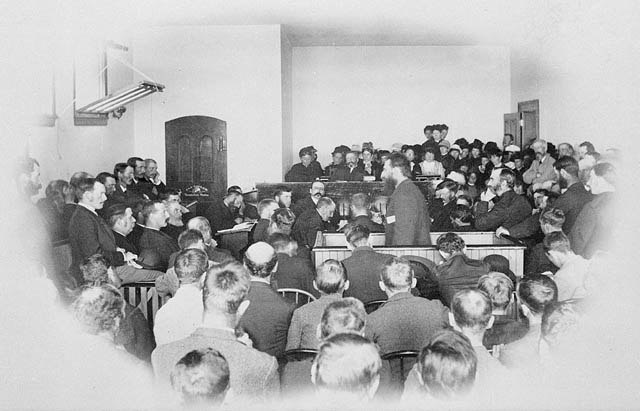
The trial of Louis Riel
The founding father of Manitoba or a traitor?
Riel’s death led to a polarisation of Canadians along religious lines with French Canadians seeing him as a heroic victim, the brave defender of the Métis people and the founding father of Manitoba whilst to others he was a traitor who was hanged for treason after mounting a rebellion against Canada.
The Métis continued to be ignored and suffered from poverty, demoralization, and racism. Many left Saskatchewan to go further west to Alberta, and the continued dispersal of the Métis led to communities being established in various parts of Canada. It has only been in the last 40 years that the Métis have been recognised as an indigenous people (1982) although their rights were not defined until a Supreme Court decision in 1993, the ‘Powley Test’, established what their rights were. In the Daniels decision of 2016, the Métis were defined as having ‘’originated largely in Western Canada and emerged as a political force in the c19th century, radiating outwards from the Red River Settlement.
By Peter Crowhurst, September 2024
Further Reading:
Britannica, https://www.britannica.com/topic/Metis-people
Lawrence James, The Rise and Fall of the British Empire, Abacus, 1998
Jan Morris, Heaven’s Command , Faber and Faber, 1998
Jean Teillet, The North-West is our Mother, CBC Books, 2019
The Canadian Encyclopedia, https://www.thecanadianencyclopedia.ca/en/article/metis